
Choosing between an NO or NC limit switch can be confusing, but the decision directly affects safety and control. This guide explains the key differences in real-world use, so you can choose the right option with confidence.
Before diving deeper, here is a quick side-by-side overview.
| Feature | NO Limit Switch | NC Limit Switch |
| Default behavior | No signal until triggered | Signal present during normal operation |
| Reaction to wiring failure | May go unnoticed | Triggers a stop or fault |
| Common use | Simple position detection | Safety-related or critical motion |
| User experience | Event-based | Status-based and predictable |
Why NO vs NC Matters in Limit Switch Applications
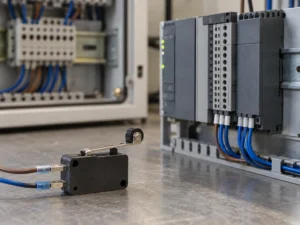
Limit switches are different from regular buttons or indicator switches. They are usually installed at physical boundaries, such as the end of a slide, a moving cover, or a mechanical stop. When they activate, something important happens: motion stops, direction changes, or access is blocked.
Because of this, the contact type inside the limit switch affects more than just signaling. It determines:
- How the system behaves when everything works normally
- What happens if a wire loosens or breaks
- Whether problems are noticed immediately or stay hidden
For users, the real issue is not the definition of NO or NC. It is how the machine reacts under real-world conditions.
How Limit Switches Are Commonly Used in Real Situations
Most users encounter limit switches in practical, everyday scenarios rather than complex control systems.
Typical applications include:
- Stopping motion at the end of a track or stroke
- Preventing a door or guard from closing while open
- Avoiding collisions between moving parts
- Confirming that a position has been reached
In many of these setups, the limit switch acts as the final checkpoint. Once it triggers, the system either behaves safely or it does not. That is why choosing between NO and NC deserves attention during the buying stage.
NO vs NC Limit Switch Behavior in Daily Operation
Instead of focusing on technical definitions, it helps to look at how each type behaves from a user’s point of view.
Normally Open Limit Switch Behavior
With an NO limit switch, the circuit stays inactive until the switch is physically triggered. A signal is sent only at the moment the limit is reached.
This works well when:
- You only need a signal at a specific position
- The switch is used for basic indication
- Safety is handled elsewhere in the system
However, if a wire disconnects or a terminal loosens, the system may behave as if nothing happened.
Normally Closed Limit Switch Behavior
With an NC limit switch, the circuit is active during normal operation. When the limit is reached or the circuit is interrupted, the signal stops.
This means:
- The system is constantly checking that everything is connected
- Wiring issues immediately change system behavior
- Faults are easier to notice
For many users, this behavior feels more predictable and reassuring.
Safety Differences Between NO and NC Limit Switches
Safety is one of the main reasons users compare NO vs NC limit switches.
Why NC Limit Switches Are Often Linked to Safety
NC limit switches react not only to motion, but also to unexpected problems. If a wire breaks or a connection fails, the system responds as if the limit was reached.
From a practical standpoint, this means:
- The machine is more likely to stop when something is wrong
- Problems are detected earlier
- Risk of silent failure is reduced
This is why NC limit switches are commonly chosen for:
- Moving guards or covers
- Equipment that should not run unattended
- Situations where stopping is safer than continuing
When NO Limit Switches Can Still Be Acceptable
NO limit switches can be suitable when:
- The application is simple and low-risk
- The switch is used only for position signaling
- Other safety measures are already in place
The key is understanding that NO relies more heavily on everything working correctly.
Related Reading: Normally Open vs. Normally Closed Switch: What’s the Real Difference
Control and Troubleshooting Experience Over Time
Beyond safety, contact choice affects how a system feels to use and maintain.
Event-Based vs Status-Based Control
NO limit switches are event-based. They send a signal only when something happens. This is straightforward and easy to understand.
NC limit switches are status-based. As long as everything is normal, the signal remains active. When it disappears, attention is needed.
Many users find status-based control easier to trust, especially in systems that run frequently.
Which Is Easier to Diagnose When Problems Occur
In everyday maintenance:
- NC setups often make faults obvious
- NO setups may require more testing to confirm whether a fault exists
Over time, this difference can save effort and reduce frustration.
A Simple Decision Guide for Choosing NO or NC Limit Switches
If you are still unsure, the following decision logic can help.
Choosing NC Limit Switches for Safety-Focused Use
NC limit switches are usually the better choice when:
- The switch is directly related to safety
- The system should stop if anything fails
- You want immediate feedback when something is wrong
This approach favors predictable behavior over convenience.
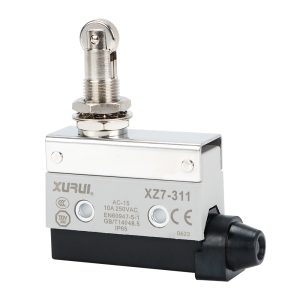
Choosing NO Limit Switches for Simple Control Tasks
NO limit switches make sense when:
- The application is non-critical
- The switch is used only to detect a position
- Faults can be handled elsewhere
In these cases, simplicity may be the priority.
Common Buying Mistakes to Avoid
Many users run into problems not because of poor products, but because of assumptions made during purchase.
Common mistakes include:
- Choosing NO because it sounds simpler
- Ignoring what happens during a wiring failure
- Assuming NO and NC behave the same once installed
- Focusing only on price rather than usage
Thinking through real-world behavior before buying helps avoid these issues.
Should You Choose a Limit Switch With Both NO and NC Contacts
If you are uncertain, many limit switches offer both NO and NC contacts in one unit.
This provides:
- Flexibility during installation
- The ability to change behavior later
- Less risk of ordering the wrong product
For first-time buyers or general applications, this is often a practical solution.
Final Thoughts
Choosing between an NO and NC limit switch is not about memorizing technical terms. It is about deciding how your system should behave when conditions are less than perfect.
By focusing on safety expectations, real-world failures, and daily use, you can select a limit switch that feels reliable and predictable over time. Making the right choice upfront helps prevent confusion, downtime, and unnecessary risk later on.
XURUI Engineering Team