
Overhead cranes must stop exactly where they should—any over-travel or overload can quickly become a safety hazard. Limit switches help prevent these risks by automatically stopping unsafe movements before damage occurs.
This guide explains how limit switches enhance crane safety and what to consider when selecting the right ones for your system.
Understanding The Importance Of Limit Switches In Crane Safety
Enhancing Safety Through Travel Boundary Control
Limit switches prevent a crane from moving beyond its safe travel range. By cutting motion at pre-set points, they create a dependable safety buffer around every operation.
Preventing Dangerous Over-Travel Movements
Over-travel is one of the main causes of hoist and structural damage. A limit switch automatically stops the hoist, trolley, or bridge before it reaches its mechanical limits, reducing the chances of sudden impact or misalignment.
To improve reliability, many facilities set two limit points—a slow-down point to soften movement and a final stop point to fully eliminate risk.
Protecting The Hoist Drum And Wire Rope
Hoisting too high can make the hook block strike the drum, while lowering too far can slacken the rope. Both conditions can shorten equipment lifespan.
Regularly checking cam positions or lever alignment helps ensure the switch stops the hoist at the correct height every time.
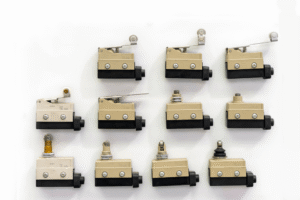
Key Limit Switch Types That Improve Crane Safety
Hoist Limit Switches For Vertical Lifting Protection
These switches control the upper and lower travel limits of the hoist, ensuring the lifting line stays properly tensioned.
Maintaining Safe Hoist Operation Through Precise Height Control
Upper limits prevent overwinding and potential rope breakage, while lower limits protect against unwinding too far.
For cranes that operate frequently or handle long lift cycles, rotary cam limit switches offer more precise and easily adjustable settings.
Travel Limit Switches For Trolley And Bridge Movement
These switches stop the trolley or bridge from traveling too far along the runway.
Reducing Collision Risk Across The Runway
By limiting horizontal movement, travel limit switches help prevent collisions with end stops, beams, and equipment along the crane’s path.
If multiple cranes share the same runway, combining travel limit switches with anti-collision sensors creates an extra layer of spacing protection.
Load Limit Switches For Lifting Protection
Load limit switches prevent cranes from operating beyond their rated lifting capacity.
Supporting Safe Lifting Through Overload Protection
When excessive weight is detected, the switch cuts lifting power to avoid mechanical strain and motor overheating.
Pairing these switches with a digital load indicator gives operators clear, real-time visibility of the load.
Related Reading: What are the 6 types of limit switches?
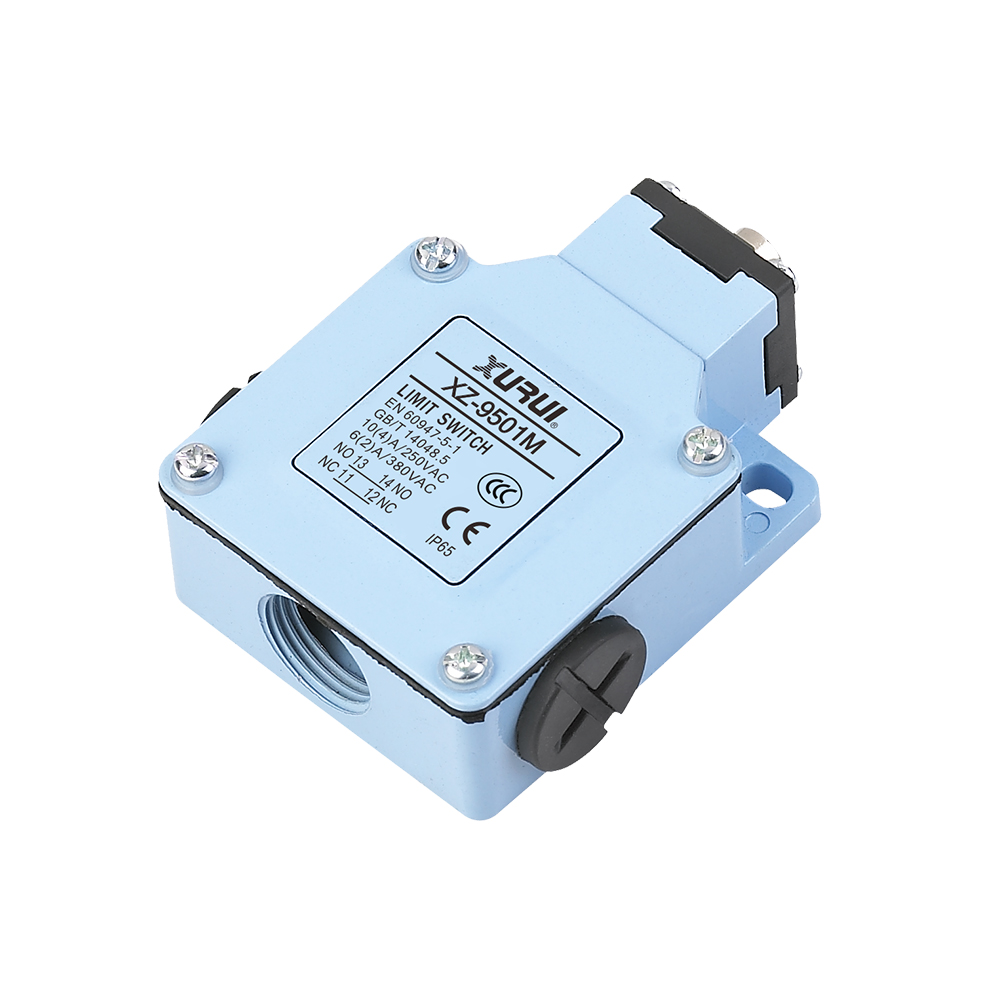
How To Choose Effective Limit Switches For Your Crane
Selecting Switches Built For Your Operating Environment
Crane conditions vary widely—from clean indoor facilities to outdoor areas exposed to dust, moisture, vibration, and temperature fluctuations.
Ensuring Durability In Real-World Conditions
A limit switch must maintain accuracy even when exposed to dirt or constant vibration.
For harsh or outdoor environments, choosing models with IP67 or higher protection significantly improves long-term performance.
Verifying Electrical And System Compatibility
A good limit switch should integrate smoothly with your crane’s existing control system.
Optimizing Integration With PLCs, VFDs, And Control Circuits
Stable electrical signals and simple wiring make installation easier and reduce downtime.
Switches with adjustable actuation points also give you flexibility to fine-tune stopping distances without reconfiguring your entire control panel.
Planning Maintenance To Sustain Reliability
Like any mechanical component, limit switches must be inspected regularly to ensure consistent performance.
Maintaining Optimal Performance Through Routine Checks
Wear, vibration, or loose hardware can delay switch response over time.
Adding monthly visual checks and quarterly function tests helps catch alignment issues early and keeps your crane running safely.
Best Practices That Strengthen Safety Performance
Adding Redundant Safety Layers
Depending on a single switch increases risk if a mechanical problem occurs.
Creating Multi-Step Safety Protection
Two-stage limits—one for slow-down and one for full-stop—reduce impact forces and offer smoother, safer operation.
For high-duty cranes, many teams also install a secondary upper-limit switch as an emergency backup.
Training Operators To Work With Limit Switches
Even the best equipment needs knowledgeable operators to support safe crane use.
Supporting Safer Operations Through Familiarity
Operators should understand what each switch does, recognize early signs of malfunction, and know when to report abnormal behavior.
Short, focused training sessions help reinforce safe habits and ensure everyone knows how the system should respond.
Final Thoughts
Limit switches play a crucial role in keeping overhead crane operations safe, stable, and predictable. By preventing over-travel, reducing collision risks, and protecting lifting components from overload, they provide a reliable layer of protection that operators and maintenance teams can depend on. When paired with the right switch type, proper installation, routine inspections, and trained personnel, they significantly reduce the chance of accidents and equipment failures. For any facility operating overhead cranes, investing in high-quality limit switches is not just a technical decision—it is a long-term commitment to safety, efficiency, and operational continuity.
XURUI Engineering Team