
Supply chain disruptions hit 72% of electronics manufacturers in 2024, according to IPC’s annual report. For OEMs that depend on a single solid state relay supplier, one delayed shipment can halt a production line. A second source gives purchasing leverage on pricing and lead time, and gives engineering a fallback when the primary vendor raises order minimums or drops a series.
Qualifying that second source takes more than matching a catalog number. The OEM needs a documented pass-fail framework, a structured supplier screen, a physical validation test plan, and a formal release gate. Xurui Switch has supplied industrial SSRs to OEMs in over 130 countries, and this guide walks through each stage so procurement and engineering can move from shortlist to approved vendor list without surprises on the factory floor.
What Should OEMs Define Before Evaluating a Second Source?
Before sending RFQs, engineering and quality need to agree on what “acceptable” means. A vague brief produces a long shortlist of near-matches that still fail at pilot build. Lock down the baseline, the electrical requirements, the installation constraints, and the certification scope first.
Approved SSR Baseline and Pass Criteria
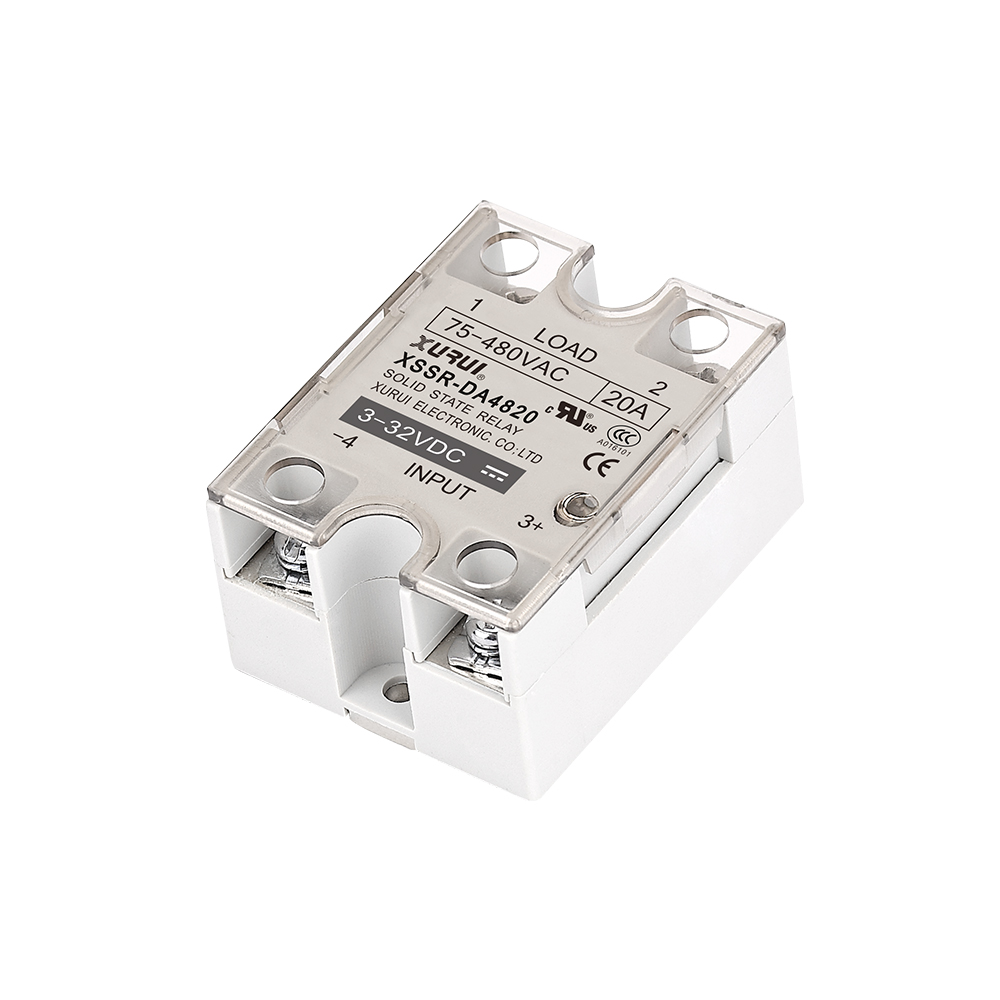
Start with the SSR already in production. Pull its datasheet, order code, and the last three incoming inspection reports. Record the exact switching type (zero-cross or random), the rated load current, the control voltage range, and the package outline with mounting hole pattern. These four items define form, fit, and function.
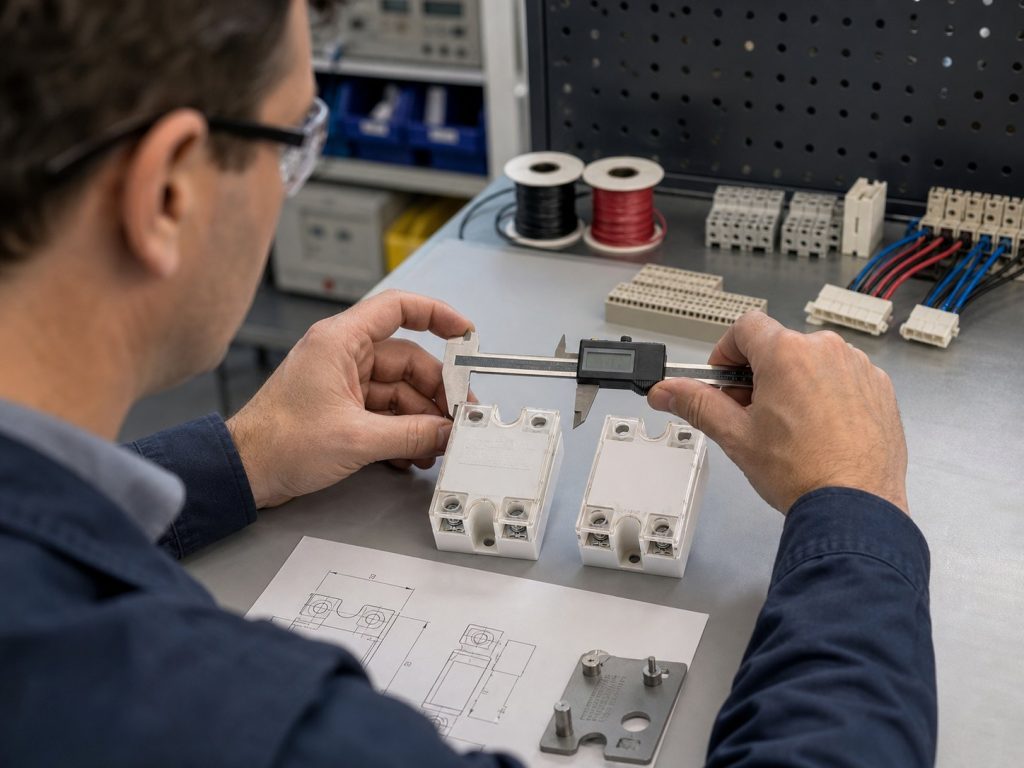
Next, set the pass criteria. Decide which parameters are hard fails (form factor mismatch, missing certification) and which have tolerance bands (gate trigger current within ±20%, thermal resistance within +10%). Put the criteria in a scoring sheet before the first datasheet comparison so the team evaluates every candidate against the same rules.
Electrical and Switching Requirements
Write down the load type. A resistive heater draws a different waveform than a motor or a transformer. The SSR must handle the inrush current and the dV/dt of the actual load, not only the steady-state rating. A relay rated at 25 A on a resistive load can fail within months on a motor circuit where inrush reaches six to eight times the steady-state current.
Specify the control signal source. PLC outputs, temperature controllers, and timer modules each have different output types (sourcing, sinking, analog 4-20 mA). The replacement SSR’s input stage must match the existing control circuit without rewiring. Mismatched input polarity or voltage is one of the most common second-source failures caught during pilot build.
Thermal, Mechanical, and Installation Requirements
SSRs generate heat proportional to load current. The current SSR’s thermal design, including heatsink size, airflow, and mounting orientation, sets the boundary for any replacement. A physically smaller SSR may save panel space, but if its junction-to-case thermal resistance is higher, the same heatsink may fail to keep the junction below its rated temperature.
Check the terminal layout. DIN-rail modules, panel-mount packages, and PCB-mount types each have different wiring access. If the current relay uses quick-connect terminals and the candidate uses screw terminals, the assembly line needs a new torque tool and a revised work instruction. Mechanical differences that look minor on a datasheet add labor cost across thousands of units.
Certification and Target Market Requirements
List the markets where the finished product ships. CE and UL certification covers the EU and North America. If the product also ships to Korea or other regulated markets, the replacement needs the corresponding local marking. Confirm the certification scope covers the relay itself, not only a component inside it.
Ask for the test report number and the certifying body. A supplier that shows a CE mark but cannot produce a test report from a recognized lab is a risk. The incoming inspection team should verify the cert number against the issuing body’s database.
How Should OEMs Screen a Second Source Supplier?
A datasheet match is necessary but does not close the case. The supplier’s factory, quality system, and delivery record matter as much as the electrical specs. Screen these areas before committing to a sample order.
Exact Order Codes and Technical Documents
Request the candidate’s order code cross-reference against the current SSR. The order code should map to the same switching type, current rating, control voltage, and package. If the supplier’s catalog uses a different numbering scheme, ask for a written cross-reference sheet, not a verbal confirmation.
Collect the full datasheet, the application note for heatsink sizing, and the UL or CE certificate. If the supplier cannot produce these within one week, treat that as a red flag. Documentation gaps during the sales phase get worse after the order ships.
Manufacturing and Quality Controls
Ask where the SSR is assembled and tested. A supplier that designs in one country and runs production in another may have tighter cost control, but the OEM loses visibility into process changes. Request the factory’s ISO 9001 certificate and confirm the certified scope includes the product category.
Review the outgoing test procedure. A factory that tests 100% of units for leakage current, isolation voltage, and trigger current catches defects that spot-check sampling misses. For critical applications such as medical equipment or food processing lines, 100% outgoing testing reduces the risk of field failures to a level most buyers accept.
Traceability and Change Notification
Each SSR unit should carry a date code or lot number that traces back to the wafer batch, the assembly line, and the test station. When a field failure occurs, traceability lets the quality team isolate the affected lot instead of recalling all units shipped in a year.
Ask for the supplier’s change notification policy. A responsible supplier notifies the OEM before changing the die source, the encapsulation material, or the test limits. The notification period should be at least 90 days so the OEM can requalify if needed.
Capacity and Supply Continuity
Confirm the supplier’s monthly capacity for the specific SSR series the OEM needs. A supplier that can quote a million units per month on paper but runs one production line with no backup is a single point of failure.
Ask about buffer stock policy. Some suppliers hold two to four weeks of finished goods for key accounts. Others build to order with no stock. The right model depends on the OEM’s forecast accuracy and the cost of a stockout.
How Should OEMs Validate an Alternate Solid State Relay?
Validation proves the candidate works in the real assembly, not only on paper. The process has three stages: datasheet comparison, bench testing, and pilot production.
Comparing Datasheets and Identifying Gaps
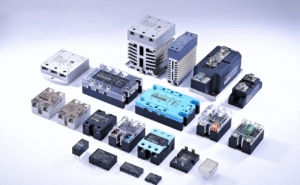
Lay the current SSR datasheet and the candidate datasheet side by side. Highlight every parameter that differs by more than 10%. A supplier’s solid state relay catalog shows how different series map to different current ratings, switching types, and package styles, which helps when cross-referencing order codes. Focus on the parameters that matter for the application: load current at the ambient temperature, dV/dt rating, isolation voltage, and leakage current in the off state.
Pay attention to the test conditions. One supplier may rate the load current at 25°C with a heatsink, while another rates it at 40°C without. Normalize the numbers to the same conditions before comparing. A candidate that looks equal on paper may fall short when adjusted for the actual operating environment.
Testing Electrical and Switching Performance
Build a test fixture that replicates the production circuit. Run the candidate SSR at the rated load for at least 48 hours. Measure the case temperature with a thermocouple, not only the ambient air temperature. Record the on-state voltage drop and compare it to the datasheet value.
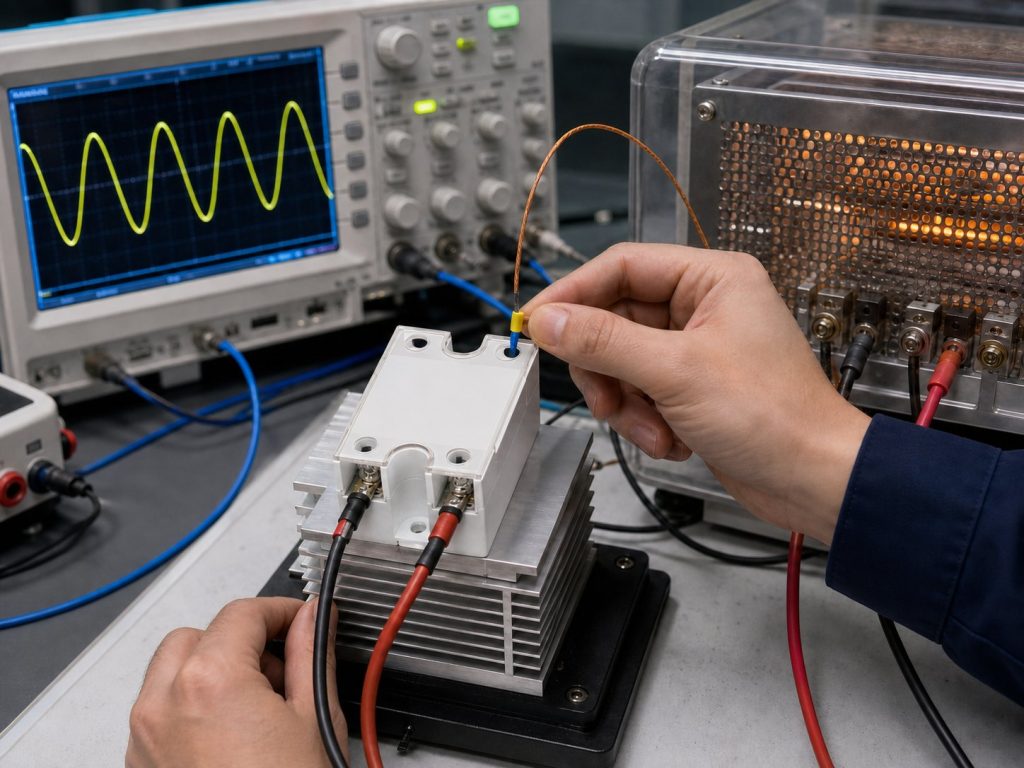
Test the switching behavior under load. A zero-cross SSR should switch within 10° of the zero crossing on the AC waveform. A random-turn-on SSR should trigger within 1 ms of the control signal. Use an oscilloscope to verify, not only the click of the relay and a lamp turning on. For more detail, see how electrical stress can affect solid state relay life expectancy.
Checking Worst Case Thermal and Fault Conditions
Run the SSR at 110% of the rated load current for four hours. The case temperature should stay below the datasheet maximum. If the SSR uses a heatsink, measure the heatsink base temperature and calculate the junction temperature using the datasheet’s thermal resistance values.
Test the fault response. Short the load briefly and confirm the SSR survives without damage to the control circuit. If the application has a risk of load short circuits, check whether the candidate series includes internal snubber protection or whether the OEM needs to add an external snubber. For circuit-level guidance, see snubber and overcurrent protection for solid state relays. protection circuits in detail.
Running a Pilot Production Build
Assemble 50 to 100 units with the candidate SSR on the production line. Use the same work instructions, the same torque settings, and the same incoming inspection procedure as the current SSR. Track the assembly time per unit. If the new SSR takes 15 seconds longer to install because the terminals sit in a different position, that cost compounds across a full production run.
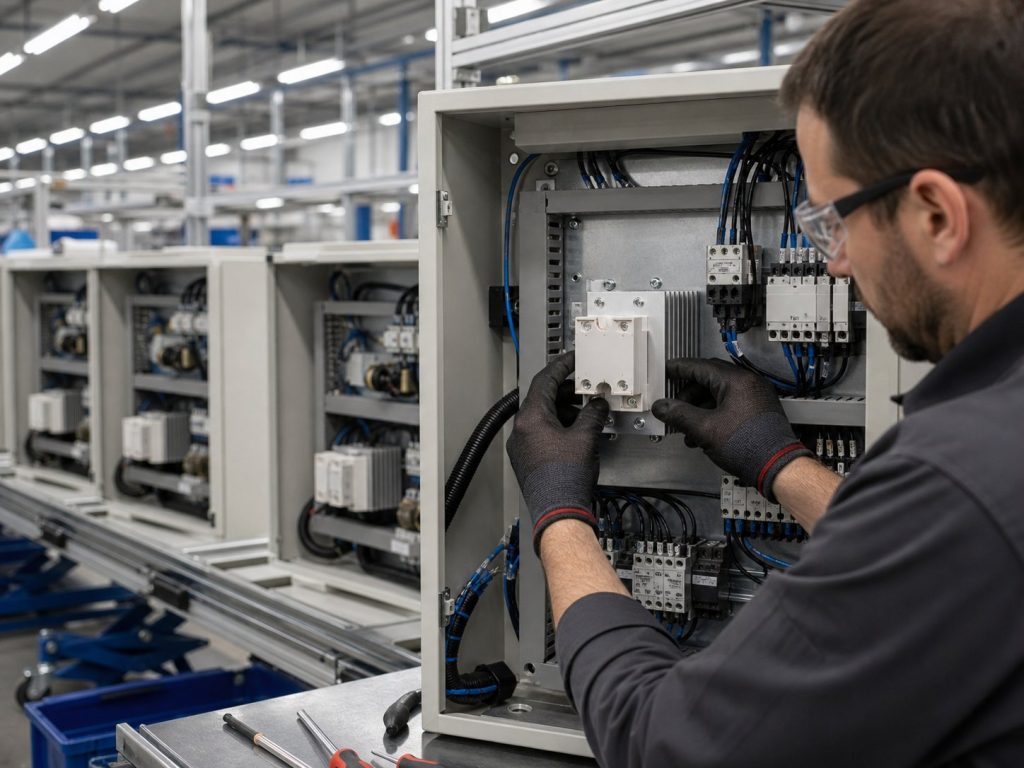
Run the finished units through the standard end-of-line test. Any unit that fails should go to engineering for root cause analysis before the next batch. Record the first-pass yield. A candidate that gives 98% first-pass yield on the pilot build is acceptable; one that gives 92% needs a design or process change before release.
How Should OEMs Release and Control the Second Source?
Release is the final gate. The SSR has passed validation, the supplier audit is complete, and the pilot build yielded at or above the target. Now the OEM locks it into the system with formal approvals, BOM updates, and ongoing controls.
Engineering, Quality, and Sourcing Approval
Three teams sign off. Engineering confirms the electrical and mechanical fit. Quality confirms the supplier’s test data, the pilot yield, and the incoming inspection plan. Sourcing confirms the pricing, the lead time, and the order quantity terms. All three approvals go on a single release form with a date, a signature, and a reference to the validation report.
Approved Vendor List and BOM Release
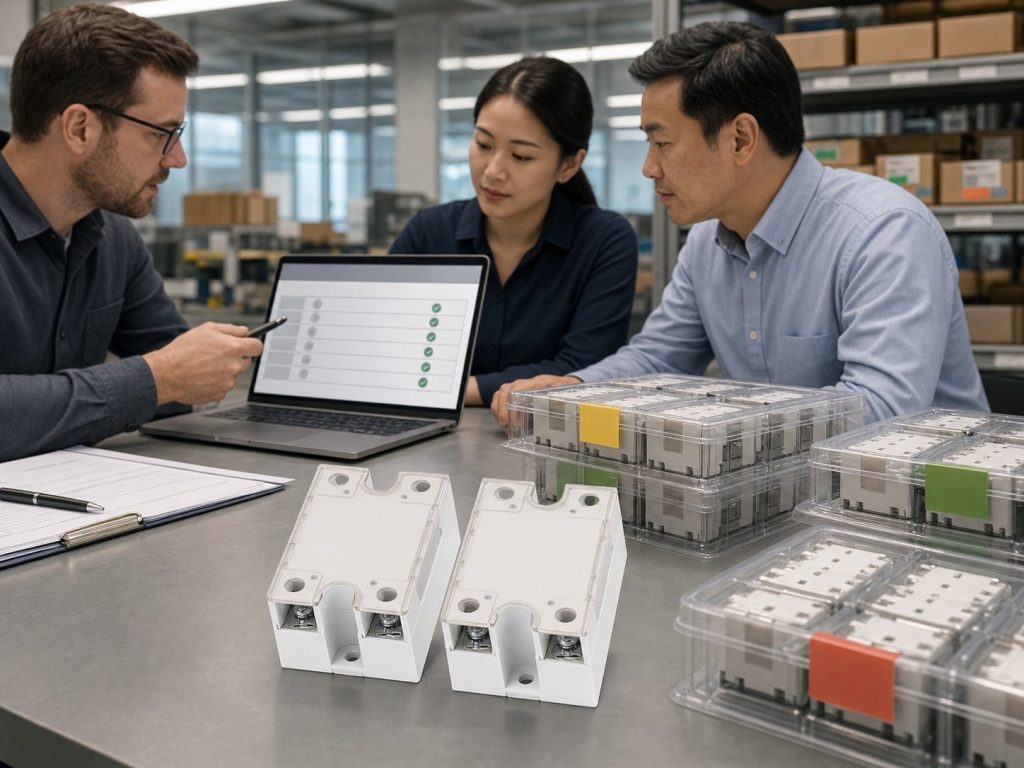
Add the SSR and the supplier to the approved vendor list (AVL). The BOM should list the primary and the alternate SSR with separate line items, each carrying its own part number, revision, and AVL reference. Do not merge two different suppliers under one BOM line. If the production planner picks the wrong supplier because the BOM is ambiguous, the fault is in the BOM, not the planner.
Incoming Inspection and Lot Tracking
Set up the incoming inspection procedure for the new SSR. The procedure should include a visual check, a measurement of the gate trigger current, and an isolation voltage test on a sample basis (AQL 1.0 or tighter for critical applications). Record the lot number of every incoming shipment. Lot tracking lets the quality team trace a field failure back to a specific production batch and a specific assembly date.
Change Control and Requalification Triggers
Define the conditions that require requalification. These include a change in the die source, a change in the encapsulation material, a change in the test limits, or a shift in the supplier’s manufacturing location. Requalification does not always mean repeating the full validation. A minor change may only require a datasheet review and a bench test. A major change, such as a new die, should trigger the full pilot build process again.
Review the supplier’s performance every six months. Track the incoming defect rate, the on-time delivery rate, and the number of change notifications received. A supplier whose defect rate exceeds 500 ppm for two consecutive quarters should be placed on probation with an increased incoming inspection sample size.
Frequently Asked Questions
When Should OEMs Begin Qualifying a Second Source?
Start the qualification process at least six months before the planned production date. The timeline runs four to six weeks for the supplier screen, two to four weeks for sample evaluation, four to six weeks for pilot build and testing, and two to four weeks for formal release. Rushing the process raises the risk of field failures or production delays.
Can One Test Plan Cover Several Ratings in the Same SSR Family?
Yes, if the candidate series shares the same package, the same die design, and the same control input across all ratings. Test the highest-rated unit and the lowest-rated unit in the family. If both pass, the intermediate ratings qualify under the same test plan. Document this approach in the validation report and list the covered order codes.
Can Two Approved SSR Brands Be Used in the Same Production Batch?
Mixing brands in the same batch is possible but requires both SSRs to have identical terminal layouts, the same mounting footprint, and the same electrical behavior in the circuit. The assembly line must handle both without changing work instructions. If the two brands differ in on-state voltage drop by more than 0.2 V, the thermal design may not suit both, and mixing should be limited to separate production runs. The comparison in Solid State Relay vs Mechanical Relay explains how switching type affects thermal behavior across brands.
When Does an Alternate SSR Require Customer or Regulatory Approval?
If the finished product carries a regulatory mark (UL, CE, CCC) that lists the SSR by part number or by manufacturer, the replacement must be submitted to the certifying body for a formal component recognition update. Some customers also require prior written approval for any component change in their approved BOM. Check the customer contract and the regulatory file before releasing the alternate.
What Should OEMs Do if No Candidate Matches Form, Fit, and Function?
If no off-the-shelf SSR matches, the OEM has three options. Ask the current supplier to dual-source from a second factory within the same group. Work with the best-fit candidate to modify the package or the terminal layout. Or redesign the mounting bracket to accept a standard package that multiple suppliers offer. The third option costs more upfront but removes the single-source risk permanently.
XURUI Engineering Team