Mini toggle switches save panel space, but their small format leaves less room for wiring, mounting hardware, and operator clearance. A switch can pass a bench test yet slow assembly, trigger accidental operation, or fall short of its intended service life.
OEM buyers need evidence before a part number reaches the drawing, sample approval sheet, or purchase order. This guide covers the panel fit, switching duty, validation, and order controls that support that decision.
What Makes a Mini Toggle Switch Fit a Compact Control Panel?
A mini toggle switch fits a compact control panel when the panel opening, bushing, hardware, rear envelope, operating space, and environment match the approved drawing. A switch that fits the cutout but fails one of these checks is not a validated panel interface.
Body Size, Bushing, and Panel Cutout
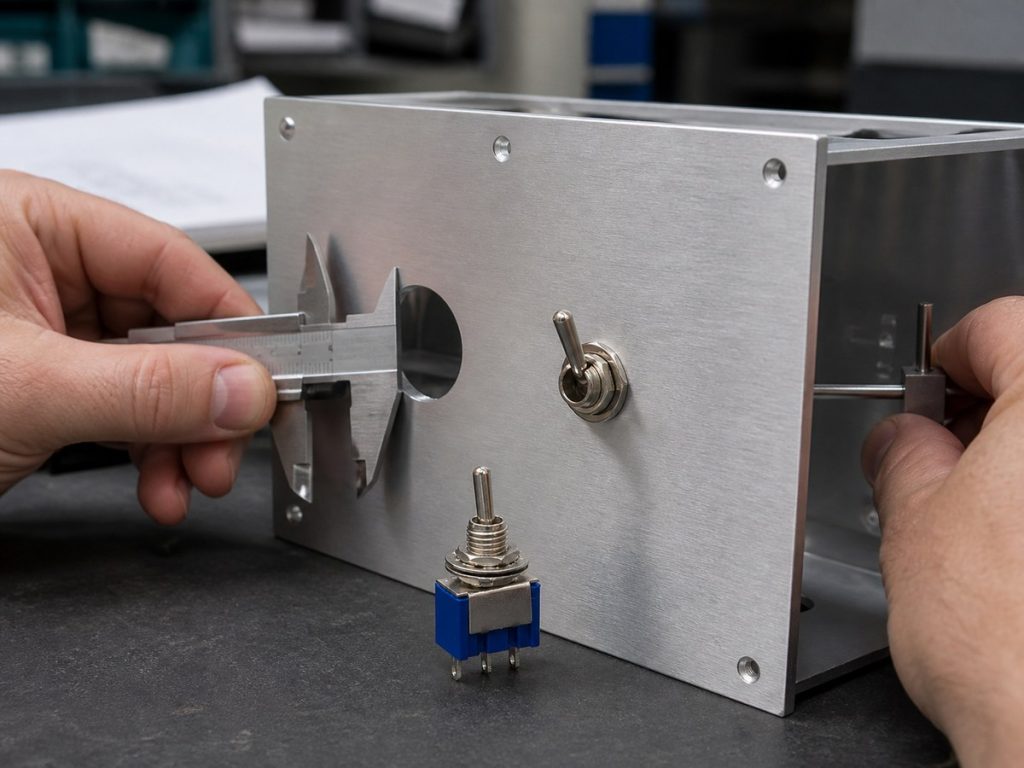
Start with the supplier’s mechanical drawing. Do not rely on a product photo or the word “mini.” Record these dimensions before releasing the panel drawing:
- Bushing diameter, thread, and usable thread length
- Panel cutout diameter and tolerance
- Body width, length, and depth behind the panel
- Keyway or antirotation feature
- Terminal position and terminal-to-panel clearance
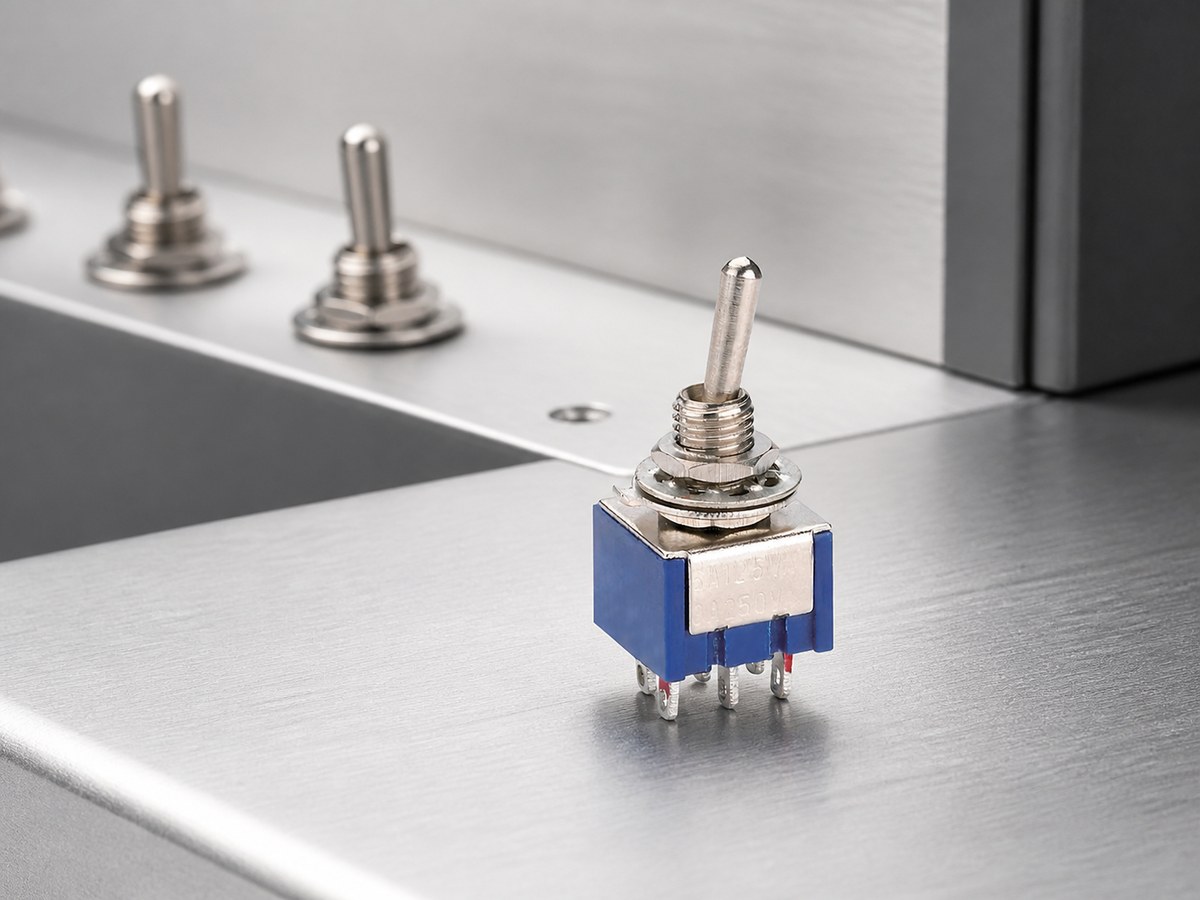
MTS-style switches commonly use a 6 mm bushing. Larger XT formats use a 12 mm bushing. The two formats need different panel cutouts and rear clearances.
Set a production tolerance for the cutout. An oversized opening can let the body rotate under lever force. A tight cutout can stop the bushing from seating after paint, plating, or burrs add material. Within a toggle switch range, bushing and terminal formats vary by model, so the part description must state the exact mounting form.
Panel Thickness and Mounting Hardware
The bushing must pass through the full panel stack with enough thread for the washer and nut to seat. Count sheet metal, paint, membrane overlays, labels, sealing washers, and any front plate. A switch that seats on bare sheet can run out of usable thread once paint, labels, and washers complete the stack.
Freeze the mounting hardware with the switch. The assembly drawing should name the nut, lock washer, flat washer, locating washer, seal, and torque limit. Locking hardware helps resist rotation. It cannot correct a wrong bushing length, an oversize cutout, or a panel that flexes around the opening.
Rear Clearance and Solder Terminal Access
Check the rear envelope inside the final enclosure. A front view does not show wire bend radius, tool access, insulation sleeves, terminal covers, or service clearance. The body may be compact while the finished wire exit uses far more space.
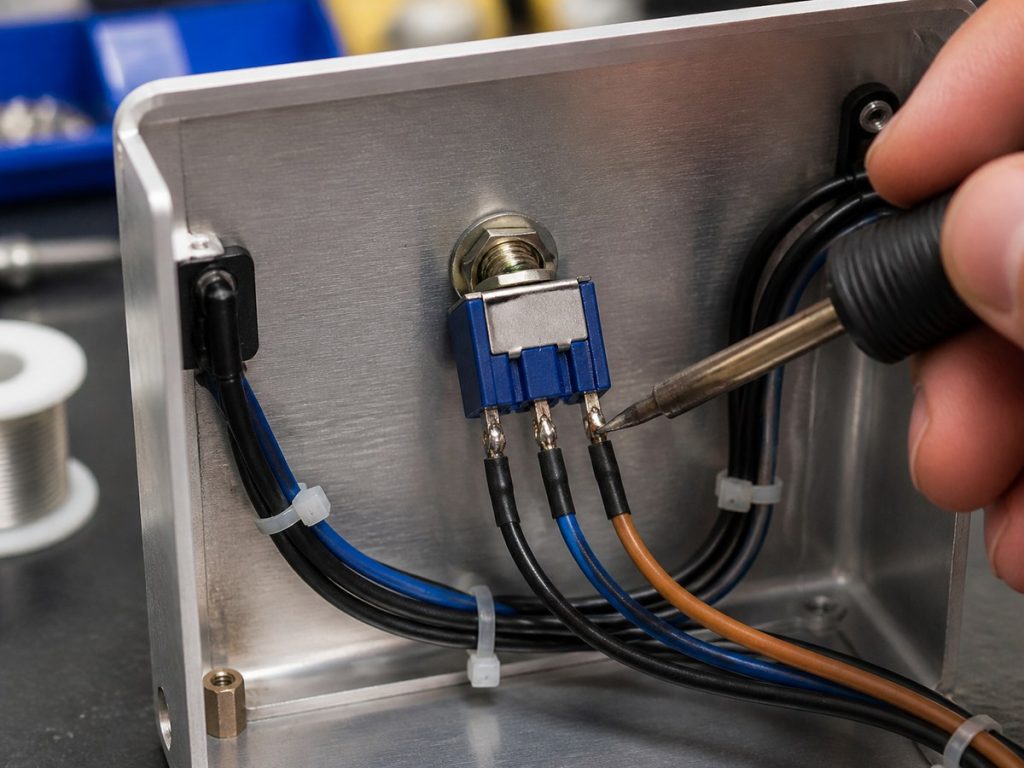
Terminal style drives the assembly process. Xurui’s catalog lists MTS styles with solder terminals. XT models may use solder, screw, or quick connect terminals by model. Confirm terminal orientation, lead free solder limits where relevant, and the clearance between live terminals, grounded metal, and adjacent components.
Panel Environment and Sealing Requirements
Define the exposure before selecting a sealing option. Record whether the front of the panel sees indoor dust, washdown splash, oil mist, outdoor rain, cleaning agents, vibration, or temperature cycling.
Separate internal switch construction from the seal at the lever, bushing, and panel. A rubber boot can protect that interface when its material, retention method, and rating match the switch and enclosure. A boot shown in a catalog image does not prove that the bare switch has a panel protection rating. The toggle switch guard guide distinguishes a lever cover from a panel protection measure.
Lever Clearance and Accidental Operation Risk
Draw the full lever travel and the operator’s hand space. Nearby labels, handles, doors, cable glands, and adjacent levers can block movement or make a short lever difficult to use with gloves. A tight layout in CAD can cause wrong-switch operation on a live panel.
Use a guard, recess, lock, or momentary action when the operating sequence calls for it. Each option changes access speed. Test the finished layout with the final labels, expected gloves, and real operating angle.
What Electrical Limits Come With a Smaller Toggle Switch?
Smaller dimensions can reduce contact area, thermal path, pole options, and terminal choices. Select the switching duty first. Then confirm that the mini format supports it with margin.
Switching Function and Contact Arrangement
Select the circuit function before the terminal count. SPST controls one on-off circuit. SPDT selects between two paths. DPST and DPDT switch two circuits together, although the internal connection and timing depend on the model.
The SPST, SPDT, DPST, and DPDT switch symbols must match the wiring schematic, terminal drawing, and position legend. Treat maintained, center off, and momentary action as separate decisions. A maintained toggle holds its selected state. A momentary toggle returns after release and suits a pulse, jog, reset, or test command when the control circuit accepts a pulse input.
Actual Load, Inrush Current, and Rating Margin
A current rating alone does not define switching duty. Record the circuit voltage, AC or DC type, normal current, start up current, switching frequency, ambient temperature, and load type. Motor, lamp, solenoid, transformer, resistive load, and PLC input circuits place different demands on the contacts.
Use the data sheet rating for the intended voltage and load type. The pole and throw terms in a toggle switch buying guide do not establish the rating of a candidate model. Check the model’s approved specification and derating data before using it on a repetitive power load.
Contact Material for Signal or Power Circuits
Contact design must match circuit energy. State the lowest and highest circuit conditions. Note whether the circuit is dry, carries a sensing signal, or repeatedly interrupts a load.
Do not approve a contact system by material name alone. Performance also depends on load type, wiping action, switching frequency, atmosphere, and the rated circuit. When one panel combines a signal input with a load command, define the duty for each circuit separately.
Electrical Life at the Intended Load
Mechanical life and electrical life measure different risks. Mechanical life measures actuation without the stated load. Electrical life measures switching under a defined voltage, current, load category, and cycle rate.
Ask for the test condition behind every life claim. A switch that changes state once per shift has a different duty from one used for frequent jogging or repeated operator commands. Put expected operations per day and the required service interval in the design record.
How Should OEMs Validate a Candidate Mini Toggle Switch?
Validate the candidate as both a panel assembly and a circuit component. A catalog review checks available options. A mounted sample checks physical fit. A functional test checks the intended duty.
Datasheet and Model Code Verification
Freeze one complete model code before testing. The code must identify the poles and throws, action, bushing, terminal type, lever style, rating, contact arrangement, sealing option, and approval suffix. Similar-looking variants can have different terminals, center positions, ratings, or hardware.
Compare the model code with the supplier data sheet, quotation, drawing, and sample label. Mark each item as confirmed, pending document review, or unacceptable. Xurui’s catalog distinguishes compact MTS formats from XT formats, so a request for “MTS” or “mini toggle” does not define an approvable part.
Dimensional and Panel Fit Checks
Build a panel coupon with the finished material, coating, label stack, cutout tolerance, and mounting hardware. Install samples at both tolerance limits. Check seating, nut engagement, rotation resistance, lever travel, rear clearance, label visibility, and access for the planned wiring process.
| Check | Verify on the approved sample | Record for production |
|---|---|---|
| Panel interface | Cutout, bushing, thread engagement, antirotation feature | Drawing revision and tolerances |
| Front operation | Lever travel, spacing, labels, guard clearance | Functional panel layout |
| Rear envelope | Terminal orientation, wire exit, tool access, clearance | Harness routing and assembly instruction |
| Mounting set | Nut, washers, seal, torque method | Approved hardware and torque limit |
Functional Testing Under the Actual Load
Test the sample in a circuit that represents the real voltage, load, inrush, command rate, and operating temperature. A continuity check proves that contacts move. It does not show whether the candidate handles the actual switching duty without excessive heating, unstable operation, or early contact wear.
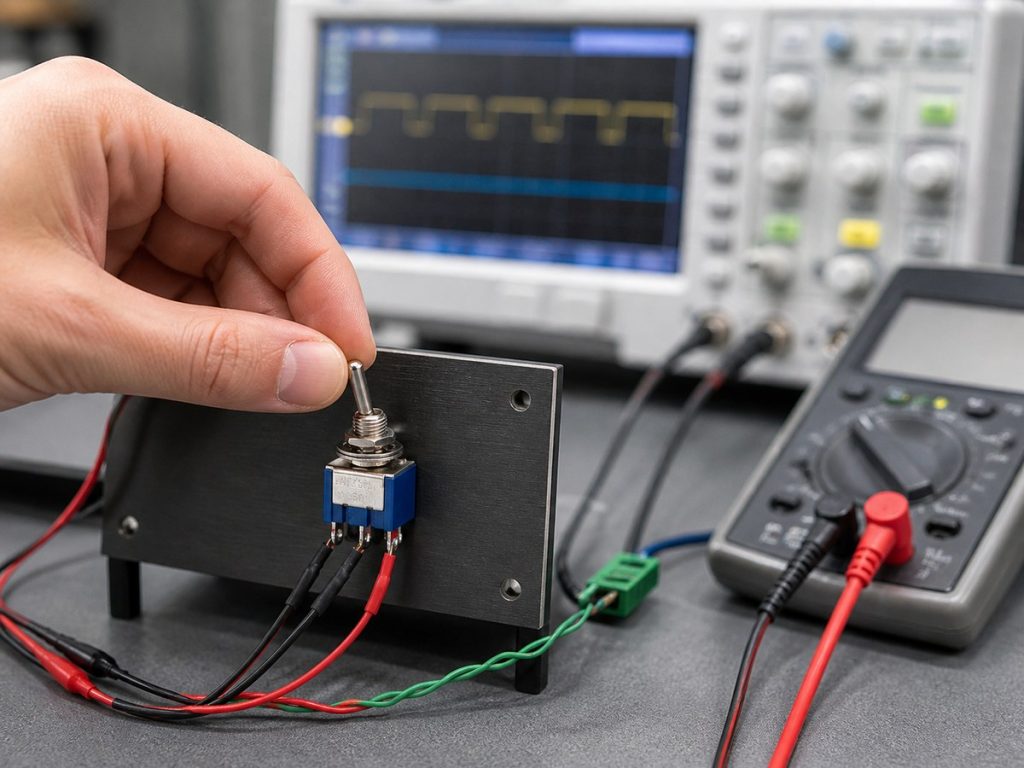
Set pass and fail criteria before testing. The plan should define contact behavior, temperature rise where relevant, function after cycling, mounting retention, and checks after vibration or environmental exposure. Keep the test fixture, circuit conditions, sample quantity, and results with the approved part record.
Certification Scope and Approved Documents
A certificate applies to a named product and a defined scope. Request the certificate or recognition file, issuing body, standard, covered model or family, report number, current status, and conditions of use.
Confirm that the approval covers the terminal, rating, and sealing option you plan to buy. For regulated equipment, the compliance team must also match component documents to the finished equipment standard. Component certification does not replace panel level compliance or wiring review.
What Should OEMs Confirm Before Issuing a Purchase Order?
The purchase order must freeze the approved configuration and state how the supplier proves that shipped material matches the approved part. Price and quantity alone do not protect a compact panel design.
Final Part Number and Approved Sample
Put the complete part number, revision, approved drawing, approved sample date, and deviation status on the PO or a controlled attachment. If the approved candidate is an XT Series Toggle Switch, cite that product family instead of a broad category name.
When no exact replacement exists, treat the change as an engineering release. Compare the old and new parts across the panel cutout, bushing, rear clearance, wiring, action, rating, environment, and approvals. Then test the revised panel with the actual load before updating drawings, labels, inspection criteria, and service records.
Forecast Volume, MOQ, and Delivery Schedule
Share the forecast, pilot quantity, production quantity, target delivery date, and demand swings that may affect component planning. Request the MOQ for the exact configuration, sample lead time, production lead time, packaging quantity, and the point at which customization changes order conditions.
Xurui Switch uses a quote-based B2B model. Because Xurui Switch needs the locked part number, drawing revision, expected volume, and required documents to quote a production order, include them in the request.
Lot Traceability and Product Change Notices
Require lot identification on the outer carton and, where package marking permits, on the inner package. The supplier should connect each shipment to its production date, material lot, inspection record, and applicable test documents. Keep the approved sample and the first production sample for comparison during long service programs.
Set a product change notice process before the first production run. Cover material, tooling, contact system, terminal plating, manufacturing site, process, labeling, packaging, and certification changes that could affect fit, function, or compliance. A part number does not control an unannounced change that alters the panel interface.
Packaging and Incoming Inspection Criteria
Specify packaging that protects lever position, terminals, and any boot or seal during transport. Loose bulk packing can bend terminals, mark finish surfaces, or mix positions and model codes. Solder terminal packaging must also avoid deformation that slows PCB or harness assembly.
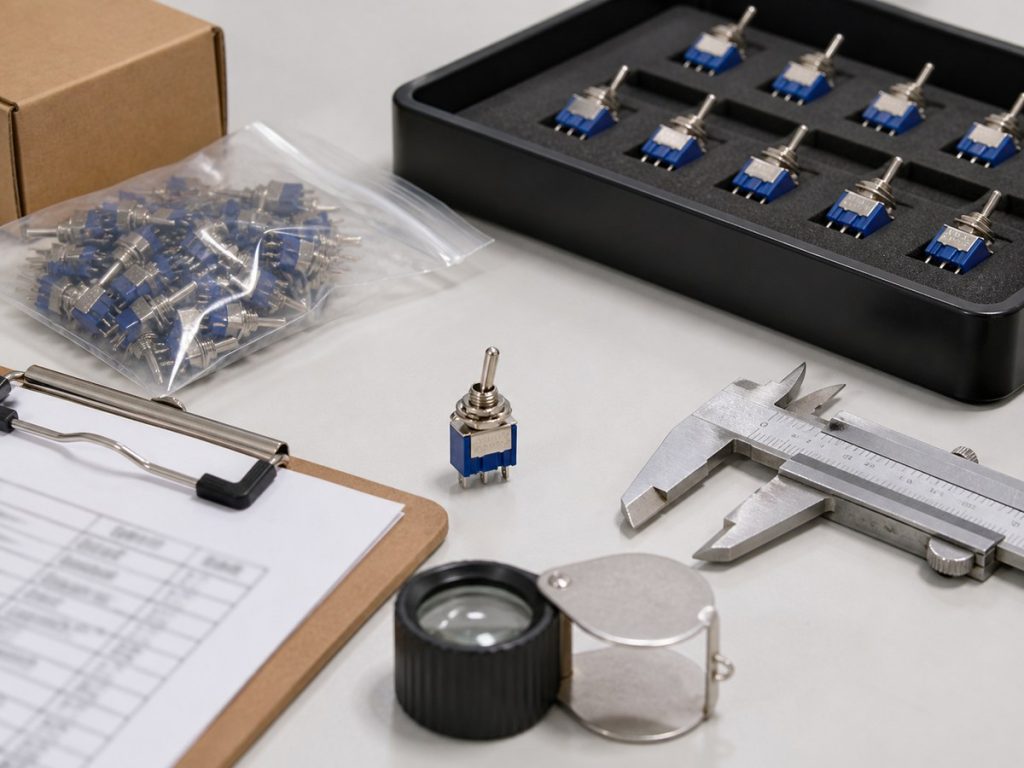
Set incoming inspection around the checks that matter to the panel: model code, appearance, terminal form, bushing thread, lever action, contact function, hardware completeness, package label, and lot code. Use an agreed sampling method and escalation path. Incoming inspection should confirm the approved part, not reconstruct an unclear PO after material arrives.
FAQs
What Is the Difference Between Miniature and Subminiature Toggle Switches?
Miniature and subminiature toggle switches are size classes, but manufacturers do not always use the terms the same way. Compare the drawing, bushing, body envelope, terminal format, pole options, and rated load. A smaller body often brings a smaller mounting interface and a narrower electrical duty range.
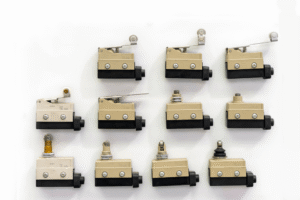
Is a Mini Toggle Switch the Same as a Micro Switch?
No. A lever operates a mini toggle switch. A micro switch uses a snap action mechanism driven by a plunger, roller, lever, or other actuator. Both can fit compact equipment, but they use different actuation methods, mounting patterns, and selection criteria.
When Should an OEM Request a Custom Mini Toggle Switch?
Request a custom mini toggle switch when a standard model cannot meet a documented panel interface, function, terminal layout, lever, marking, sealing arrangement, or electrical duty. Start with a controlled requirement sheet and drawing review. Customization should solve a defined gap, not compensate for an incomplete specification.
Can Operating Force and Lever Feel Be Specified for Production Orders?
Yes. A supplier can control operating force and lever feel when the approved design and inspection standard define them. State the required action, lever geometry, positional feel, tolerance, sample approval method, and acceptance criteria. Avoid subjective terms such as “firm” or “smooth” unless an approved sample or measurable reference defines them.
How Should OEMs Replace an Obsolete Mini Toggle Switch When No Drop-In Equivalent Is Available?
Treat an obsolete switch replacement as an engineering change. Compare the old and new parts across the panel cutout, bushing, rear clearance, wiring, action, rating, environment, and approvals. Test the revised panel with the actual load, then update drawings, labels, incoming inspection criteria, and service records before release.
XURUI Engineering Team