
If you’re using a solid state relay, knowing whether you need a heatsink is critical. Skip it when it’s needed, and you risk overheating and failure. Add it unnecessarily, and you waste space and cost. This guide explains when a heatsink is required, how to make the right call, and what to watch out for in your setup.
Why Heat Is a Big Deal for Solid State Relays
Heat Generation Is Built Into Solid State Relays
Unlike mechanical relays that simply switch on and off, solid state relays use semiconductors. These components always generate some heat due to internal voltage drops—even when the device is operating normally. For example, a 1.5-volt drop across a 10-amp load results in 15 watts of heat. That’s like running a small lightbulb inside a sealed box.
What Can Go Wrong Without Cooling
If that heat isn’t removed properly, the solid state relay can overheat. This leads to performance issues like random switching, early failure, or even melted insulation and damaged control boards. The risks go up when the solid state relay handles high current, runs continuously, or sits in a poorly ventilated enclosure.
Overheating also reduces the expected lifespan of the device. Even if it doesn’t fail immediately, long-term exposure to high temperatures breaks down internal components over time.
Related Reading: How Does a Solid-State Relay Work
Key Factors That Tell You Whether a Heatsink Is Needed
Load Current Is the First Indicator
The higher the current running through the solid state relay, the more heat it produces. Low-current solid state relays—under 2 amps—often don’t need extra cooling. But as current increases beyond 5 or 10 amps, the risk of overheating grows quickly. If your relay will carry a steady, high load, you’ll almost always need a heatsink.
Ambient Temperature Matters Too
Your working environment plays a role. If your control panel is exposed to hot air or direct sunlight—or located in a factory where ambient temps exceed 30°C—then the same relay will run hotter than in an air-conditioned room. In these cases, even moderate loads might require a heatsink.
Enclosure Design Affects Heat Dissipation
If the relay is installed in a tight, sealed box with little airflow, heat has nowhere to go. Even a low-power solid state relay can run too hot in a poorly ventilated space. A heatsink provides passive cooling, helping draw heat away from the solid state relay and into the surrounding air.
Use Pattern and Duty Cycle
Is your solid state relay switching a high-power load continuously? Or does it only operate a few times per hour? Intermittent operation gives the relay time to cool down, reducing the need for external cooling. Continuous loads—or relays that switch rapidly, like in PWM control—generate consistent heat and need stronger thermal management.
Manufacturer Recommendations and Datasheets
Don’t guess—read the datasheet. Most manufacturers clearly state the conditions under which a heatsink is required. Look for sections that specify maximum current with and without a heatsink, or thermal resistance values. If the relay is rated for 25 amps with a heatsink, using it without one could limit you to only 5 or 10 amps safely.
Related Reading: What Is the Life Expectancy of a Solid State Relay?
How to Choose the Right Heatsink for a Solid State Relay
Start With Power Dissipation
You can estimate the heat your solid state relay will produce by multiplying the voltage drop across the device by the load current. For example, if the relay drops 1.5 volts and carries 10 amps, that’s 15 watts of heat that must be managed.
Understand Thermal Resistance
Every heatsink has a thermal resistance value, measured in degrees Celsius per watt (°C/W). The lower this number, the better it is at cooling. To select the right heatsink, calculate how much heat needs to be removed and how far above room temperature the solid state relay can safely operate.
Don’t Forget the Thermal Interface
Between the solid state relay and the heatsink, use a thermal pad or paste. This step improves heat transfer dramatically. Without it, air gaps and uneven surfaces reduce cooling efficiency, which can cause the relay to run hotter than expected.
Other Cooling Options to Consider
Integrated Heatsink Solid State Relays
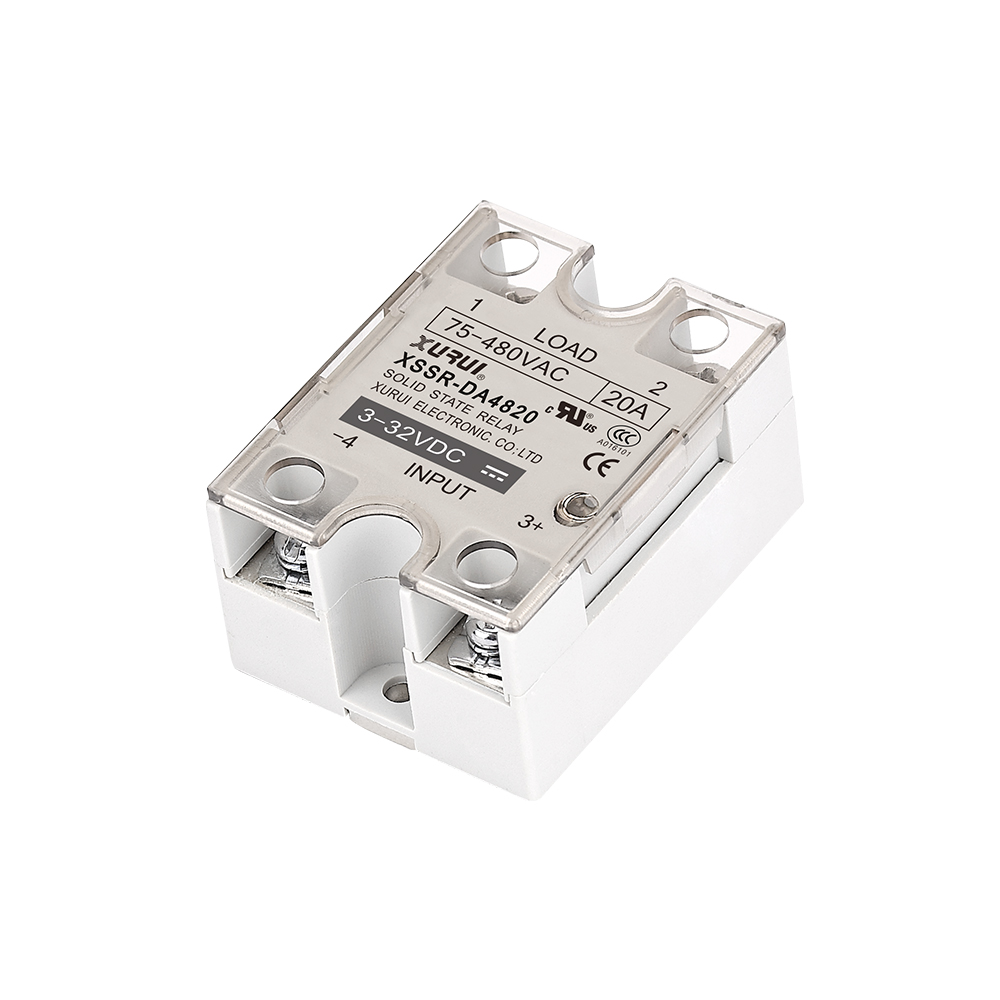
Some solid state relays come with built-in heatsinks. These models are ideal for users who want a plug-and-play solution. But even integrated models still need proper airflow—especially in enclosures without ventilation.
Active Cooling With Fans
For high-current or high-density setups, consider adding a fan to keep air moving across the heatsink. Active cooling is especially useful in panels with multiple solid state relays or devices that run near their thermal limit.
Better Enclosure Design
If space allows, mounting the solid state relay on a metal panel, increasing spacing between components, or cutting ventilation slots can help reduce heat buildup. Good system design can reduce or even eliminate the need for large heatsinks.
Final Thoughts
Solid state relays are reliable, but only when heat is properly managed. If your solid state relay handles high current, runs continuously, or sits in a warm or enclosed space, a heatsink isn’t optional—it’s essential. Always check the datasheet, evaluate your environment, and think long-term. When in doubt, adding a heatsink is a smart and low-cost way to protect your system.
XURUI Engineering Team