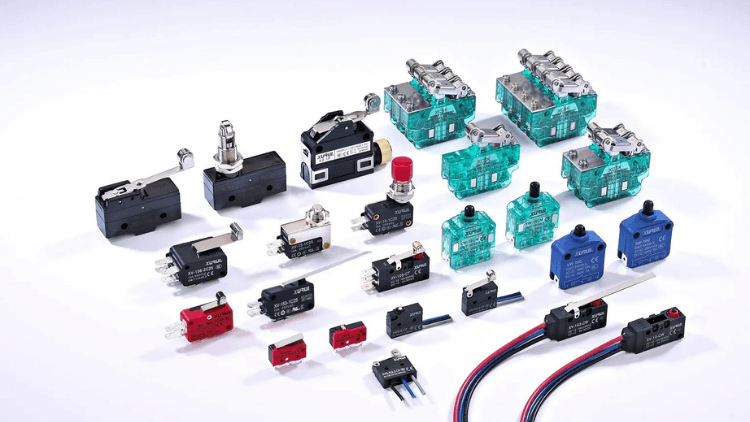
A Micro Switch can look simple, but the actuator type changes how it feels, triggers, and fits into a device. Lever, roller, pin plunger, and hinge actuators all respond differently to force, movement, and mounting direction. Choosing the wrong actuator can lead to missed signals, early wear, or poor installation fit. This guide explains common Micro Switch actuator types and how to choose the right one for your application.
What Is A Micro Switch Actuator?
A Micro Switch actuator is the part that receives physical movement and transfers that movement to the internal switching mechanism. When the actuator is pressed, pushed, rolled, or moved by another object, it causes the Micro Switch contacts to open or close.
In simple terms, the actuator is the “touch point” between the outside mechanical movement and the inside electrical circuit. A machine part, door, cam, lever, button, float, or sliding mechanism may all press against the actuator.
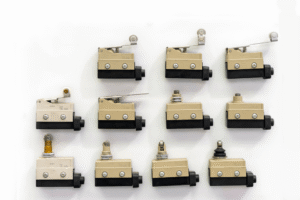
The actuator type matters because it affects three important things: how much force is needed, how much travel is allowed, and how accurately the switch responds. A compact machine may need a short pin plunger. A moving cam may work better with a roller lever. A door detection system may need a longer lever that can tolerate slight position differences.
Why Actuator Type Matters When Choosing A Micro Switch
It Affects Operating Force
Different actuators require different amounts of force to trigger the Micro Switch. A pin plunger usually needs direct pressure and may feel firmer. A long lever can reduce the force needed because it gives mechanical advantage.
If the actuator requires too much force, the moving part may not press it fully. If it is too sensitive, the switch may trigger too easily. The correct operating force helps the Micro Switch work reliably without stressing the device.
It Affects Mounting Flexibility
Some applications allow direct vertical movement. Others involve sliding, rotating, or angled contact. The actuator must match the direction of movement.
For example, a pin plunger works well when the force comes straight down. A lever is better when the force comes from the side or when the object does not line up perfectly with the switch body. A roller lever works well when a moving part passes across the switch instead of pressing it directly.
It Affects Service Life
A poorly matched actuator can wear out faster. If a moving part scrapes across a pin plunger, the switch may experience side pressure and early mechanical damage. If a roller actuator is used, the moving part can pass more smoothly with less friction.
Choosing the right actuator protects both the Micro Switch and the equipment around it.
Pin Plunger Micro Switch
How A Pin Plunger Works
A pin plunger actuator has a small button or pin on top of the Micro Switch body. It is designed for direct pressure. When the pin is pressed, the internal mechanism snaps and changes the contact state.
This actuator type is compact, simple, and accurate. It is commonly used when the moving part can press directly on the switch in a controlled position.
Best Uses For Pin Plunger Actuators
A pin plunger Micro Switch is often used in devices where space is limited and the contact point is precise. Common examples include control panels, small appliances, office equipment, vending machines, and safety interlock mechanisms.
It is also useful when the device needs a clear and repeatable actuation point. Since the pin moves in a short and direct path, it can provide accurate switching when properly installed.
What To Watch Out For
A pin plunger does not handle side force very well. If the moving part pushes from an angle or slides across the pin, the actuator may wear or stick over time.
For best performance, the force should be applied straight to the plunger. If the application involves sliding or rotating movement, a lever or roller actuator may be a better choice.
Straight Lever Micro Switch
How A Straight Lever Works
A straight lever actuator adds a metal or plastic arm to the Micro Switch. Instead of pressing directly on the small button, the moving part presses the lever. The lever then transfers force to the internal switch mechanism.
This design gives more flexibility than a pin plunger. The lever can be contacted at different points along its length, which makes installation easier in applications where exact alignment is difficult.
Best Uses For Straight Lever Actuators
A straight lever Micro Switch is a good choice for general position detection, door detection, limit control, and machine movement sensing. It works well when the moving object has a larger travel range or does not hit the switch at a perfectly fixed point.
For example, in an appliance door, the closing movement may not always be perfectly aligned. A lever provides more tolerance, allowing the Micro Switch to trigger reliably even with small variations.
What To Watch Out For
A longer lever usually reduces the force needed to operate the switch, but it may also increase the amount of movement required. If the lever is too long or too flexible, it may bend or fail to trigger cleanly.
The lever length and shape should match the movement path of the equipment.
Roller Lever Micro Switch
How A Roller Lever Works
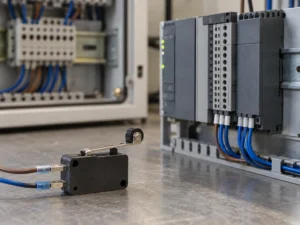
A roller lever actuator is similar to a straight lever, but it has a small wheel at the end. The roller allows a moving part to pass over the actuator smoothly.
Instead of scraping across a flat lever, the object rolls over the wheel. This reduces friction, wear, and impact stress.
Best Uses For Roller Lever Actuators
A roller lever Micro Switch is often used with cams, sliding parts, rotating mechanisms, conveyors, and machinery where the actuator is contacted repeatedly by a moving surface.
It is a practical choice when the object moves across the switch from one direction to another. The roller helps reduce drag and allows smoother operation.
For industrial equipment, a roller lever can improve durability because it handles repeated movement better than a simple lever in many sliding applications.
What To Watch Out For
The roller must line up with the moving part. If the roller is hit too hard, from the wrong direction, or at a poor angle, the actuator may wear or break.
It is also important to consider the movement speed. Fast moving mechanisms may need a Micro Switch with a suitable actuator strength, mounting position, and electrical rating.
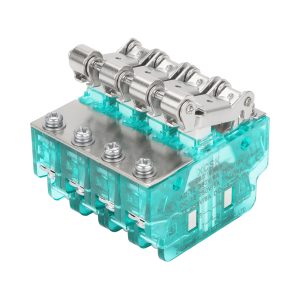
Simulated Roller Lever Micro Switch
How A Simulated Roller Works
A simulated roller lever looks like a lever with a curved end instead of an actual wheel. The curved tip helps the moving object glide over the actuator more smoothly than a flat lever.
It does not roll like a true roller, but it can still reduce sharp contact and improve movement compared with a standard straight lever.
Best Uses For Simulated Roller Levers
This actuator type is useful when a full roller is not necessary or when a lower cost option is preferred. It can be used in appliances, light duty machines, access panels, and mechanical detection systems.
A simulated roller lever may be enough when the movement is not too fast, the load is not too heavy, and the contact surface is smooth.
What To Watch Out For
Since the end does not actually rotate, there is still some sliding friction. For high speed or high cycle applications, a true roller lever may provide better long term performance.
Hinge Lever Micro Switch
How A Hinge Lever Works
A hinge lever actuator is attached to the Micro Switch body with a hinge style structure. It gives the actuator a controlled pivot point and allows it to move in a predictable path.
This design is often used when the switch needs a longer actuation area or when the mechanical contact point moves in an arc.
Best Uses For Hinge Lever Actuators
A hinge lever Micro Switch can work well in door systems, covers, access panels, and equipment where the actuator is pressed by a swinging or rotating part.
It gives more reach than a pin plunger and can help the switch respond to movement that is not perfectly vertical.
What To Watch Out For
The hinge structure must not be overloaded. If the moving part presses too far or applies excessive force, the lever may bend or the Micro Switch may be damaged.
The mounting design should include enough clearance and should avoid forcing the actuator beyond its rated travel.
Roller Plunger Micro Switch
How A Roller Plunger Works
A roller plunger combines a direct plunger style with a small roller. Instead of a simple button, the actuator includes a roller at the contact point.
This design allows more direct actuation while still reducing friction when a moving part slides over the switch.
Best Uses For Roller Plunger Actuators
A roller plunger Micro Switch is useful when space is limited but the actuator still needs to handle some sliding contact. It can be found in compact machines, automation devices, and position detection systems.
It is often selected when a standard pin plunger may experience too much friction, but a long lever would take up too much space.
What To Watch Out For
The roller plunger still needs proper alignment. It is more tolerant than a plain pin plunger, but it is not as flexible as a long roller lever.
Use it when the movement path is controlled and the available space is limited.
Flexible Rod Actuator Micro Switch
How A Flexible Rod Works
A flexible rod actuator uses a thin wire or spring like rod to detect movement from different directions. The rod can bend when it is touched, pushed, or brushed by a moving object.
This makes it useful in applications where the contact point is less predictable.
Best Uses For Flexible Rod Actuators
A flexible rod Micro Switch is often used for broad area detection, light object sensing, and mechanical limit detection where the object may not hit the same spot every time.
It can work well in some packaging machines, counting systems, material handling equipment, and light duty automation setups.
What To Watch Out For
A flexible rod is not designed for heavy force. If the object applies too much pressure, the rod may bend permanently or fail to return correctly.
It should be used where the actuation force is light and the purpose is detection, not mechanical stopping.
How To Choose The Right Micro Switch Actuator Type
Check The Direction Of Movement
Start by looking at how the moving part approaches the switch. If the force is straight and controlled, a pin plunger may work well. If the force comes from the side, a lever or roller lever may be better.
If the object slides across the switch, choose a roller type to reduce friction. If the object swings or rotates, a hinge lever may provide better alignment.
Check The Available Space
Some actuators need more room than others. A pin plunger is compact, while a long lever needs more clearance. A roller lever also needs space for the roller to move safely.
Before choosing a Micro Switch, check the mounting area, actuator travel, and nearby parts. The switch should fit without being forced into an awkward position.
Check The Required Operating Force
If the actuator is too stiff, the machine part may not activate it reliably. If it is too light, vibration or small movement may trigger the switch too easily.
Long levers usually require less force. Pin plungers usually require more direct force. Roller actuators help reduce friction but still need correct pressure.
Check Overtravel
Overtravel is the extra movement after the switch has already operated. Some mechanical systems continue moving after the switch is triggered. If the actuator cannot handle that extra movement, the Micro Switch may be damaged.
Lever and roller actuators often provide more tolerance for overtravel than a short pin plunger. This makes them useful in equipment where movement is not perfectly controlled.
Check The Environment
Dust, moisture, oil, vibration, and temperature can affect actuator performance. Industrial equipment may need a sealed Micro Switch or a stronger actuator design.
For harsh environments, choose a switch with the right housing, terminals, actuator material, and protection rating.
Related Reading: How to Tell If a Micro Switch Is Bad or Faulty in Quality?
Common Mistakes To Avoid
Choosing By Shape Only
A Micro Switch actuator should not be selected only because it looks similar to the old one. The actuator type, operating force, travel distance, mounting position, and electrical rating all matter.
Ignoring Side Force
Pin plungers are not designed for strong side pressure. If the movement is not straight, a lever or roller type is usually safer.
Using A Lever That Is Too Long
A long lever can reduce operating force, but it may also bend, vibrate, or require more travel. The lever should fit the actual movement range of the equipment.
Forgetting About Repeatability
If the switch must trigger at the same point every time, choose an actuator that provides stable and repeatable movement. Poor alignment can make even a good Micro Switch unreliable.
Final Thoughts
The actuator type has a major impact on how a Micro Switch performs in real equipment. Pin plungers are compact and precise, levers offer mounting flexibility, roller levers reduce friction, and flexible rods handle broader detection areas. The best choice depends on movement direction, available space, operating force, overtravel, and environment. Matching the actuator to the application helps the Micro Switch work more reliably and last longer.
XURUI Engineering Team