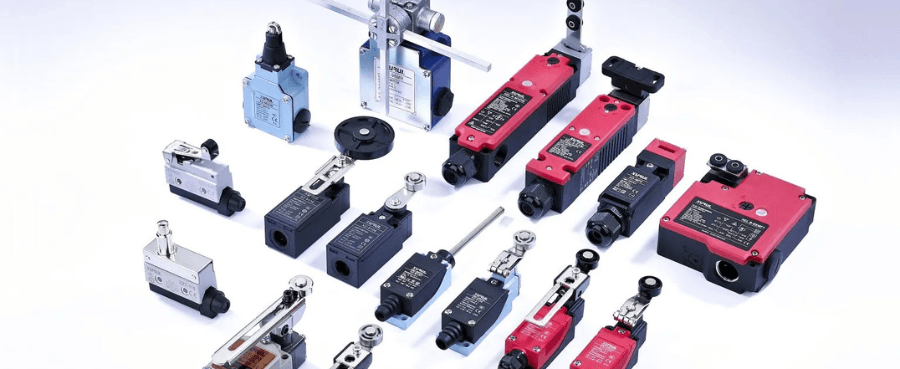
A Limit Switch and a proximity sensor can both detect position, movement, or the presence of an object. However, they work in very different ways. A Limit Switch needs physical contact, while a proximity sensor detects objects without touching them. Choosing the wrong one can cause poor accuracy, early wear, or unstable machine operation. This guide explains the differences, advantages, and best use cases so you can choose the right option for your system.
What Is A Limit Switch?
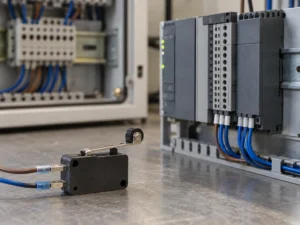
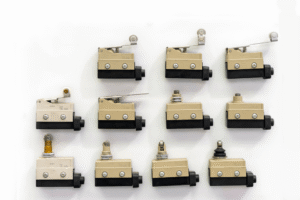
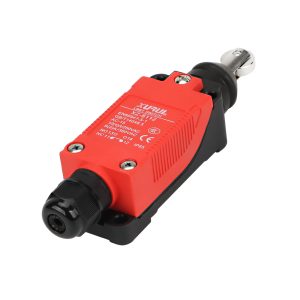
A Limit Switch is an electromechanical device used to detect the presence, position, or end point of a moving part. It usually has an actuator, such as a lever, roller, plunger, or arm. When an object touches the actuator, the internal contacts open or close the circuit.
This simple design makes the Limit Switch widely used in industrial equipment, conveyors, elevators, doors, packaging machines, CNC machines, and safety systems. It is often used to confirm that a machine part has reached a specific position.
For example, a Limit Switch may tell a machine when a door is fully closed, when a conveyor item has reached the end of a track, or when a moving platform has reached its travel limit.
Related Reading: What Are The 6 Types Of Limit Switches?
What Is A Proximity Sensor?
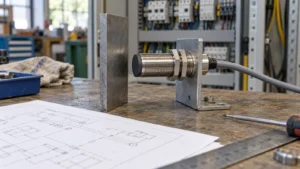
A proximity sensor detects an object without physical contact. Instead of being pressed by a moving part, it uses a sensing field. Depending on the sensor type, it may detect metal, plastic, liquid, or other materials.
Common types include inductive proximity sensors, capacitive proximity sensors, photoelectric sensors, and magnetic sensors. Inductive sensors are often used for metal detection. Capacitive sensors can detect both metal and nonmetal materials. Photoelectric sensors use light to detect objects.
Because a proximity sensor has no physical contact with the target, it can be useful in high speed, high cycle, or dirty environments where mechanical contact may cause wear.
Limit Switch Vs Proximity Sensor: The Basic Difference
Contact Detection Vs Non Contact Detection
The biggest difference is how the device detects an object. A Limit Switch requires direct contact. The moving object must physically press or move the actuator.
A proximity sensor detects objects without touching them. This means there is no mechanical impact between the sensor and the target.
If your system needs a clear mechanical confirmation point, a Limit Switch may be a better choice. If you want to avoid contact and reduce wear, a proximity sensor may be more suitable.
Mechanical Output Vs Electronic Output
A Limit Switch usually uses mechanical contacts to open or close a circuit. This makes it easy to understand, test, and wire in many control systems.
A proximity sensor usually provides an electronic output. It may require the correct voltage, wiring type, output signal, and controller compatibility. For example, some sensors use NPN or PNP outputs, and the system must match that signal type.
For simple circuits, a Limit Switch may be easier to integrate. For advanced automation, a proximity sensor may offer more flexible detection options.
Advantages Of Using A Limit Switch
Simple And Reliable Design
One major advantage of a Limit Switch is its simple structure. Since it operates through physical movement, technicians can easily see how it works. This makes troubleshooting easier.
If the actuator is pressed and the circuit changes state, the switch is working. If not, the issue can often be found by checking alignment, wiring, actuator movement, or contact wear.
This simplicity is valuable in industrial systems where maintenance teams need fast diagnosis and repair.
Clear Position Confirmation
A Limit Switch is often used when a system needs a definite mechanical stop or position confirmation. Because it is physically triggered, it can provide a clear signal when a part reaches a specific location.
This is useful in machine travel limits, access doors, safety covers, lift systems, and mechanical interlocks. In these applications, the system may need to know that a part has physically reached the correct point.
Works Well In Many Electrical Circuits
A Limit Switch can often switch AC or DC circuits, depending on its rating. It can be used in control circuits, signal circuits, and some power circuits.
This makes it a flexible option for many basic machine control applications. As long as the voltage, current, and load type match the switch rating, the Limit Switch can provide dependable operation.
Lower Cost In Many Applications
For simple position detection, a Limit Switch is often more cost effective than a proximity sensor. It does not always require extra electronics, special wiring, or complex setup.
This can make it a smart choice for equipment where the target moves slowly, contact is acceptable, and environmental conditions are not too severe.
Disadvantages Of Using A Limit Switch
Mechanical Wear
Because a Limit Switch depends on physical contact, the actuator and internal contacts can wear over time. In high cycle applications, repeated impact can shorten service life.
Wear may show up as loose actuators, inconsistent switching, contact damage, or delayed response. If the machine runs continuously, maintenance and replacement should be considered.
Alignment Is Important
A Limit Switch must be mounted so that the moving part contacts the actuator correctly. If the actuator is hit at the wrong angle, the switch may fail to trigger or may become damaged.
Poor alignment can also cause side loading, bending, or excessive overtravel. These problems can reduce reliability and shorten the life of the switch.
Not Ideal For Very High Speed Detection
A Limit Switch can work in many moving systems, but it may not be the best option for very high speed detection. If the target moves too fast, the actuator may experience impact stress or fail to respond consistently.
In high speed counting, sorting, or automated production lines, a non contact sensor may perform better.
Advantages Of Using A Proximity Sensor
No Physical Contact
The biggest advantage of a proximity sensor is non contact detection. Since the target does not touch the sensor, there is little or no mechanical wear.
This is useful for high cycle machinery, fast moving objects, and systems where repeated contact would damage the sensor or the target.
Good For High Speed Applications
Proximity sensors can often detect objects quickly and repeatedly. This makes them useful in automated production lines, conveyors, robotics, packaging systems, and counting applications.
Because there is no actuator to move, the response can be faster and more consistent than a mechanical switch in certain applications.
Better For Harsh Or Dirty Environments
Some proximity sensors are sealed and can work well in dusty, oily, wet, or dirty environments. Since they do not need a moving actuator, there are fewer mechanical parts exposed to contamination.
In environments where dust or debris could block a Limit Switch actuator, a sealed proximity sensor may provide better long term reliability.
Flexible Detection Options
Different proximity sensors can detect different materials. Inductive sensors detect metal. Capacitive sensors can detect many materials. Photoelectric sensors can detect objects over longer distances.
This gives engineers more options when the target material, distance, or mounting position makes physical contact difficult.
Disadvantages Of Using A Proximity Sensor
Higher Cost
A proximity sensor is often more expensive than a basic Limit Switch. It may also require specific wiring, power supply, mounting brackets, and controller compatibility.
For simple mechanical position detection, the extra cost may not be necessary.
More Sensitive To Setup Conditions
A proximity sensor must be selected based on sensing distance, target material, sensor type, output signal, and environment. If any of these factors are wrong, the sensor may not detect reliably.
For example, an inductive sensor works well for metal targets but will not detect plastic. A capacitive sensor may detect more materials but can be affected by moisture, dust, or nearby objects.
Requires Electrical Compatibility
Unlike many mechanical switches, proximity sensors usually need power and electronic signal matching. The system must support the correct voltage and output type.
If the control system expects a dry contact signal, a Limit Switch may be easier to use. If the system accepts sensor outputs, a proximity sensor may be a better fit.
When A Limit Switch Is Better
When You Need Physical Position Confirmation
Choose a Limit Switch when your system needs confirmation that a part physically reached a certain position. This is common in doors, gates, machine covers, end stops, and travel limits.
A proximity sensor may detect that an object is nearby, but a Limit Switch confirms contact at a specific mechanical point.
When The System Is Simple
A Limit Switch is often better for simple control circuits. It is easy to wire, easy to test, and easy to replace.
If the application does not require non contact detection, high speed sensing, or special environmental protection, a Limit Switch may be the more practical choice.
When Budget Matters
For cost sensitive machines, a Limit Switch can offer reliable performance without adding unnecessary complexity. It is especially useful when the movement is slow, repeatable, and easy to align.
Key Factors To Consider Before Choosing
Target Material
If the target is metal, an inductive proximity sensor may work well. If the target is plastic, wood, liquid, or glass, another type of sensor may be needed. A Limit Switch can detect almost any solid object as long as the object can physically press the actuator.
Detection Distance
A Limit Switch requires direct contact. A proximity sensor has a defined sensing range. If the object cannot touch the device, a proximity sensor is usually the better choice.
Operating Environment
For clean and controlled environments, either option may work. For dusty, wet, oily, or high vibration environments, compare enclosure rating, sealing, actuator design, and sensor protection level.
Electrical Requirements
Check voltage, current, load type, wiring style, and output signal. A Limit Switch may be easier for simple circuits. A proximity sensor may require more careful matching with PLCs or controllers.
Maintenance Expectations
If easy replacement and simple troubleshooting matter most, a Limit Switch may be preferred. If reducing mechanical wear is more important, a proximity sensor may offer better long term performance.
Final Thoughts
A Limit Switch is usually better for simple, low cost, contact based position detection. It provides clear mechanical confirmation and is easy to install and troubleshoot. A proximity sensor is better when non contact detection, high speed operation, or reduced wear is more important. The best choice depends on target material, movement speed, environment, sensing distance, wiring needs, and maintenance goals.
XURUI Engineering Team