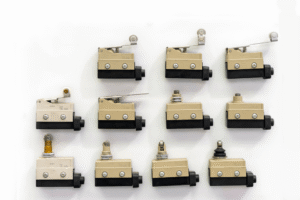
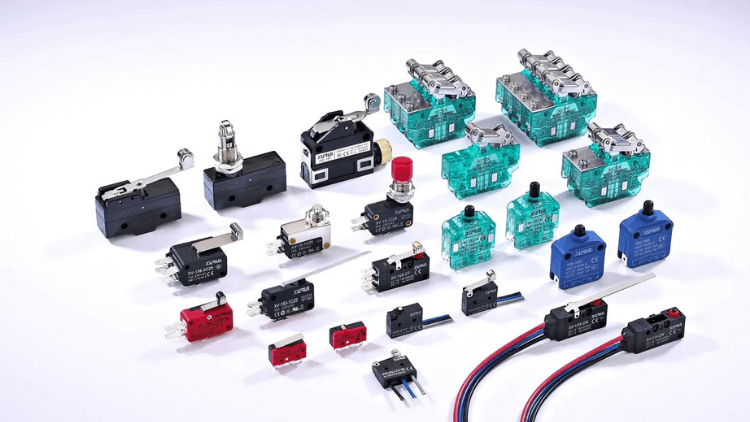
A Micro Switch may look simple from the outside, but its contact material has a major impact on how it performs. The contact material affects electrical conductivity, signal stability, contact resistance, durability, and service life. Choosing the wrong material can lead to unstable switching, early wear, or failure under load. This guide explains how Micro Switch contact materials affect performance and how to choose the right option for different applications.
Why Contact Materials Matter In A Micro Switch
A Micro Switch works by opening or closing an electrical circuit when its actuator is pressed, released, or moved by a mechanical force. Inside the switch, the contacts touch and separate every time the switch operates. These contacts carry current, respond to mechanical movement, and deal with heat, wear, oxidation, and sometimes electrical arcing.
Because the contacts are the actual switching point, their material directly affects performance. A good contact material helps the Micro Switch provide stable electrical output over repeated use. A poor match between contact material and load can create problems such as high contact resistance, weak signal transmission, contact welding, surface oxidation, or short electrical life.
In simple terms, the contact material decides how well the Micro Switch handles the real working conditions of the circuit.
How Contact Materials Affect Micro Switch Performance
Electrical Conductivity
One of the most important jobs of a contact material is to conduct electricity efficiently. When contact resistance is low, current can pass through the Micro Switch smoothly. This helps the circuit receive a stable signal or deliver reliable power.
If the contact material has poor conductivity or the contact surface becomes damaged, resistance may increase. In low voltage circuits, even a small increase in resistance can cause unstable signals. In higher current circuits, increased resistance may create heat and shorten switch life.
This is why contact material should always be matched to the voltage and current of the application.
Contact Resistance
Contact resistance refers to the electrical resistance at the point where the two contact surfaces meet. In a well designed Micro Switch, this resistance should stay low and stable.
Over time, contact resistance can increase because of oxidation, contamination, arcing, or surface wear. When that happens, the switch may not perform consistently. In signal circuits, the system may receive incomplete or unstable input. In power circuits, the switch may heat up or fail earlier than expected.
Contact materials such as gold plated contacts are often used for low level signals because they resist oxidation and help maintain stable contact resistance.
Electrical Life
Electrical life is the number of switching cycles a Micro Switch can perform while carrying an electrical load. This is different from mechanical life, which is measured without electrical load or under very light load.
The contact material plays a key role in electrical life. When a switch opens or closes under load, the contact surface may experience small sparks or arcs. Over many cycles, this can damage the surface. Some materials handle arcing and wear better than others.
For example, silver based contacts are often used for general power switching because they provide strong conductivity. For more demanding loads, special silver alloys may offer better resistance to welding, erosion, and heat.
Signal Stability
In control systems, sensors, and electronic devices, a Micro Switch may be used to send a small signal instead of switching a heavy load. In these cases, signal stability is critical.
Low level signals do not always have enough current to break through oxidation on the contact surface. If the contact material oxidizes easily, the signal may become unstable. This can cause false readings, missed signals, or intermittent operation.
Gold plated contacts are often used in low current applications because gold resists oxidation very well. This helps the Micro Switch maintain a cleaner and more reliable signal path.
Common Contact Materials Used In A Micro Switch
Silver Alloy Contacts
Silver alloy is one of the most common contact materials used in a Micro Switch. It offers excellent electrical conductivity and works well for many general purpose applications.
Silver alloy contacts are often used in home appliances, industrial equipment, vending machines, automotive devices, power tools, and control systems. They are suitable for many medium current applications and provide a good balance between performance and cost.
However, silver can oxidize or tarnish over time, especially in low current circuits. In higher current circuits, the switching action can help clean the contact surface. In very low current circuits, that cleaning effect may not happen, which can lead to signal problems.
Gold Plated Contacts
Gold plated contacts are mainly used for low voltage and low current signal applications. Gold has strong corrosion resistance and does not oxidize easily, making it ideal for sensitive electronic signals.
A Micro Switch with gold plated contacts is often used in control boards, test equipment, communication devices, medical devices, and precision instruments. These applications usually need clean and stable switching rather than high current capacity.
The limitation is that gold plating is usually thin. It is not designed for heavy current, frequent arcing, or high load switching. If gold plated contacts are used in the wrong circuit, the plating may wear out quickly.
Silver Nickel Contacts
Silver nickel contacts are used when better wear resistance is needed. Compared with standard silver contacts, silver nickel can provide improved durability under repeated switching.
This material is often used in industrial controls, automation equipment, automotive applications, and devices that require frequent operation. It provides a practical balance of conductivity, wear resistance, and long term stability.
Silver nickel may be a good choice when the Micro Switch needs to handle moderate electrical loads and operate many times over its service life.
Silver Tin Oxide Contacts
Silver tin oxide is often used for applications where the switch may face higher electrical stress. It has good resistance to contact welding and arc erosion.
This material can be useful when the Micro Switch controls inductive loads such as motors, coils, solenoids, or relays. These loads can create voltage spikes when the circuit opens, which may cause arcing at the contacts.
Silver tin oxide contacts help reduce damage from this type of stress. However, the complete circuit design still matters. For inductive loads, protective components such as diodes, snubbers, or varistors may also be needed.
Matching Contact Material To Different Applications
Low Current Signal Circuits
For low current signal circuits, gold plated contacts are often the better option. These circuits may include sensors, electronic control boards, testing systems, and communication equipment.
In these applications, the Micro Switch is not carrying much current. Its main job is to send a clean and accurate signal. Since low current may not clean the contact surface during switching, oxidation resistance becomes very important.
Gold plated contacts help keep the signal stable and reduce the chance of intermittent operation.
General Power Control
For general power control, silver alloy contacts are commonly used. These contacts work well in many appliances, machines, and control systems where the load is within the rated range of the switch.
This type of Micro Switch may be used in coffee machines, microwave doors, washing machines, vending machines, office equipment, and industrial panels. As long as the voltage, current, and load type match the switch rating, silver alloy contacts can deliver reliable performance.
Inductive Loads
Inductive loads are more demanding because they can create voltage spikes when the circuit is opened. Motors, solenoids, transformers, and relay coils are common examples.
For these applications, contact material must resist arcing and erosion. Silver tin oxide or selected silver alloy contacts may be more suitable than basic contact materials.
It is also important to use circuit protection. A DC inductive load may need a flyback diode. An AC inductive load may need an RC snubber or varistor. The right protection reduces stress on the Micro Switch and improves service life.
High Inrush Current Loads
Some loads draw a much larger current when first turned on. Lamps, power supplies, capacitive loads, and some motors can create high inrush current. This short current surge may be much higher than the normal operating current.
If the Micro Switch contact material is not suitable for this stress, the contacts may pit, weld, or wear out quickly. Buyers should look beyond the normal current rating and consider startup conditions.
For high inrush applications, choose a Micro Switch with contact materials and electrical ratings designed for that type of load.
Related Reading: Why Micro Switch Hysteresis Is the Key to Precision Control
Environmental Factors That Affect Contact Materials
Oxidation And Corrosion
Oxidation can form a film on the contact surface. This film increases contact resistance and may prevent reliable switching. Gold resists oxidation very well, while silver based contacts may tarnish in certain environments.
If the Micro Switch is used in humid, dusty, or chemically active conditions, contact material should be selected carefully. A sealed switch design may also be needed to protect the internal contacts.
Dust And Contamination
Dust, oil, moisture, and other contaminants can interfere with contact performance. If contamination reaches the contacts, the switch may produce unstable signals or fail to close properly.
In industrial equipment, outdoor devices, or appliances exposed to moisture, a sealed or protected Micro Switch can improve reliability.
Temperature
High temperature can affect contact materials, plastic housings, springs, and internal components. It may also speed up oxidation or reduce the mechanical stability of the switch.
If the Micro Switch is used near heating elements, motors, ovens, or outdoor equipment, both the contact material and the full switch temperature rating should be checked.
Vibration
Vibration can affect contact stability and terminal connections. In some applications, vibration may cause contact bounce or unstable signals.
A Micro Switch used in vehicles, machinery, or moving equipment should have suitable contact design, spring force, housing strength, and terminal structure.
Contact Material And Contact Bounce
What Contact Bounce Means
Contact bounce happens when the contacts do not settle immediately after switching. Instead, they may open and close rapidly for a very short time before reaching a stable position.
In simple power circuits, this may not matter much. In electronic control systems, contact bounce can create multiple signals from one switch action.
How Material Plays A Role
Contact bounce is affected by switch design, actuator movement, spring structure, and contact surface condition. Contact material also matters because worn, damaged, or contaminated surfaces may make signal stability worse.
For digital circuits, buyers should consider both the Micro Switch contact material and the need for software or hardware debounce design.
How To Choose The Right Micro Switch Contact Material
Start With The Load Type
The first step is to identify the load. Is the Micro Switch switching a low level signal, a general resistive load, an inductive load, or a load with high inrush current?
A low signal circuit may need gold plated contacts. A general power circuit may work well with silver alloy contacts. A motor or solenoid circuit may need stronger silver based materials and extra protection.
Check Voltage And Current Ratings
Do not select a Micro Switch by size or appearance alone. Always check the rated voltage and current. Also check whether the rating applies to AC or DC loads.
DC loads can be harder to switch because the arc may not extinguish as easily as it does in AC circuits. If the Micro Switch is used in a DC circuit, make sure the contact rating supports that condition.
Consider Minimum Load Requirements
Many buyers focus only on maximum current, but minimum load can be just as important. A switch designed for higher current may not perform well in very low current circuits if the contact material is not suitable.
For electronic signal circuits, check whether the Micro Switch is rated for low level switching.
Think About Service Life
If the switch will operate frequently, choose contact materials that support long electrical life. A switch used once a week has very different needs from a switch used thousands of times per day.
Look at both mechanical life and electrical life. The real service life depends on the load, environment, switching frequency, and contact material.
Common Mistakes To Avoid
Choosing The Cheapest Contact Material
A low cost Micro Switch may be acceptable for simple applications, but it can become expensive if it fails early in a critical system. Contact material should match the job, not just the budget.
Using Gold Contacts For Heavy Loads
Gold plated contacts are excellent for small signals, but they are not designed for heavy loads. Using them in high current circuits can damage the plating and reduce reliability.
Using Standard Contacts For Sensitive Signals
A standard silver contact may work well for power loads, but it may not be ideal for very low current signals. If the signal is small, oxidation can cause unstable switching.
Ignoring Circuit Protection
Even a good contact material can fail early if the circuit has strong arcing, voltage spikes, or inrush current. Proper protection helps the Micro Switch last longer.
Final Thoughts
Micro Switch contact materials affect conductivity, contact resistance, oxidation resistance, signal stability, and electrical life. Silver alloy contacts are suitable for many general loads, while gold plated contacts are better for low level signals. For inductive or high stress circuits, stronger silver based materials may be needed. The best choice depends on load type, current level, switching frequency, and operating environment.
XURUI Engineering Team