A switch is one of the most common electrical components in daily life. It is used to turn on lights, start machines, control appliances, and manage electronic devices. But when people search for the difference between a switch and a micro switch, they are usually not asking a simple vocabulary question. They want to know which component is better for a product, machine, repair project, or industrial control system.
The simple answer is that a switch is a broad category of devices used to open or close an electrical circuit. A micro switch is a specific type of switch that uses a fast snap action mechanism and can be triggered by very small movement or light force.
This difference matters in real applications. A standard switch is often used when a person directly controls a device. A micro switch is often used when a machine, door, lever, cover, or moving part needs to trigger a circuit automatically and reliably.
Understanding the difference can help engineers, manufacturers, maintenance teams, and buyers choose the right component for power control, position detection, safety confirmation, and automatic operation.
What Is a Standard Switch?
A Switch Opens and Closes a Circuit
A standard switch controls whether electricity can flow through a circuit. When the switch is closed, the circuit is complete and current can flow. When the switch is open, the circuit is broken and current stops.
This basic function appears in many forms. A wall switch controls lighting. A rocker switch controls power on appliances. A push button switch starts or stops a device. A rotary switch changes settings. A toggle switch turns equipment on or off.
The important point is that the word switch describes a large family of components. These components can look different, move differently, and serve different purposes, but their main job is the same. They control the electrical path.
A Switch Is Often Used for Direct Control
Many standard switches are designed for direct human operation. A person presses a button, flips a toggle, slides a control, or turns a knob. The switch is usually selected based on how the user interacts with the product.
For example, a coffee maker may use a rocker switch because it is easy to press. A flashlight may use a push button switch because it fits a handheld design. A control panel may use toggle switches because they are visible and easy to manage.
In these cases, the switch is part of the user experience. The feel, size, appearance, and position all matter. A standard switch is not only an electrical part. It can also be part of the product design.
What Is a Micro Switch?
A Micro Switch Detects Small Movement
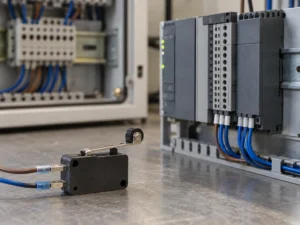
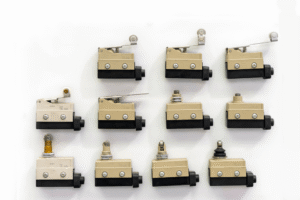
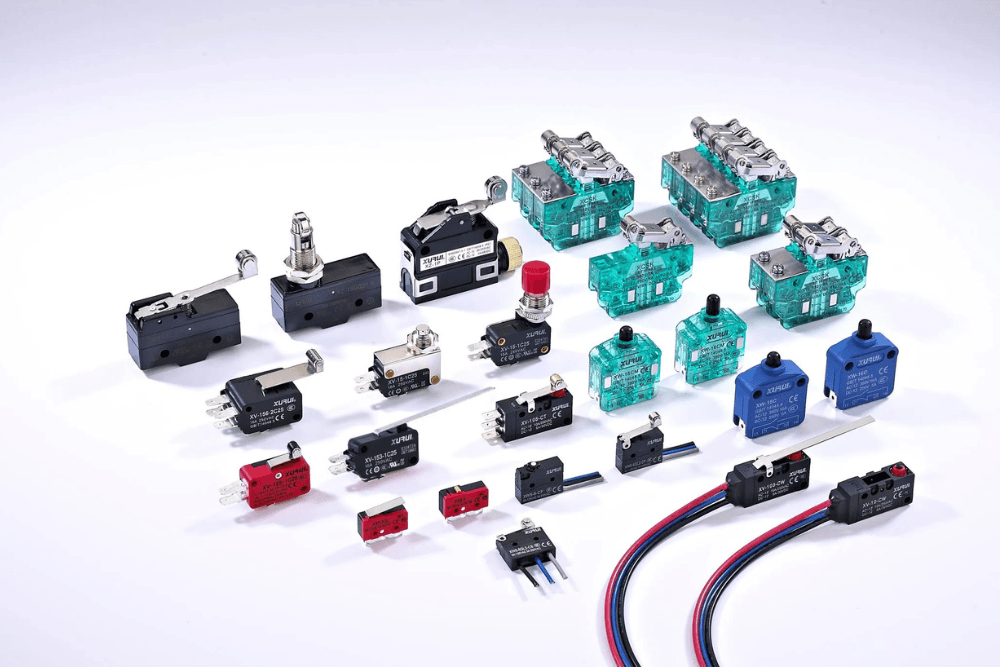
A micro switch is a small and sensitive switch that responds to very small mechanical movement. It usually includes an actuator, such as a button, lever, or roller lever. When the actuator reaches a certain point, the internal contacts change state quickly.
The word micro does not only refer to size. It also points to the small amount of movement or force needed to activate the switch. A micro switch can respond to a slight mechanical action and still produce a clear electrical signal.
This makes micro switches useful in applications where accurate detection is needed. They can detect whether a door is closed, whether a machine part has reached a limit, whether a cover is in place, or whether an object has pressed against a lever.
A Micro Switch Uses Snap Action
The snap action mechanism is one of the biggest differences between a micro switch and many ordinary switches. In a standard switch, the contacts may move more directly with the button or lever. In a micro switch, internal spring force causes the contacts to change quickly once the actuator reaches a set position.
This quick action helps create consistent switching. Even if the actuator moves slowly, the electrical contact changes rapidly. That improves signal clarity and reduces unstable contact behavior.
In real products, this matters a lot. A washing machine door lock, vending machine mechanism, printer tray, microwave door, or safety interlock cannot depend on vague switching. It needs a clear signal at the right moment. That is where a micro switch is especially useful.
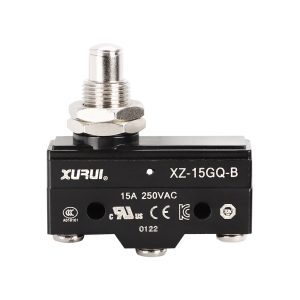
Switch vs Micro Switch: Main Differences
A Switch Is a Category, While a Micro Switch Is a Type
The easiest way to understand the difference is that a switch is the general category, while a micro switch is one specific type inside that category.
All micro switches are switches, but not all switches are micro switches. Toggle switches, rocker switches, slide switches, and push button switches are also types of switches. They may control circuits, but they do not always provide the same sensitivity, repeatability, or snap action behavior as a micro switch.
This distinction is important when selecting parts. If a product only needs a visible power control for a user, a standard switch may be enough. If the product needs precise mechanical detection, a micro switch may be the better choice.
Related Reading: How Long Does a Micro Switch Last?
A Standard Switch Is Often Used for Control
A standard switch is usually used when the main goal is manual control. The user decides when to turn a device on, turn it off, change a mode, or start a function.
This type of switch is common in household appliances, consumer electronics, lighting systems, tools, control panels, and office equipment. The focus is often on ease of use, appearance, mounting style, and electrical rating.
A standard switch works well when the action is intentional and visible. If the design goal is simply to let a user control a function directly, a regular switch is often the most practical choice.
A Micro Switch Is Often Used for Detection
A micro switch is usually used when the main goal is detection. Instead of waiting for a person to operate it directly, a micro switch is often activated by a moving part inside the product.
For example, a person may press a standard switch to start a machine. But a micro switch may be placed inside the machine to confirm that a guard is closed before the motor runs. A person may flip a light switch to turn on a lamp. But a micro switch may detect whether a refrigerator door is open and then turn on the internal light.
This is why micro switches are common in safety systems, appliances, industrial equipment, access control devices, vending machines, elevators, printers, and automotive systems. They are often hidden inside the product, but they play an important role in reliable operation.
Design and Operation Differences
Actuation Force and Travel Distance
One major difference is how much movement is required to activate the switch. Many standard switches need a clear manual action. The user may need to press, slide, rotate, or flip the switch through a noticeable distance.
A micro switch usually needs much less movement. The actuator only has to move far enough to reach the operating point. Once it reaches that point, the internal snap action changes the contact state quickly.
This makes micro switches useful when space is limited or when the movement being detected is small. For example, a small lever inside a device may not move far enough to operate a large standard switch. A micro switch can detect that small movement more effectively.
Contact Behavior and Repeatability
Repeatability is another key difference. In many detection applications, the switch must activate at nearly the same point every time. A micro switch is designed for this kind of consistent operation.
A standard switch may be excellent for user control, but it may not be the best choice for precise mechanical positioning. If the switching point changes too much, the equipment may behave unpredictably.
A micro switch helps solve this issue by providing a defined operating point. That is why it is often used as a limit switch. It can tell a machine when a moving part has reached a specific position, allowing the system to stop, reverse, unlock, or trigger the next action.
Mounting Position and Actuator Style
A standard switch is often mounted where the user can easily reach it. Its position is usually based on comfort, visibility, and product design.
A micro switch is usually mounted based on the movement it needs to detect. The actuator must be positioned so that a door, cam, lever, or moving part can press it correctly. If the actuator is not aligned well, the switch may trigger too early, too late, or not at all.
This means the mechanical design around a micro switch is very important. The switch itself may be small, but its position, actuator type, and operating force can strongly affect the reliability of the full system.
Common Uses for Standard Switches
Manual Power Control
Standard switches are common wherever people need direct control. They are used in home lighting, consumer electronics, power tools, office equipment, lamps, toys, control panels, and many other products.
In these situations, the switch is usually selected for comfort, appearance, rating, mounting method, and ease of use. The user needs to find it, understand it, and operate it without confusion.
A standard switch works well when the action is intentional and manual. If the product simply needs an on and off function, a standard switch is often the right choice.
Product Interface Design
Standard switches also influence how a product feels. A rocker switch may make an appliance feel simple and familiar. A push button may make a device feel modern and clean. A rotary switch may help users choose between multiple modes.
This is different from how a micro switch is usually used. A micro switch is often hidden inside the product and activated by a mechanism. The user may never see it. Its value is not visual design. Its value is reliable internal detection.
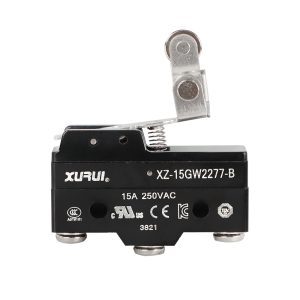
Common Uses for Micro Switches
Door and Cover Detection
One of the most common uses for a micro switch is detecting whether a door, lid, or cover is open or closed. This appears in microwaves, washing machines, refrigerators, printers, cabinets, vending machines, and safety enclosures.
In these applications, the micro switch helps the product respond automatically. A refrigerator light turns on when the door opens. A microwave prevents operation when the door is not closed. A printer detects whether a tray or cover is in place.
The switch does not need a person to press it directly. The product structure activates it through movement.
Limit and Position Detection
A micro switch is also widely used for limit detection. In machines, moving parts often need a reliable signal when they reach the end of travel. A micro switch can provide that signal.
This is common in industrial equipment, elevators, actuators, robotic systems, garage doors, and mechanical control systems. The switch helps prevent overtravel, supports automation, and improves safety.
Because a micro switch can respond to small movement with repeatable action, it is well suited for this kind of work.
Safety and Interlock Applications
Micro switches are also used in safety and interlock systems. A machine may need to confirm that a cover, guard, or access panel is closed before it can operate. A micro switch can provide that confirmation.
This does not mean every micro switch is a certified safety component. The full safety design still depends on the circuit, product standard, load, environment, and required safety level. However, micro switches are often used as part of mechanical detection systems because they are compact, responsive, and repeatable.
How to Choose Between a Switch and a Micro Switch
Start With the Operating Method
The best choice depends on how the switch will be activated. If a person will press, flip, slide, or rotate the component, a standard switch may be the better option. It can be selected for appearance, comfort, size, and control style.
If a moving part will activate the component, a micro switch may be more suitable. It is designed for mechanical detection and can respond to small movement with a clear signal.
This is the first question to ask during selection. Is the switch used for manual control, or is it used for automatic detection? Once that is clear, the choice becomes much easier.
Check Electrical Ratings
Whether you choose a standard switch or a micro switch, electrical ratings matter. The switch must match the voltage, current, and load type of the circuit.
A switch used with resistive loads may behave differently from a switch used with motors, solenoids, relays, or other inductive loads. If the load is demanding, the circuit may need extra protection, such as proper contact rating, arc suppression, or an external relay.
Choosing only by size or price can create long term reliability problems. The electrical rating should always match the real working condition.
Consider the Working Environment
The environment also affects switch performance. Dust, moisture, heat, vibration, oil, and repeated operation can all influence reliability.
For clean indoor products, a basic switch may be enough. For industrial equipment or outdoor equipment, the switch may need better sealing, stronger housing, higher durability, or more careful mounting.
For a micro switch used inside a machine, the actuator style and mounting position are especially important. The moving part should activate the switch smoothly without applying too much force or causing mechanical stress.
Final Thoughts
The difference between a switch and a micro switch is simple but important. A switch is a broad electrical component used to open or close a circuit. A micro switch is a specific type of switch designed for small movement, fast snap action, and reliable detection.
Use a standard switch when the goal is direct user control. Use a micro switch when the goal is precise sensing, position detection, safety confirmation, or automatic response inside a product.
In practical terms, the best option is not always the largest, smallest, or cheapest switch. It is the one that matches the movement, load, environment, and purpose of the application. For products that need compact, sensitive, and repeatable detection, a micro switch is often the smarter choice.
XURUI Engineering Team