Choosing between Reed Switches and Hall effect sensors can feel simple at first. Both respond to magnetic fields, and both are used to detect position, movement, proximity, speed, or open and closed status. But in real product design, the difference matters a lot.
A poor sensor choice can lead to higher power use, unstable triggering, shorter service life, added circuit cost, or unreliable performance in the field. A good choice can make the product simpler, more efficient, and easier to maintain.
This guide explains the key differences between Reed Switches and Hall effect sensors in practical terms. You will learn how each technology works, where each one performs best, and how to choose the right magnetic sensing option based on power, speed, signal type, environment, and cost.
Magnetic Sensing Basics
How Reed Switches Work
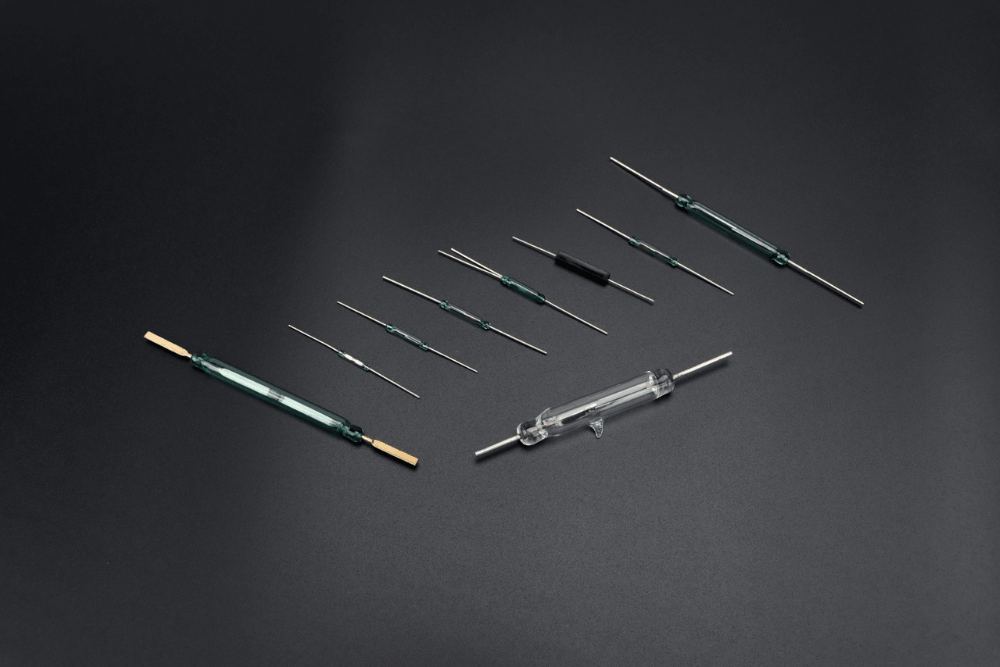
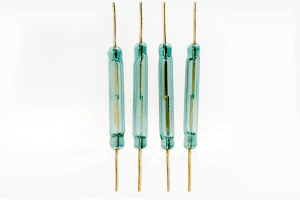
Reed Switches are magnetic switches sealed inside a small glass capsule. Inside the capsule are two thin metal reeds that act as electrical contacts. When a magnet moves close enough, the magnetic field causes the contacts to open or close, depending on the switch design.
The biggest advantage of Reed Switches is simplicity. They work like a regular electrical switch, but instead of being pressed by hand, they are activated by a magnet. In many designs, the switch itself does not need continuous power to sense the magnetic field. This makes Reed Switches useful for low power devices, security sensors, door and window sensors, fluid level sensing, appliance safety switches, and simple position detection.
For reliable performance, engineers need to check contact form, switching voltage, switching current, pull in distance, drop out distance, magnet strength, mounting position, and environmental protection. Reed Switches are simple, but they still need the right magnet and circuit design.
Related Reading: What Is A Reed Switch And How Does It Work?
How Hall Effect Sensors Work
Hall effect sensors detect magnetic fields electronically. Instead of using physical contacts, they use a semiconductor element that changes its electrical output when exposed to a magnetic field.
This gives Hall effect sensors more flexibility. They can provide a digital on or off signal, but they can also provide analog output for position sensing, rotation sensing, speed detection, and motion feedback. This makes them common in motors, automotive systems, robotics, smart locks, fans, control knobs, and industrial equipment.
The tradeoff is that Hall effect sensors need power. They require a supply voltage and supporting electronics. In products that already have a powered control board, this may not be a problem. In battery powered devices that need long standby time, the power demand can become a major factor.
Reed Switches Vs. Hall Effect Sensors At A Glance
| Factor | Reed Switches | Hall Effect Sensors |
| Operating Principle | Mechanical contact activated by a magnet | Semiconductor detects magnetic field |
| Power Use | Very low because the switch is passive | Requires continuous power |
| Output Type | Simple open or closed signal | Digital or analog electronic signal |
| Switching Speed | Better for low frequency switching | Better for high speed detection |
| Circuit Complexity | Simple circuit design | Needs power and signal processing |
| Contact Wear | Contacts can wear if overloaded | No mechanical contact wear |
| Best For | Door sensors, level sensors, low power devices | Motors, rotation, speed, position feedback |
| Main Risk | Wrong load, poor magnet placement, glass damage | Power use, electrical noise, circuit protection |
Key Differences That Affect Sensor Choice
Power Consumption And Standby Performance
Power consumption is one of the clearest differences between the two technologies. Reed Switches are passive components. They do not need continuous power to wait for a magnet. This makes them highly useful in devices that spend most of their life in standby mode.
Think about a wireless door sensor, smart meter, cabinet sensor, or battery powered alarm device. These products may only need to detect a simple open or closed state. In this situation, Reed Switches can help reduce standby power and extend battery life.
Hall effect sensors need power to monitor a magnetic field. Some Hall sensors are designed for low power use, but they still rely on active electronics. If the device already has a powered circuit and needs advanced signal feedback, Hall sensors can be a strong fit. If the device needs years of battery life and only simple switching, Reed Switches are usually more efficient.
Switching Speed And Response Time
Switching speed is another major decision point. Reed Switches have physical contacts, so they are better suited for low speed or low frequency detection. They work well when the magnet moves at a moderate pace and the product only needs a clear state change.
Hall effect sensors are usually better for high speed detection. Because they are solid state devices with no moving contacts, they can respond quickly to repeated magnetic changes. This makes them a good choice for motors, fans, wheels, gear systems, and speed sensing applications.
A simple way to decide is to look at the movement pattern. If the product detects a door opening, a lid closing, a float rising, or a part reaching a fixed position, Reed Switches are often enough. If the product tracks fast rotation, repeated pulses, or continuous motion, Hall effect sensors are usually safer.
Signal Output And Circuit Complexity
Reed Switches provide a simple contact signal. For many products, this is exactly what is needed. The circuit can be easy to design, easy to test, and easy to troubleshoot. This helps reduce cost and development time.
Hall effect sensors provide electronic output. This gives the system more information, but it also adds complexity. A digital Hall sensor can send a clean signal to a microcontroller. An analog Hall sensor can help measure position, angle, current, or magnetic field strength.
The key question is whether the system needs simple detection or richer data. If the product only needs to know whether something is open or closed, Reed Switches may be the cleaner choice. If the system needs speed, position, movement range, or real time feedback, Hall effect sensors are usually better.
Durability And Operating Life
Reed Switches can be very reliable when used within their rated limits. The contacts are sealed inside glass, which helps protect them from dust, moisture, oil, and contamination. This makes them useful in harsh or sealed environments.
However, Reed Switches still contain physical contacts. If they are used with high current, voltage spikes, or inductive loads, the contacts can wear faster. Motors, relays, solenoids, and coils may need protection circuits to reduce stress on the switch.
Hall effect sensors do not have moving contacts, so they are strong in applications with frequent switching or high cycle counts. But they are not risk free. Their electronics need protection against heat, ESD, moisture, voltage transients, and electrical noise.
Reed Switches Advantages In Real Applications
Low Power Sensing For Battery Powered Devices
Reed Switches are especially valuable when battery life matters. In a simple open or closed detection system, the switch can remain passive until the magnet changes position. This is useful for wireless security devices, smart home sensors, portable equipment, and standby monitoring systems.
To get the best result, the full circuit should also be designed for low power use. The switch may be passive, but the controller input, resistor values, wake up logic, and sleep mode settings still affect battery performance. A good low power design treats Reed Switches as part of the complete system, not just as a separate component.
Stable Triggering With Hysteresis
One important detail in Reed Switches is the difference between the activation point and release point. The pull in point is where the switch activates. The drop out point is where the switch releases. The gap between these two points is called hysteresis.
This matters because real products are not always perfectly stable. Doors vibrate. Floats wobble. Water moves. Mechanical parts shift slightly. If a sensor reacts to every small movement near the trigger point, the signal may become unstable.
Proper hysteresis helps reduce false triggering. In a water flow meter, for example, small waves or vibration may move the magnet slightly even when there is no true flow event. With the right reed switch and magnet setup, the sensor can avoid reacting to every small disturbance.
Sealed Contacts For Harsh Environments
Reed Switches are often useful in dirty, wet, or contaminated environments because the contacts are sealed inside glass. This helps protect them from dust, oil, moisture, and many external contaminants.
That said, the glass capsule must be protected. A bare reed switch can be damaged if it is bent, dropped, crushed, or mounted under mechanical stress. In real products, Reed Switches are often placed inside plastic housings, metal tubes, or custom sensor assemblies.
This makes them especially useful in fluid level sensors, appliances, industrial controls, outdoor equipment, and safety switches. The key is to design the whole assembly for the environment, not just select the bare switch.
Hall Effect Sensor Advantages In Real Applications
High Speed Detection For Motors And Rotation
Hall effect sensors are usually the better choice for high speed detection. They can detect repeated magnetic changes without mechanical contact wear. This makes them ideal for motors, fans, wheels, gear systems, and rotational speed sensing.
In these applications, the sensor may need to produce many pulses per second. Hall sensors can provide clean electronic output for controllers that need to calculate speed, position, or direction.
When selecting a Hall sensor, engineers should check response time, output type, supply voltage, magnetic threshold, operating temperature, and controller compatibility. The sensor should be tested at the highest expected speed, not only under normal operating conditions.
Better Fit For Advanced Electronic Systems
Hall effect sensors work well in products that already have powered electronics. If the system includes a microcontroller, control board, or software logic, Hall sensors can provide useful data for decision making.
For example, a smart lock may need position feedback. A motor controller may need speed signals. A control knob may need analog movement detection. A robotics system may need repeatable position sensing. In these cases, Hall sensors provide more flexibility than basic Reed Switches.
The tradeoff is added design work. Engineers need to manage power, grounding, filtering, electrical noise, and signal interpretation. Hall sensors can be powerful, but they require a more complete electronic design.
Application Based Selection Guide
| Application | Better Choice | Why It Fits |
| Door and window sensors | Reed Switches | Simple open and closed detection with low power use |
| Battery powered alarms | Reed Switches | Passive operation helps extend battery life |
| Fluid level sensing | Reed Switches | Works well with magnetic floats and sealed assemblies |
| Water flow detection | Reed Switches or Hall sensors | Reed Switches fit lower speed designs, Hall sensors fit higher pulse rates |
| Motor speed sensing | Hall effect sensors | Better for fast and repeated magnetic pulses |
| Robotics and motion feedback | Hall effect sensors | Supports position, speed, and electronic control |
| Harsh industrial sensing | Depends on design | Reed Switches offer sealed contacts, Hall sensors offer solid state durability |
| Smart devices with controllers | Hall effect sensors | Easier to integrate with electronic logic and software |
Common Mistakes To Avoid
Poor Magnet Placement
Many magnetic sensing problems come from the magnet, not the sensor. If the magnet is too weak, too far away, mounted at the wrong angle, or affected by nearby metal, the sensor may trigger unreliably.
For Reed Switches, magnet placement is especially important because the switch depends on pull in and drop out distance. Designers should test the actual magnet, housing, mounting gap, and movement path before final production.
A bench test with a loose magnet is not enough. The final product structure can change magnetic performance.
Ignoring Electrical Load Ratings
Reed Switches must be matched to the electrical load. A switch that works well for a low current signal may fail early if it directly switches a motor, relay, or solenoid. Inductive loads can create voltage spikes that damage contacts.
The safer approach is to use Reed Switches for signal switching when loads are demanding. If needed, the switch can control a separate circuit rather than carry the full load. Protection components may also be added depending on the design.
Hall effect sensors have different risks. They need stable power, ESD protection, noise control, and proper signal handling. Each technology has its own design limits.
Choosing Before Defining The Signal
A common mistake is choosing a sensor before defining what the system needs to know. The first question should not be which part is cheaper. It should be what kind of signal the system needs.
If the system only needs open or closed detection, Reed Switches are often simple and efficient. If the system needs speed, direction, position, or continuous feedback, Hall effect sensors are usually a better fit.
Final Thoughts
Choosing between Reed Switches and Hall effect sensors depends on what your application needs most. Reed Switches are a great fit for simple, low power magnetic sensing, especially in door sensors, window sensors, fluid level sensors, and battery powered devices. They are easy to use, cost effective, and reliable when matched with the right magnet and load.
Hall effect sensors are better for high speed detection, frequent switching, and applications that need electronic feedback, such as motors, robotics, and smart control systems.
Before choosing, consider power use, switching speed, signal type, environment, and installation space. The right sensor is not always the most advanced one, but the one that fits the real working conditions best.
XURUI Engineering Team