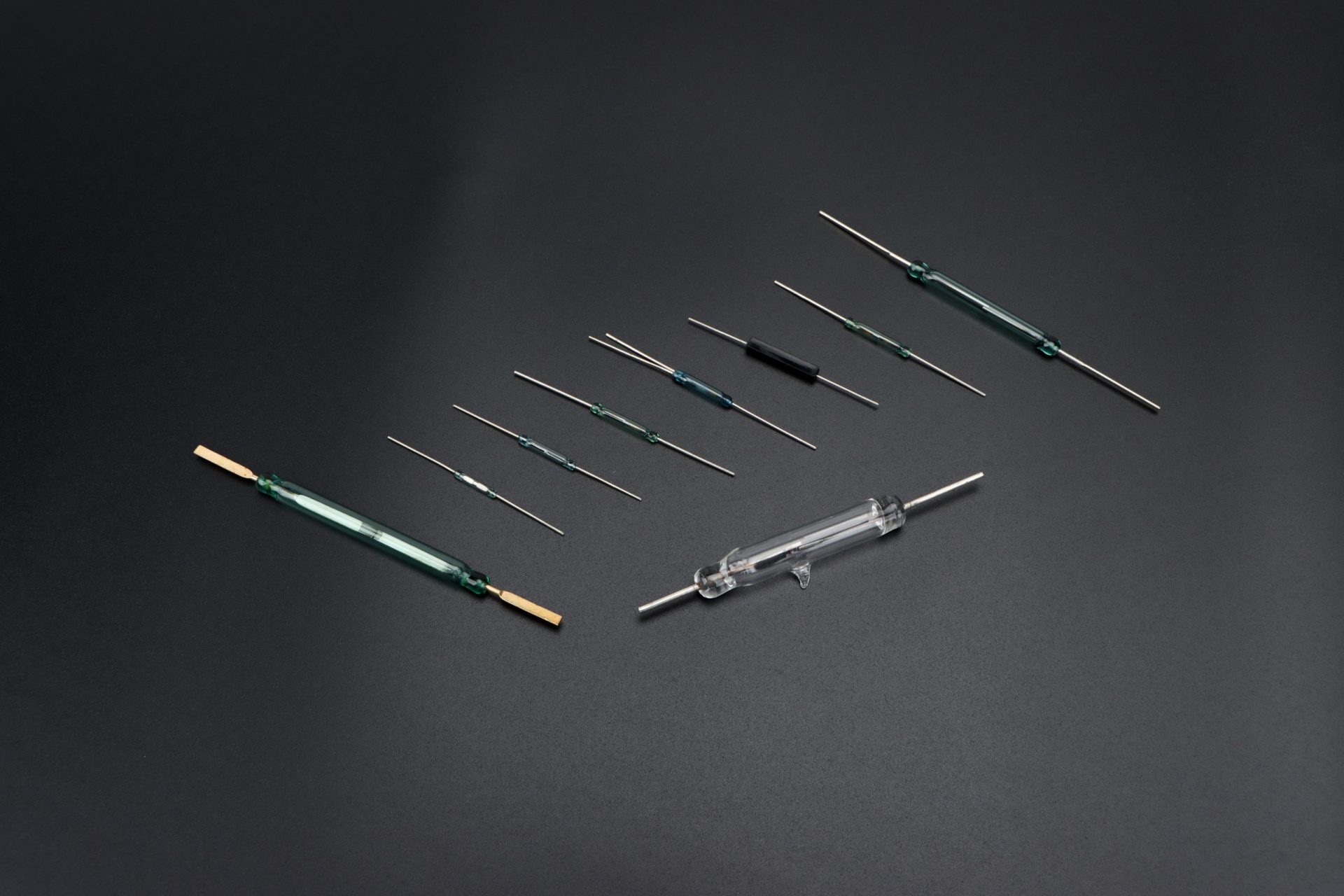
If you’ve worked with reed switches before, you know they’re compact, reliable, and surprisingly versatile. But one question comes up regularly in engineering discussions and procurement conversations: can a reed switch actually handle high-voltage applications, or does the glass envelope and delicate contact design set a hard ceiling on what’s possible?
The honest answer is: it depends on what you mean by high voltage, and more importantly, it depends on the specific reed switch you’re using. This article breaks down what reed switches can and can’t do at higher voltages, what specs to pay attention to, and where they hold up well in demanding electrical environments.
How a Reed Switch Works and Why Voltage Matters
The Basic Operating Principle
A reed switch consists of two ferromagnetic contact blades sealed inside a glass tube filled with inert gas. When a magnetic field is applied, the blades flex toward each other and make contact. Remove the field, and they spring back apart. There are no coils, no mechanical actuators, and no external moving parts exposed to the environment.
That sealed glass construction is both the reed switch’s greatest strength and the factor that defines its voltage limits. The contacts are protected from contamination, oxidation, and humidity, which contributes to long service life. But the glass envelope also limits physical contact size, contact gap, and the dielectric strength of the switch at higher voltages.
What Happens at Higher Voltages
At elevated voltages, a few things become relevant. Contact gap matters more, because a larger gap is needed to prevent arcing when the contacts open under load. The inert gas fill inside the tube affects arc suppression and dielectric withstand. Contact material plays a role too, since some materials resist arc erosion better than others.
This is why reed switch voltage ratings vary meaningfully across product lines, and why it’s worth reading the datasheet carefully rather than assuming all reed switches perform the same way at the top end of their ratings.
What Voltage Can a Reed Switch Actually Handle?
Typical Voltage Ratings in Standard Reed Switches
Most general-purpose reed switches are rated in the range of 10V to 100V DC, with some models going up to 220V DC or 120V AC. That puts them well within range for a wide variety of control circuit, signal switching, and low-power applications.
Higher-spec industrial reed switch models can support switching voltages up to 220V DC, with switching currents of up to 4A and contact resistance at or below 200mΩ. That’s a capable range for many industrial control and sensing applications, and it’s worth knowing that the upper end of the market does push meaningfully beyond what basic models can handle.
The Difference Between Switching Voltage and Carry Voltage
One point that trips people up is the distinction between switching voltage and carry voltage. Switching voltage is the maximum voltage the contacts can interrupt while carrying current, in other words, when the switch opens under load. Carry voltage is the maximum voltage that can be present across closed contacts.
Switching at high voltage is the harder condition, because that’s when arcing is most likely to occur. If your application involves the reed switch opening and closing under significant voltage, pay close attention to the switching voltage rating. If the switch is only ever opened under low voltage or no load, you may have more flexibility.
Where Reed Switches Work Well at Higher Voltages
Proximity and Position Sensing in Industrial Systems
One of the most reliable uses of reed switches in higher-voltage environments is as sensing elements in circuits where the reed switch itself handles a low-level control signal, even if the system it’s monitoring operates at higher voltages. The reed switch triggers a relay or PLC input at a safe signal level, while the high-voltage load is handled elsewhere in the circuit. This is a common and practical approach that plays to the reed switch’s strengths.
Security and Access Control Systems
Reed switches are widely used in door and window sensors, position detection, and access control applications. These systems typically operate at low signal voltages, but they’re often installed in buildings where the surrounding electrical environment involves higher voltages. The sealed glass construction gives reed switches good immunity to electrical noise, which helps maintain reliable sensing in electrically busy environments.
Automotive and Transportation Applications
Automotive systems present an interesting case. The main power system runs at 12V or 24V DC, which is comfortably within the range of most reed switches. But under load switching conditions or with inductive loads, voltage spikes can occur. Choosing a reed switch with an appropriate voltage rating and using transient suppression where needed covers most situations here.
Related Reading: Is a reed switch passive or active?
Flow Meters and Level Sensors
Reed switches are frequently used in flow meters, liquid level sensors, and similar instruments where a magnet on a float or rotor triggers the switch. Many of these instruments are installed in industrial facilities with 24V DC control systems, which fits well within standard reed switch ratings. The hermetically sealed construction also makes them resistant to the moisture and chemical exposure common in these environments.
Where Reed Switches Have Limitations at High Voltage
True High-Voltage Power Switching
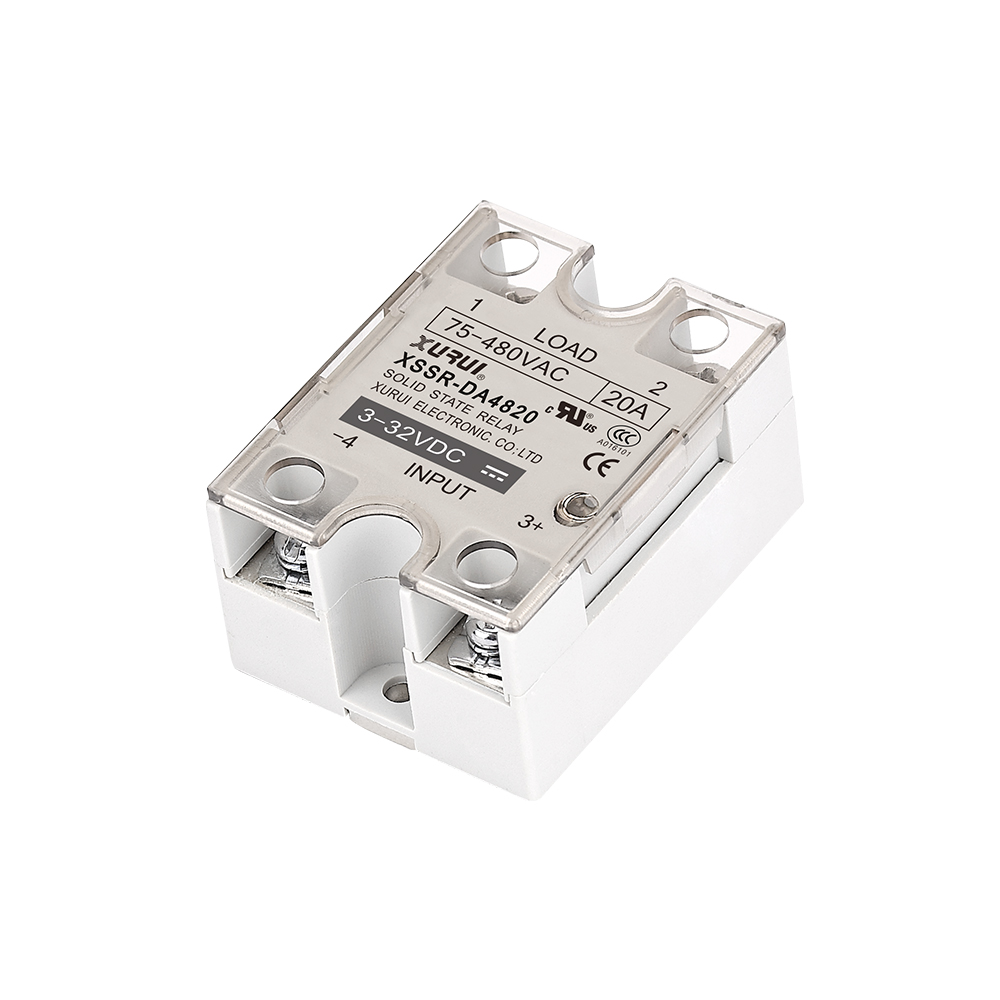
If your application involves switching actual high-voltage power lines, 480V AC or higher for example, a standard reed switch is not the right tool. The contact gap and glass envelope construction aren’t designed for that level of dielectric stress. For true high-voltage power switching, you need devices specifically engineered for it, such as high-voltage relays, contactors, or solid state devices.
High-Frequency Switching Under Load
Reed switches are rated for operating frequencies up to 100Hz to 500Hz depending on the model, and they can handle this well in many applications. But combining high-frequency switching with higher voltages and inductive loads puts more stress on the contacts. Arc erosion becomes more of a factor, and contact life shortens. If your application involves rapid switching of any significant inductive load at higher voltages, it’s worth reviewing the contact life ratings closely or considering a different switching technology.
Environments with Severe Transients
Industrial environments sometimes generate severe voltage transients from motors, solenoids, or switching power supplies. If those transients exceed the peak voltage rating of the reed switch, contact damage or premature failure can result. Snubber circuits or transient voltage suppressors placed across the load can extend contact life significantly in these situations.
How to Choose the Right Reed Switch for Your Voltage Requirements
Check the Full Electrical Rating, Not Just One Number
When evaluating a reed switch for a higher-voltage application, look at the complete electrical specification: switching voltage, switching current, carry current, and maximum switched power. These four ratings together tell you what the switch can actually handle. A switch rated for 220V DC but only 0.5A has a very different capability profile than one rated for 220V DC at 4A.
Consider the Load Type
Resistive loads are the easiest on reed switch contacts. Capacitive loads can cause inrush current spikes at contact closure. Inductive loads cause voltage spikes at contact opening. If you’re switching anything other than a purely resistive load at the upper end of the voltage rating, apply a derating factor and add appropriate protection across the load.
Factor In Operating Frequency and Cycle Life
Higher-voltage switching and higher operating frequency both reduce contact life. If your application cycles the reed switch thousands of times per day, choose a model with a rated cycle life that gives adequate margin for your expected service period.
Work With a Supplier That Offers Customization
For demanding or specialized applications, off-the-shelf specs sometimes don’t fit precisely. Many industrial reed switch suppliers offer customization options for pull-in sensitivity, contact materials, and housing configurations for volume OEM orders. If you’re designing a product that requires specific electrical performance, working directly with a supplier gives you more flexibility than selecting from a standard catalog.
Final Thoughts
A reed switch can be used in higher-voltage applications, within its rated limits, and with appropriate circuit protection for the load type. For control signal switching, sensing, and position detection in systems operating up to 220V DC or 120V AC, a well-specified reed switch is a practical and reliable choice.
For true high-voltage power switching above those levels, other technologies are better suited. The key is matching the switch to the actual electrical demands of your application rather than assuming all reed switches perform the same way across the voltage range.
When in doubt, review the full datasheet, account for your load type, and leave yourself some margin above your nominal operating conditions.
XURUI Engineering Team