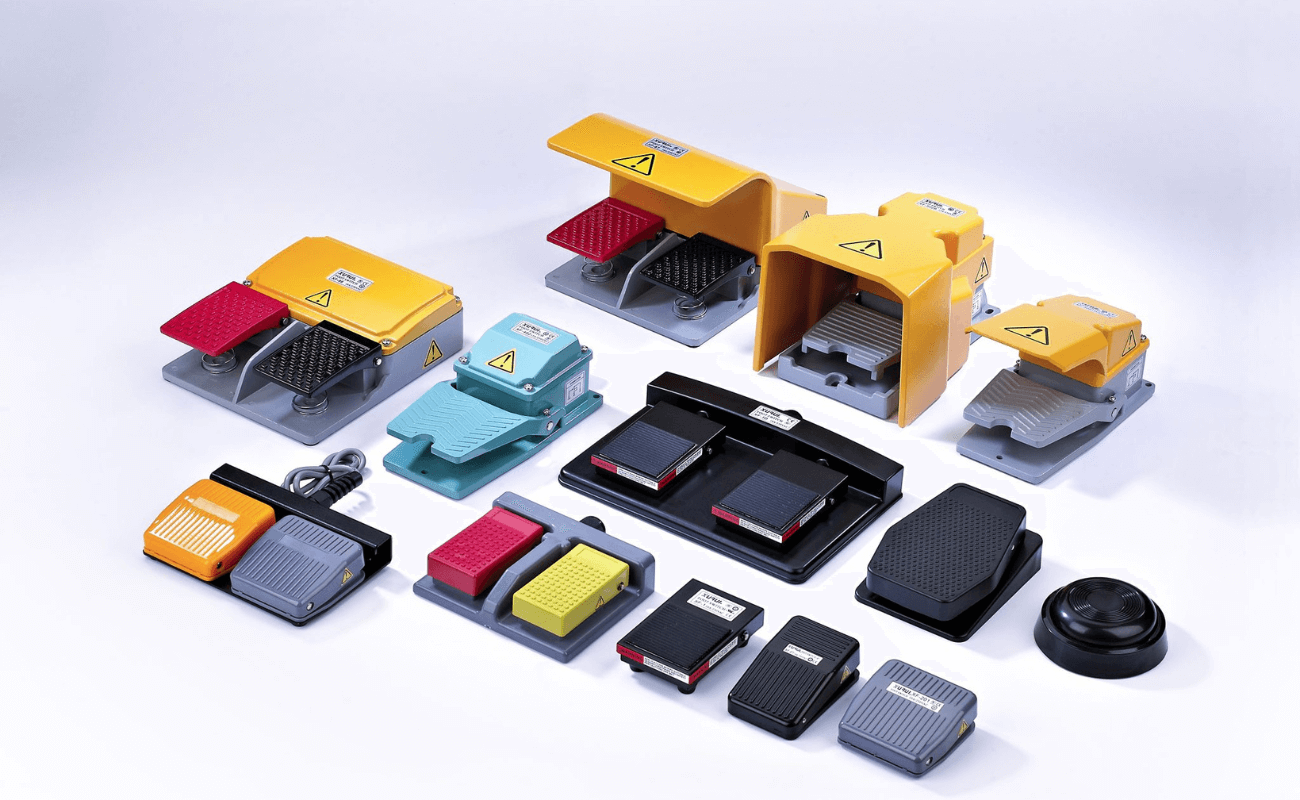
When you see the word footswitch, your first thought might be convenience — turning on a tool, machine, or device with a simple tap of your foot. But right after that comes the concern: is it really safe?
This article clears up the confusion. We’ll explain what makes a footswitch safe or unsafe, share practical tips to avoid accidents, and give you a clear decision guide to choose the right one for your needs.
Quick Comparison: Types of Footswitch Safety
| Type of Footswitch | Best For | Safety Consideration | Risk Level |
| Momentary (active only while pressed) | Power tools, sewing machines | Low chance of accidental lock-on | Low |
| Maintained (stays on until pressed again) | Lamps, small appliances | Can remain on unintentionally | Medium |
| Guarded / Covered | Industrial machines, medical equipment | Extra protection against missteps | Very Low |
| Wireless | Modern tools, e-bikes, and electric scooters | Must ensure signal reliability & encryption | Medium |
The Core Pillars of Footswitch Safety
Foot switch safety is built upon three foundational requirements: Certification, Electrical Integrity, and Environmental Protection.
1. Essential Certifications and Compliance
The single most important step in ensuring footswitch safety is verifying its certification. These seals are not optional; they confirm the product has passed rigorous, independent testing for electrical and mechanical integrity.
- UL (Underwriters Laboratories): The most recognized certification in North America, certifying products meet strict fire, electric shock, and mechanical hazards standards.
- CE (Conformité Européenne): A mandatory conformity mark for products sold within the European Economic Area (EEA), indicating compliance with health, safety, and environmental protection standards.
- CSA (Canadian Standards Association): A certification body that develops standards for various electrical and mechanical products, primarily for the Canadian market.
- OSHA and ANSI Standards: For industrial applications, the footswitch’s use and installation must comply with specific Occupational Safety and Health Administration (OSHA) and American National Standards Institute (ANSI) regulations, particularly concerning point-of-operation safeguarding (ensuring the operator’s hands are not in a danger zone when the switch is activated).
2. Electrical Safety and Load Ratings
The internal components of the switch must be designed to handle the electrical demands of the connected device.
- Matching Amp and Voltage Ratings: Always select a footswitch with a maximum amperage (amp) and voltage rating that exceed the requirements of the equipment you are controlling. Overloading a switch is the primary cause of internal overheating, component failure, and a potential fire hazard.
- Understanding Load Types: Electric motors (like those on power tools) draw a higher initial current (inrush current) at startup than they do while running. Switches used for motors must be rated to handle this higher surge safely. For heavy-duty tools or medical equipment, always choose a switch with a substantial safety margin above your actual load.
- Proper Wiring and Grounding: For wired switches, installation must be performed by a qualified professional to ensure correct wiring and, crucially, an appropriate connection of grounding to prevent electric shock in the event of an electrical fault.
3. Environmental Protection (IP Rating)
The working environment dictates the necessary level of protection for the switch’s internal electrical components. The Ingress Protection (IP) rating is an international standard that defines this protection level.
The IP code consists of two digits:
- First Digit (0-6): Protection against solid objects (dust, fingers). A ‘6’ means it is completely dust-tight.
- Second Digit (0-9): Protection against liquids (water, jets, immersion).
| IP Rating | Protection Against Solids | Protection Against Liquids | Typical Use |
| IP20 | Protected from objects larger than 12.5 mm (e.g., fingers) | No water protection | Indoor, dry environments only |
| IP54 | Dust-protected (limited ingress) | Protected against water splashing from any direction | Workshops, garages, light moisture |
| IP65 | Completely dust-tight | Protected against low-pressure water jets from any direction | Industrial settings, hosedown areas, outdoor use (rain) |
| IP67 | Completely dust-tight | Protected against temporary immersion in water (up to 1 m for 30 minutes) | Harsh industrial, construction, or outdoor use |
For environments with sawdust, cutting fluids, or high humidity (e.g., a metalworking shop or outdoor scooter use), an IP65 or IP67 rating is absolutely essential for long-term safety and reliability.
Preventing Accidents: Practical Safety Tips
Safety is a combination of the right equipment and the right operational habits.
Choosing the Right Activation Mechanism
- The Guarded Footswitch: The guarded or covered design is the gold standard for high-risk equipment. Its protective shield makes accidental activation by a dropped tool, falling debris, or an operator’s misstep extremely difficult. For medical or industrial equipment, this feature is often mandatory.
- Anti-Trip Mechanisms: Some industrial footswitches include an anti-trip latch or gate that requires a specific, two-part action (e.g., pressing a small lever with the toe before depressing the main pedal) to prevent unintended activation.
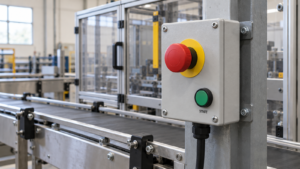
- The Emergency Stop Function: In some industrial applications, a specialized safety footswitch features a second stage or a separate emergency stop button that, when fully depressed, locks the machine off and requires a manual reset, ensuring adherence to strict safety protocols.
Ergonomics for Long-Term Safety
Repetitive use of a poorly designed switch can lead to operator fatigue, which increases the risk of mistakes and accidents.
- Pedal Force and Travel: An ergonomic switch requires a comfortable and manageable amount of force (actuation force) and a short, smooth travel distance to activate. Overly stiff switches cause leg and foot strain.
- Stability and Weight: The footswitch should be stable and heavy enough to remain stationary during use. Anti-slip pads or secure mounting options are crucial to prevent the switch from sliding or flipping over, which can result in activation failure or accidental triggering.
Operational and Installation Checklist
- Placement is Key: Position the switch where the operator’s foot rests naturally, without strain. Crucially, never place it near high-traffic walkways where it could be accidentally bumped or pressed by a passerby.
- Pre-Use Inspection: Before connecting any device, inspect the footswitch housing and cable for cracks, cuts, or exposed wiring. Ensure anti-slip pads are intact.
- No “Riding the Pedal”: Standard operating procedure should prohibit resting a foot on the pedal without depressing it, as this can lead to accidental or fatigue-induced activation.
Related Reading: What is a foot switch used for?
Conclusion:
A footswitch can be very safe when chosen, installed, and used correctly. Confirm certifications, match the electrical rating to your equipment, and select the right IP rating for your environment to reduce risks. Adding guards, ensuring stable installation, and following good habits make it a reliable safety component that keeps your tools and e-bikes under control with confidence.