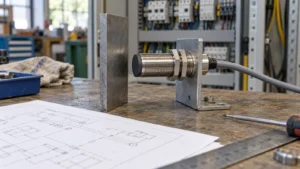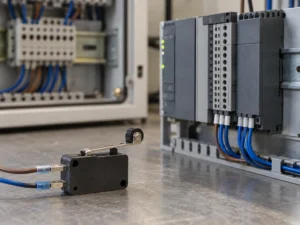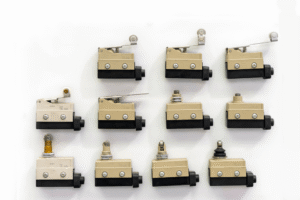

Choose a limit switch body by matching housing material, sealing level, and mounting load before the actuator hits a cam. A weak body can crack, shift, leak oil into contacts, or let vibration move the trip point.
The body must keep the contact block sealed, mounted, and aligned when vibration, oil mist, or side hits move the trip point.
What Is a Limit Switch Body?
A limit switch body houses the contact block, terminals, cable entry, mounting base, and internal mechanism. The actuator touches the machine target, while the body keeps parts aligned through contact, vibration, oil mist, and bracket stress.
Treat the body as part of the signal path. Body flex changes actuator angle. A leaking cable entry corrodes terminals. A cracked base lets the switch click by hand while the machine misses the limit point under load.
Why Does the Limit Switch Body Matter?
The body matters because the switch signal depends on stable alignment, clean terminals, and repeatable actuator travel.
Trip Point Stability
The limit switch body protects the signal from mechanical failure. A correct contact rating will not save a switch on a weak bracket, near cutting fluid without sealing, or in the path of a side hit.
False trips often start as small body problems. A loose screw moves the switch. A dented housing changes actuator position. A cracked cover lets dust reach the contact area. The controller reads the wrong state, then stops a conveyor or lets an axis pass the intended stop.
Exposure and Service Risk
Body selection matters most near:
- moving frames, cams, pallets, doors, or crane travel points
- coolant, oil mist, dust, metal chips, or outdoor spray
- vibration from motors, presses, pumps, or conveyors
- service areas where workers may hit the switch
Correct wiring still matters. A normally closed circuit needs the right contact form, and a PLC input needs the right voltage. For contact logic, start with NO vs NC limit switch, then choose a body that holds that signal.
Which Housing Materials Do Limit Switches Use?
Limit switch housings usually use plastic, metal, or mixed construction. The right choice depends on impact risk, chemical exposure, space, and service needs.
Plastic Bodies for Compact Mounting
Plastic bodies keep the switch light and compact. A plastic housing can work inside panels, appliance assemblies, light machinery, and protected brackets.
Use plastic where the target touches only the actuator. Avoid plastic if the switch becomes the hard stop, the bracket twists, or the cable pulls sideways at the entry.
Metal Bodies for Exposed Impact Zones
Metal housings suit exposed areas where frames, workpieces, guards, or fixtures may knock the switch. A metal body gives the mounting base more stiffness and helps the switch hold position when the bracket sees shock.
Metal still needs correct installation. If the cam path is wrong, impact can transfer into the actuator shaft. Add a hard stop so the machine load does not hit the housing.
Mixed Bodies for Sealing and Weight Balance
Mixed bodies balance stiffness, sealing, and weight. Xurui XZ8 uses a zinc-alloy plus plastic body and carries confirmed IP65 sealing.
Do not assume the same sealing, contact rating, or withstand voltage across every switch that looks similar. The datasheet confirms the rating, not the housing shape.
How Does Sealing Protect the Limit Switch Body?
Sealing works only when the enclosure, cable entry, and actuator opening match the real exposure around the machine.
Ingress Paths
Sealing keeps coolant, dust, oil spray, moisture, and conductive debris out of the contact block, terminals, cable entry, and actuator opening.
An IP-rated body reduces contamination risk. An unsealed body may work in a clean fixture, then fail near cutting fluid or metal chips.
IP65 Limits
IP65 suits dust and spray, not immersion or close-range pressure washing unless the datasheet says so. For washdown, rain, or chemical cleaning, confirm IP rating, cable gland detail, and actuator-head compatibility.
Series-Level Rating Checks
For Xurui, XZ8 has confirmed IP65 sealing. Xurui also lists XZ limit switches with steel, stainless steel, or high-grade plastic housing options.
Buyers should confirm IP rating by series and avoid calling the whole limit switch family IP65-rated. A shared body style does not prove a shared seal.
How Should Buyers Check Mounting Before Choosing a Body?
Mounting decides whether the selected body can hold the trip point. A heavy-duty housing can still fail if the switch sits at the wrong angle, the bracket vibrates, or the actuator overtravels.
Mounting Face and Bracket Load
The mounting face should be flat, stiff, and matched to the hole spacing. Uneven screw pressure can twist the body or crack the base.
Actuator Path and Overtravel
Do not use the limit switch as the mechanical stop. The actuator should trip before the moving part reaches its hard stop.
Cable Exit and Service Access
The cable should bend without pulling on the entry, and the cover should stay reachable. A sealed body can still leak if the gland is loose, oversized, or vibration-stressed.
Use this checklist:
| Check | What to confirm | Prevents |
|---|---|---|
| Mounting face | Flat surface, hole spacing, screw engagement | Twisted body, cracked base |
| Actuator path | Cam touches the rated direction | Broken lever, bent plunger |
| Overtravel | Clearance after the switch trips | Body used as the hard stop |
| Cable exit | Cable bends without pulling | Seal damage, terminal stress |
| Service access | Cover and terminals stay reachable | Skipped inspection, wrong rewiring |
After installation, jog the machine through the trip point and check controller response. A hand click is not enough. A proper limit switch testing guide should confirm travel, input response, bracket movement, and reset.
Which Xurui Limit Switch Bodies Fit Common Jobs?
Xurui Switch supplies XZ-series limit switches for travel limits, position confirmation, conveyors, cranes, and automation. Use the limit switch manufacturer category as the starting point, then confirm body, actuator, rating, and certificate by series.
Body Fit by Series
| Series | Body note | Typical fit |
|---|---|---|
| XZ-8 (10A) Series Limit Switch | Zinc-alloy plus plastic body, confirmed IP65, 10A version | Dust, spray, coolant nearby, higher contact load within series rating |
| XZ-8 (5A) Series Limit Switch | Zinc-alloy plus plastic body, confirmed IP65, 5A version | Sealed position feedback with lower contact load |
| XZ-9 Series Limit Switch Metal Housing Version | Die-cast metal housing variant | Exposed brackets, frame knock risk, tougher mounting base |
| XZ-95, XZ-93, XZ-9, XZ7, XZ5 | Standard XZ limit switch bodies by series | General travel and position jobs |
Category Facts That Need Confirmation
Safe Xurui XZ category facts include AC/DC support, -20 C to +60 C operating temperature, 1,000,000-plus mechanical operations, 300 m/s2 misoperation impact resistance, and 1000 m/s2 survival impact resistance. Contact load reaches up to 10A/250VAC and 6A/380VAC by series.
Confirm those facts by series before purchase. XZ8 has the clearest sealed-body data. XZ-9 Metal Housing fits exposed brackets. Other XZ series can fit travel jobs after checks for environment, mounting, actuator, and certificates.
What Body Failures Should Maintenance Teams Inspect?
Inspect the body before blaming the PLC, relay, or software. A limit switch can click by hand yet fail at machine speed when the body shifts, leaks, or binds.
Housing Movement and Cracks
Check for cracks around mounting screws or covers. Also check whether the body moved away from the paint mark or alignment line.
Seal and Actuator Problems
Look for oil, dust, coolant, chips, loose screws, corroded terminals, and pulled insulation near the cable entry. A bent lever, sticky plunger, slow return, or housing rub points beyond simple adjustment.
Replace the switch body or full switch when the housing cracks, the seal fails, or the actuator shaft no longer returns cleanly. Adjust the bracket only when the body is intact and the problem is alignment, cam length, or trip distance.
FAQ
How Do IP and NEMA Ratings Differ for a Limit Switch Body?
IP ratings describe how the switch enclosure resists dust and water under IEC 60529. NEMA ratings are common in North America and may cover broader industrial hazards, including oil, coolant, corrosion, or outdoor exposure. Do not convert IP65 into a NEMA rating unless the datasheet states both.
Can an IP65 Limit Switch Body Handle Cutting Oil or Coolant?
IP65 does not prove oil or coolant compatibility. IP65 covers dust and water spray, while coolants, cutting oils, and cleaners can attack seals, plastics, or cable glands. For machine tools, ask for material compatibility, gland rating, and exposure method before approval.
Which Cable Gland Fits a Sealed Limit Switch Body?
Use a cable gland or connector that matches cable diameter, thread, sealing rating, and fluid exposure. A sealed switch body can still leak if the cable entry is loose, oversized, or pulled sideways. Keep the cable bend relaxed so vibration does not open the seal.
Does a Metal Limit Switch Body Need Grounding?
A metal limit switch body should follow the machine grounding plan and datasheet. If the housing can become energized, the machine design may require bonding or verified continuity. Do not rely on mounting screws as the only protective path unless the electrical design validates that path.
What Should Buyers Check When Replacing an Old Limit Switch Body?
A replacement limit switch body should match the mounting footprint, actuator height, operating direction, cable entry, contact form, and enclosure rating. A part can click correctly by hand and still trip late if the new body changes the actuator position or cam contact point.
XURUI Engineering Team