
Micro switch or membrane switch? If you’re unsure which one fits your product, this guide clears up the confusion and helps you make the right choice.
UNDERSTANDING THE FUNDAMENTALS OF MICRO AND MEMBRANE SWITCHES
HOW MICRO SWITCHES WORK
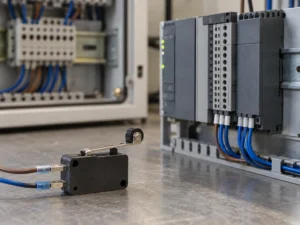
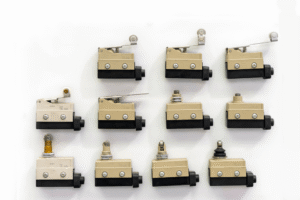
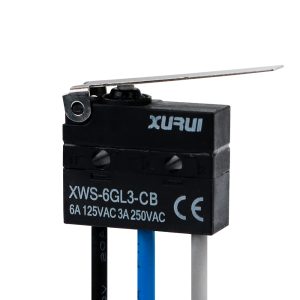
Micro switches are small, highly sensitive snap-action switches commonly used in safety mechanisms, limit detection, and precision controls. They feature an internal spring-loaded lever mechanism that creates a distinctive click when actuated.
Key features:
- Crisp tactile response
- Operates with minimal pressure (as low as 50g)
- Ideal for repetitive high-cycle mechanical operations
Common applications:
- Door interlocks (microwaves, elevators)
- Safety shut-off mechanisms
- Limit detection in machinery
HOW MEMBRANE SWITCHES FUNCTION
Membrane switches are flat, flexible switches made from several layers of polymer sheets. Electrical contact is made when pressure is applied, connecting two conductive traces separated by a spacer.
Key features:
- Slim, low-profile design
- Customizable printed graphics and icons
- Quiet operation, with optional tactile domes
Common applications:
- Medical equipment interfaces
- Consumer appliance keypads
- Industrial control panels
KEY PERFORMANCE DIFFERENCES THAT IMPACT PRODUCT DESIGN
DURABILITY AND LIFESPAN
When evaluating switch performance, durability is one of the first things to consider—especially for high-use or mission-critical applications. Micro switches generally offer a longer mechanical lifespan, often rated for up to 10 million cycles, making them ideal for applications that require frequent actuation. However, they require external housing to protect against dust or moisture, which can increase design complexity.
Membrane switches, while not lasting quite as long mechanically, excel in environments where sealing and surface hygiene matter. Their flat construction makes them easy to seal against contaminants and suitable for wet or sterile environments. However, they are more prone to wear or delamination over time, especially in high-stress or outdoor settings.
Use this table as a quick reference, but always match the switch to the actual operating environment and actuation frequency of your product.
| Feature | Micro Switch | Membrane Switch |
| Mechanical lifespan | 1M–10M cycles | 1M–5M cycles |
| Environmental resilience | Moderate (requires housing) | High (easily sealed) |
| Failure risk | Spring fatigue or corrosion | Wear or delamination |
TACTILE FEEDBACK AND USER EXPERIENCE
Micro switches offer a loud and clear click, giving users immediate confirmation that the action was registered. In contrast, membrane switches are quieter and softer, sometimes requiring visual cues or LEDs for feedback.
Checklist:
- Need audible or physical feedback? → Micro switch
- Prefer silent or soft-touch operation? → Membrane switch
- Interface used with gloves? → Micro switch with large actuator
ENVIRONMENTAL RESISTANCE
Membrane switches can be sealed to meet IP65–IP67 ratings, making them ideal for medical, outdoor, or industrial environments. Micro switches need additional housing or sealing gaskets to withstand similar conditions.
Design tip: If your product will be exposed to dust, water, or cleaning chemicals, membrane switches offer a simpler path to compliance.
INSTALLATION, INTEGRATION, AND COST CONSIDERATIONS
SPACE AND MOUNTING FLEXIBILITY
Micro switches, though compact, have rigid bodies that require mechanical mounting and wire terminals. Membrane switches, on the other hand, are flat and flexible—easy to stick onto curved or tight surfaces using adhesive backing.
Design checklist:
- PCB or solder-based integration? → Micro switch
- Plug-and-play ribbon connector? → Membrane switch
- Thin control panel or handheld device? → Membrane switch
CUSTOMIZATION OPTIONS
Membrane switches allow full surface customization, including:
- Logos
- Color-coded buttons
- Icon graphics
- LED backlighting
Micro switches are hidden components and offer no branding surface, making them better suited for internal controls or devices with external buttons.
COST-EFFICIENCY AND SOURCING
While micro switches typically have a lower unit cost and faster lead time, especially for standard off-the-shelf models, cost-efficiency depends on your volume, customization needs, and development stage.
If you’re in early prototyping or need to get a product into market quickly, micro switches are often the better choice. They require minimal tooling, no artwork or printing, and are widely available with short lead times.
However, if you’re working on a branded consumer product or an industrial control panel that needs a polished interface, membrane switches justify their moderate cost with more value. They support full-surface customization, from printed icons to LED backlighting, giving your interface a professional and intuitive look.
Also consider tooling and setup costs:
Micro switches can be integrated with basic mechanical mounting and wiring.
Membrane switches often require custom dies, printing plates, and overlays, which adds to the upfront cost but may streamline final assembly.
| Factor | Micro Switch | Membrane Switch |
| Unit cost | Low | Moderate |
| Lead time | Short (standard SKUs) | Longer (custom graphics) |
| Tooling needs | Minimal | Requires printing and die-cutting |
WHEN TO CHOOSE MICRO SWITCH VS. MEMBRANE SWITCH
DECISION FRAMEWORK
| Use Case | Best Choice |
| Appliance safety shut-off | Micro switch |
| Waterproof outdoor keypad | Membrane switch |
| Cost-effective internal switch | Micro switch |
| Branded control panel with backlight | Membrane switch |
| High-cycle mechanical trigger | Micro switch |
| Compact wearable device | Membrane switch |
Choosing the right switch depends heavily on your specific use case. This decision framework highlights common scenarios and recommends the most suitable switch type based on functionality, environment, and user interaction needs.
Related Reading: How Long Does a Micro switch Last?
FINAL THOUGHTS
Choosing between a micro switch and a membrane switch comes down to how your product needs to perform. If you need a durable, tactile, and high-cycle component, a micro switch is the better fit. If your design calls for a sleek interface, environmental sealing, or custom graphics, a membrane switch provides more flexibility. Understanding these core differences helps you avoid costly mistakes and build smarter from the start.
XURUI Engineering Team