
When installation space is limited, choosing a safety interlock switch becomes a real challenge. Compact machines and crowded enclosures leave little room for mounting, wiring, or adjustment, and the wrong choice often leads to misalignment, false trips, or maintenance issues. This article explains what actually matters when selecting safety interlock switches for compact and space-limited applications, helping you make practical, reliable decisions that work in real-world conditions.
Quick Comparison: Standard vs. Compact Interlock Use
| Consideration | Standard Installations | Space-Limited Installations |
| Mounting freedom | High | Very limited |
| Alignment tolerance | Often forgiving | Must be carefully selected |
| Wiring access | Straightforward | Often restricted |
| Common risks | Oversizing | Misalignment, false trips |
| Selection priority | Function first | Fit + reliability |
Why Space Constraints Change How Safety Interlock Switches Should Be Chosen
Limited space is not just a mechanical issue. It directly affects how Safety Interlock Switches behave over time, especially in compact and space-limited applications.
When doors are small, frames are thin, or mounting surfaces are narrow, even minor misalignment can cause contact instability in a Safety Interlock Switch. In compact systems, vibration, thermal expansion, and repeated door cycles have a much larger impact on Safety Interlock Switch reliability than in large industrial machines.
The goal in space-limited applications is not selecting the smallest Safety Interlock Switch, but choosing a Safety Interlock Switch that offers the best tolerance and long-term stability for the available space.
Where Compact Safety Interlock Switch Applications Commonly Appear
Compact Industrial Machinery
Small packaging machines, benchtop automation, and modular equipment often prioritize footprint over service access.
Practical impact:
In these machines, a Safety Interlock Switch must fit narrow frames while still allowing consistent actuator engagement across thousands of operating cycles. Poorly matched Safety Interlock Switches often fail early due to alignment drift.
Assembly Lines and Test Stations
Electronic assembly lines and test stations frequently use local guards or access panels that operators open many times per shift.
Real-world issue:
High-cycle use combined with tight mounting increases wear and alignment drift when the wrong Safety Interlock Switch design is used. Choosing Safety Interlock Switches with limited tolerance often results in nuisance trips and operator frustration.
Space-Limited Safety Circuits
In compact control panels, Safety Interlock Switches must compete with power supplies, controllers, and communication modules for space.
Selection reality:
For Safety Interlock Switches in space-limited safety circuits, wiring direction, connector orientation, and contact configuration matter just as much as the switch body size.
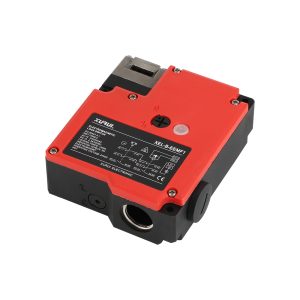
Choosing the Right Safety Interlock Switch Type for Compact Installations
Mechanical vs. Electromagnetic Safety Interlock Switch Designs
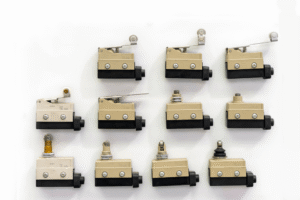
Mechanical Safety Interlock Switches are often favored in compact applications because of their simple construction and smaller housings. However, they depend heavily on precise alignment and stable mounting.
Electromagnetic Safety Interlock Switches may require slightly more space, but they often tolerate door movement better and allow controlled locking where safety timing matters.
Actionable guidance:
- Use mechanical Safety Interlock Switches when door movement is rigid and predictable
- Use electromagnetic Safety Interlock Switches when doors flex, vibrate, or require controlled access timing
Locking vs. Non-Locking Safety Interlock Switches in Small Enclosures
Space constraints do not eliminate the need for guard locking. In compact systems, a locking Safety Interlock Switch may still be required if hazardous motion continues after power removal.
Key consideration:
The stopping time of the hazard determines whether a locking Safety Interlock Switch is necessary, not the size of the enclosure.
Related Reading: What is the difference between interlock and safety switch?
Mounting and Actuator Choices That Reduce Safety Interlock Switch Failure Risk
Flexible Mounting Orientations
In compact layouts, the ability to mount a Safety Interlock Switch from multiple sides can prevent last-minute compromises.
Best practice:
Select Safety Interlock Switches that support multiple mounting orientations so the switch can adapt to frame geometry instead of forcing mechanical redesign.
Actuator Design and Alignment Tolerance
Slim or offset actuators are often critical in tight spaces, especially on narrow doors or small access covers.
Scenario example:
A test station door with limited swing clearance benefits from a Safety Interlock Switch using a slim actuator that avoids frame collision while maintaining reliable engagement.
Wiring and Contact Configuration for Safety Interlock Switches in Tight Spaces
Selecting the Right Contact Arrangement
Compact Safety Interlock Switches often provide multiple contact options in a single housing. Choosing the correct contact arrangement can eliminate the need for additional safety components.
Actionable advice:
Match the Safety Interlock Switch contact configuration directly to your safety relay or controller to minimize wiring complexity.
Cable Exit Direction and Connector Options
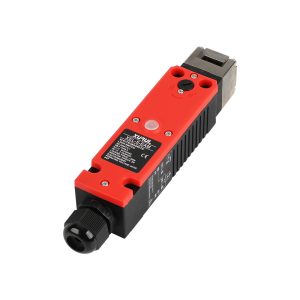
Wiring is one of the most overlooked issues when installing Safety Interlock Switches in space-limited environments.
What to look for:
- Side or rear cable exits instead of bottom exits
- Connector-based Safety Interlock Switch designs for easier replacement
- Strain relief suitable for tight bend radii
Poor cable routing remains a common cause of early Safety Interlock Switch failure.
Improving Safety Interlock Switch Reliability in Compact Environments
Managing Misalignment and Door Movement
Small doors flex more than large ones. In compact machines, even normal use can introduce alignment shifts that affect Safety Interlock Switch performance.
Reliability checklist:
- Choose Safety Interlock Switches with higher misalignment tolerance
- Avoid rigid actuator designs when door movement is unavoidable
- Verify Safety Interlock Switch alignment under real operating conditions, not just during installation
Reducing Maintenance and Downtime
In compact systems, maintenance access is often limited. Frequent adjustment of a Safety Interlock Switch is not realistic.
Selection goal:
Choose Safety Interlock Switches designed to remain stable over time, even when installation conditions are not perfect.
Common Mistakes in Space-Limited Safety Interlock Switch Selection
Prioritizing Size Over Stability
The smallest Safety Interlock Switch is not always the safest choice. Ultra-compact Safety Interlock Switches with low tolerance often fail faster than slightly larger but more forgiving designs.
Ignoring Service and Replacement Access
If replacing a Safety Interlock Switch requires partial machine disassembly, long-term maintenance costs increase significantly.
Best practice:
Always consider how the Safety Interlock Switch will be accessed five years after installation.
Final Thought
Compact and space-limited applications do not reduce safety requirements; they amplify them. The smaller the installation space, the less margin there is for poor Safety Interlock Switch selection. By focusing on alignment tolerance, mounting flexibility, wiring practicality, and real-world operating conditions, you can choose Safety Interlock Switches that remain reliable long after installation, even in the tightest environments.
XURUI Engineering Team