
Top 10 Micro Switch Manufacturers in 2026
The micro switch has evolved from a simple mechanical trigger into a sophisticated component essential for industrial automation, electric vehicles, and medical precision. For engineers and procurement managers, the challenge is no longer just finding a part that fits—it’s finding a manufacturing partner that can guarantee supply chain resilience and material integrity.
This guide breaks down the Top 10 Micro Switch Manufacturers in 2026, focusing on the brands that are setting the standard for the next generation of hardware.
1. Honeywell
Honeywell remains one of the strongest names for buyers who care about long-term reliability and high-consequence applications. Honeywell says it manufactures millions of MICRO SWITCH basic switches annually for aerospace and defense, industrial, off-highway, water and irrigation, and medical applications, with emphasis on accurate repeatability and extended life. That makes Honeywell a natural fit when the cost of failure is high and the buying team needs a globally recognized brand with a long performance track record.
2. Omron
Omron is a very strong option when your selection process depends on breadth and engineering flexibility. Its basic switch lineup includes miniature, subminiature, ultra-subminiature, and sealed models, which is useful when the same project family needs multiple sizes or environmental grades. Omron is especially good for teams that want a well-structured catalog and a supplier that can support both compact product design and standard industrial selection workflows.
3. Panasonic
Panasonic is particularly attractive for projects that need sealed performance and high reliability in contamination-prone environments. Panasonic highlights IP67 seal type micro switches and points to applications such as vehicle doors, shift levers, washing machines, and vacuum cleaners. That makes Panasonic a smart shortlist candidate when your design has to perform around dust, water exposure, or repeated mechanical detection in consumer and automotive-adjacent applications.
4. TE Connectivity
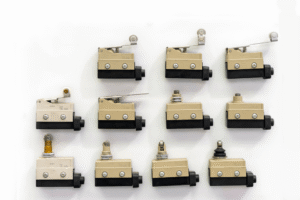
TE Connectivity stands out for selection flexibility. TE describes its snap action switch portfolio as covering multiple actuator styles, multiple mounting options, and ranges from miniature styles to IP-rated switches. For design teams that are still narrowing down lever style, plunger type, roller configuration, or mounting method, TE is often a strong early-stage comparison brand because it gives you many paths before locking the design.
5. C&K
C&K is a good fit for buyers who want a very broad snap-switch catalog with many configuration options. The company says its range includes mini, small, mid-size, large heavy-duty, and metal case models, with electrical ratings from low levels up to 30 amps, multiple terminal styles, and sealed options across SPST, SPDT, DPST, and DPDT. In practice, C&K is worth shortlisting when your team wants to compare many actuator, rating, and mounting combinations without jumping between several suppliers.
6. XURUI
XURUI switch manufacturer is a practical option for buyers seeking a broad product range and flexible sourcing support. Its portfolio covers both standard and waterproof micro switch solutions, which makes it easier for procurement teams and engineers to compare options for different application environments in one place. Beyond product variety, XURUI also stands out for its focus on certification support, customization capability, and global market service, all of which matter when buyers are evaluating manufacturers for long-term cooperation rather than a one-time order. For businesses looking for a supplier that can balance product coverage, compliance support, and real-world manufacturing needs, XURUI is a brand worth considering.
7. ZF
ZF remains a credible name for buyers who care about precision and application diversity. Its microswitch portfolio is described as quality-focused and reliable, with use across appliances, automotive, gaming, vending, drives, switchgear, control engineering, and power tools. That breadth is useful because it suggests the brand is not limited to a narrow product niche; it can serve programs that need proven microswitch behavior in both consumer-facing and industrial environments.
8. Marquardt
Marquardt is a strong choice when repeat accuracy and switching precision are major priorities. The company describes its snap-action switches as responding quickly and precisely, with a proven mechanism that maintains high repeat accuracy even after thousands of switching cycles. This makes Marquardt especially relevant for buyers who are less focused on low price and more focused on stable tactile and mechanical behavior over time.
9. Unionwell
Unionwell is a supplier many buyers will consider when they want a manufacturing-focused partner with strong certification coverage. Unionwell says its micro switch products carry global access certifications and that the company holds ISO9001, IATF16949, and ISO14001 certifications, along with UL, CUL, ENEC, CE, CB, and CQC safety approvals. It is a practical option for OEM sourcing, especially in automotive, home appliance, and other programs where documentation and production discipline matter as much as the switch itself.
10. Dongnan
Dongnan is a solid shortlist candidate for buyers looking at China-based volume manufacturing with strong micro switch specialization. The company says it was founded in 1987, produces micro switch and waterproof micro switch lines, supports certifications such as UL, ENEC, and other approvals, and cites annual output in the hundreds of millions of switches, with one product page stating more than 600 million units. For buyers balancing certification coverage, customization potential, and large-scale supply, Dongnan is worth considering.
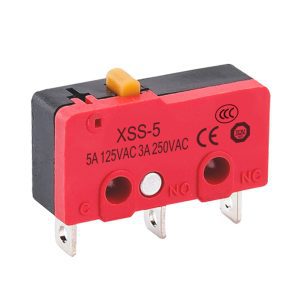
How To Choose the Right Manufacturer for Your Project
Match the Supplier to Your End Use
Do not start with brand reputation alone. Start with your use case. If your switch will sit in a humid or dusty environment, sealed and waterproof lines should move to the top of your list. If your switch is going into medical, industrial, or high-cost-of-failure equipment, repeatability and long-life positioning should matter more than getting the cheapest quote. If you are building automotive-adjacent products, look carefully at environmental resistance, approvals, and supplier quality systems.
Validate the Part Before Mass Production
A good selection process usually follows a simple path: define the load and environment, narrow down actuator style, confirm mounting and terminal requirements, request samples, then test for actuation feel, electrical consistency, and durability in your actual assembly. This step matters because a switch that looks correct in the catalog can still feel wrong in the finished product or behave differently under vibration, dust, heat, or repeated cycling.
Ask for the Right Documents Up Front
Before moving too far, request the documents that reduce sourcing risk: datasheets, approval certificates, compliance declarations, lifecycle information, and any available guidance on application fit. This sounds basic, but it saves time. It also tells you very quickly whether a supplier is set up for serious OEM work or only for transactional price-driven sales.
Common Mistakes To Avoid When Comparing Suppliers
Choosing on Unit Price Alone
The cheapest switch is often the most expensive decision later if it creates returns, inconsistent actuation, or requalification work. In most real projects, stable quality and dependable supply create more value than shaving a small amount off the piece price. That is why established suppliers emphasize repeatability, durability, sealing, and compliance so heavily.
Ignoring Environmental Ratings and Actuator Details
Many buying mistakes happen because teams choose by dimensions and current rating only. In practice, environmental protection, lever geometry, operating force, and mounting style often decide whether the switch actually works well in the end product. A supplier with more actuator and mounting choices gives you a better chance of getting both fit and performance right.
Treating All Certifications as Equal
Not every project needs the same approvals, and not every supplier presents them with the same clarity. For export projects or regulated product categories, you need to check whether the exact series you are considering carries the approvals your program requires, rather than assuming the whole brand automatically covers every case.
Related Reading: How to Tell If a Micro Switch Is Bad or Faulty in Quality?
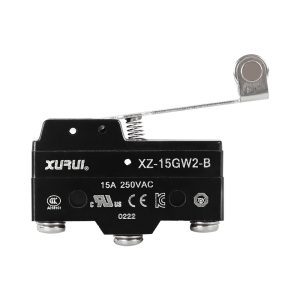
How To Evaluate a Micro Switch Manufacturer
Check Reliability, Certifications, and Application Coverage
Start with the basics: where the switches are used, what certifications are available, and whether the supplier clearly supports the type of environment you are designing for. A supplier that covers general-purpose models, sealed models, and multiple actuator styles usually gives you more room to optimize your design instead of forcing your product to fit the catalog.
Confirm Customization, Sample Support, and Production Readiness
After that, look beyond the datasheet. Check whether the supplier supports custom actuators, terminal styles, wiring options, compliance documents, and stable production capacity. In real projects, a supplier becomes much more valuable when they can help you move from sample validation to repeatable supply without changing vendors halfway through the program.
Final Thoughts
The best micro switch manufacturer is not always the biggest name or the lowest-cost option. In real sourcing work, the better choice usually comes down to how well a supplier matches your application, supports compliance needs, and helps reduce risk across sampling, testing, and long-term production. A strong manufacturer should make the selection process easier by offering the right product range, dependable quality, and enough flexibility to support different project requirements.
The manufacturers listed above each bring different strengths to the table, from global brand reputation to sealing performance, customization, and production support. For buyers narrowing down options in 2026, the smartest approach is to use this list as a starting point, then compare suppliers based on your actual working environment, technical needs, and sourcing priorities. That way, you are not just choosing a brand name — you are choosing a partner that fits the job.
XURUI Engineering Team