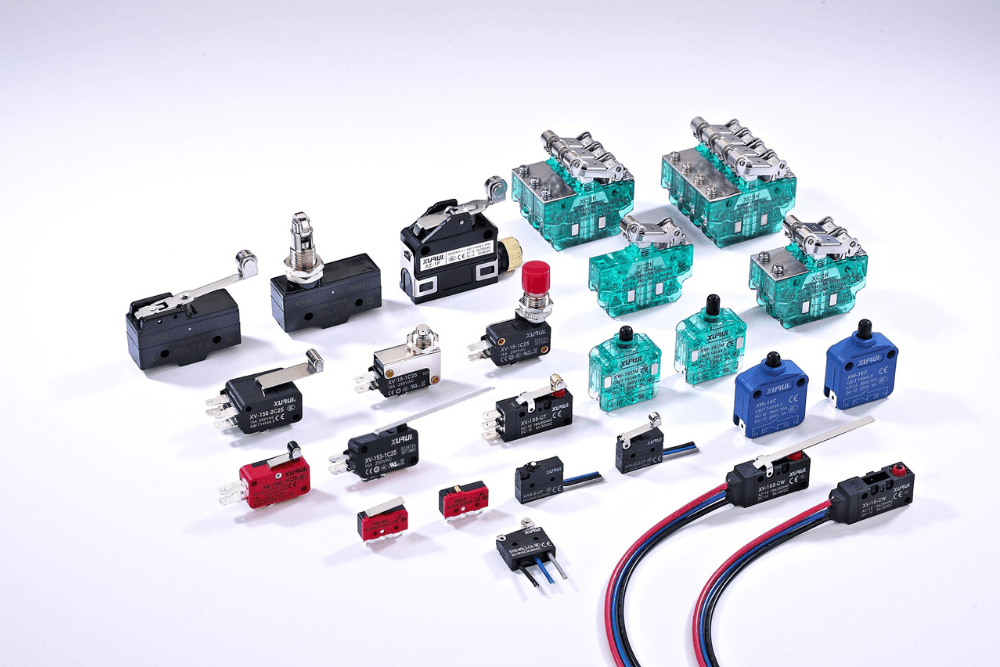
A DPDT Micro Switch may look like a small component, but it can play a major role in how a machine, appliance, or control system works. For many buyers, engineers, and maintenance teams, the challenge is not simply finding a Micro Switch. The real challenge is understanding which switching structure fits the circuit, how DPDT works, and where it should be used.
A DPDT Micro Switch is designed to control two separate circuits at the same time. It can switch each circuit between two output paths, which makes it more flexible than a basic single pole switch. This guide explains what a DPDT Micro Switch is, how it works, what features matter most, and how to choose the right one for real applications.
What A DPDT Micro Switch Means
The Basic Meaning Of DPDT
DPDT stands for double pole double throw. Double pole means the switch can control two separate circuits. Double throw means each circuit can be connected to one of two output terminals.
In simple terms, a DPDT Micro Switch works like two single pole double throw switches inside one compact housing. When the actuator is pressed or released, both internal switching sections change position at the same time. This allows one small switch to control two electrical paths with one mechanical action.
This structure is useful when a system needs more than a simple open or closed signal. A DPDT Micro Switch can reverse polarity, change signal paths, control two loads, or provide separate feedback signals to different parts of a system.
How It Differs From A Standard Micro Switch
A standard Micro Switch is often used to detect position, movement, door status, or machine limits. Many common Micro Switches use a single pole design, which controls one circuit. That is enough for simple detection tasks.
A DPDT Micro Switch gives the designer more control. It can handle two circuit paths at once, which makes it useful in more complex electrical systems. For example, one side of the switch may control a motor direction circuit, while the other side sends a position signal to a controller.
The value of a DPDT Micro Switch is not just its size. It combines compact design, snap action movement, and multi circuit control in one component. This makes it especially useful when space is limited but the circuit needs more flexible switching.
How A DPDT Micro Switch Works
The Role Of The Actuator
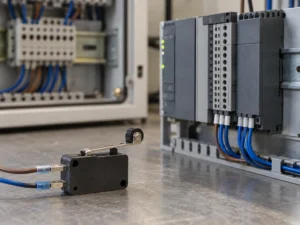
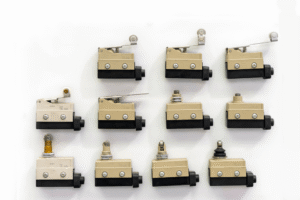
A DPDT Micro Switch is activated by physical movement. The actuator may be a small button, lever, roller lever, or custom mechanical part. When the actuator reaches a specific operating point, the internal contacts change position quickly.
This fast movement is called snap action. Even if the outside force moves slowly, the switch contacts change state quickly and consistently. That helps the switch provide a clear signal instead of an unstable or slow transition.
In many applications, the actuator is not pressed directly by a person. It may be triggered by a door, cam, lever, sliding part, machine guard, or moving assembly. This is why Micro Switch components are commonly used for detection and safety functions inside products.
The Contact Positions Inside The Switch
A DPDT Micro Switch usually includes two common terminals, two normally open terminals, and two normally closed terminals. Each pole has one common terminal that switches between two output paths.
When the actuator is in its normal position, each common terminal is connected to its normally closed terminal. When the actuator is pressed, each common terminal moves to its normally open terminal. Both poles change state together.
This contact arrangement allows the switch to perform two related actions at the same time. For instance, it can disconnect one circuit while connecting another. It can also send one signal to a control board while switching a separate power path.
Related Reading: How to Tell If a Micro Switch Is Bad or Faulty in Quality?
Key Features Of A DPDT Micro Switch
Compact Size With Multi Circuit Control
One major advantage of a DPDT Micro Switch is that it provides multi circuit control in a small package. Instead of using two separate switches, designers can often use one DPDT switch to save space and simplify mechanical design.
This is valuable in appliances, control panels, compact machines, and equipment where space is limited. A smaller switching solution can reduce assembly complexity and help keep the product layout cleaner.
However, compact size should not be the only selection factor. The switch must still match the circuit load, operating force, travel distance, mounting style, and environmental conditions. A small switch that is not rated correctly can create reliability problems later.
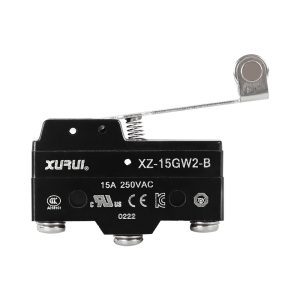
Snap Action For Reliable Switching
Snap action is one of the most important features of a Micro Switch. It allows the internal contacts to change state quickly when the actuator reaches the operating point. This helps create repeatable switching and reduces uncertain contact behavior.
In practical use, this means the switch can provide a more reliable signal even when the mechanical movement is slow. For example, a machine door may close gradually, or a cam may rotate slowly into position. The DPDT Micro Switch still changes state quickly once the trigger point is reached.
This repeatability is important in safety systems, position detection, limit control, and automated equipment. When the system depends on accurate switching, a vague contact point can cause trouble. Snap action helps solve that problem.
Electrical Ratings And Load Capacity
Every DPDT Micro Switch has electrical ratings that define how much voltage and current it can handle. These ratings must be checked carefully before the switch is used in a real circuit.
A switch used for signal detection may handle a very small current. A switch used to control a motor, solenoid, or lamp may face a much heavier load. If the load is too high, the contacts can wear, arc, or fail early.
The load type also matters. Resistive loads are usually easier to switch. Inductive loads, such as motors, coils, and relays, can create voltage spikes when the circuit opens. In these cases, the design may need protective components or a different switching method.
Operating Force And Travel Distance
Operating force refers to how much force is needed to activate the switch. Travel distance refers to how far the actuator must move before the switch changes state.
These details are important because the Micro Switch must match the mechanical movement of the product. If the operating force is too high, the moving part may not trigger the switch reliably. If the travel distance is wrong, the switch may activate too early, too late, or not at all.
For this reason, a DPDT Micro Switch should be tested with the actual mechanism that will activate it. A switch that works well by hand may behave differently once installed in a machine or appliance.
Common Types Of DPDT Micro Switch
Button Type DPDT Micro Switch
A button type DPDT Micro Switch uses a small plunger or button actuator. It is often used when the movement direction is direct and controlled. The object presses the button, and the switch changes state.
This type is useful when the mounting position is precise and the actuator can be pressed straight. It is common in equipment where internal parts move along a predictable path.
The main advantage is compactness. The design is simple and space efficient. The main challenge is alignment. If the pressing part is not positioned correctly, the switch may experience side force or fail to activate consistently.
Lever Type DPDT Micro Switch
A lever type DPDT Micro Switch includes a small lever that extends from the switch body. The lever reduces the force needed to activate the switch and allows the switch to respond to movement over a larger area.
This type is useful when the mechanical part does not press the switch perfectly straight. The lever gives the design more flexibility and can make installation easier.
Lever types are common in limit detection, door sensing, automation equipment, and appliances. They are especially helpful when the product needs smoother activation or when the movement path has some variation.
Roller Lever DPDT Micro Switch
A roller lever DPDT Micro Switch adds a small roller to the end of the lever. This allows moving parts to pass over the actuator with less friction.
This type is often used with cams, sliding rails, rotating parts, and moving machine elements. The roller helps reduce wear on the actuator and makes repeated operation smoother.
For applications with frequent movement, a roller lever can be a smart choice. It helps the switch follow mechanical motion more easily and reduces stress on the actuator.
Main Applications Of DPDT Micro Switch
Motor Direction Control
One common use of a DPDT Micro Switch is motor direction control. Because DPDT switching can change two circuit paths at the same time, it can be used in circuits that reverse polarity for a small DC motor.
This can be useful in actuators, vending machines, small automation devices, and mechanical control systems. The switch can help determine movement direction or stop a motor when a mechanism reaches a limit.
However, motor loads must be handled carefully. Motors can create surge current and electrical noise. The DPDT Micro Switch must be rated for the load, and the circuit may need protection to prevent contact damage.
Limit Detection In Machines
DPDT Micro Switch components are widely used for limit detection. In many machines, a moving part must stop when it reaches a certain position. The switch provides a signal that tells the system the limit has been reached.
This is common in lifts, actuators, printers, packaging equipment, control cabinets, and automated machines. A DPDT design can provide more than one signal from the same action. One contact section may stop motion, while the other sends status feedback to a controller.
This makes the DPDT Micro Switch useful when both control and monitoring are needed.
Door And Safety Interlock Systems
A DPDT Micro Switch can also be used in door and safety interlock systems. When a door, cover, or guard is opened, the switch can change the state of two circuits at once.
For example, one circuit may cut power to a moving part, while another circuit sends a warning signal. This kind of function is useful in appliances, industrial equipment, access panels, and safety enclosures.
In safety related applications, switch placement is critical. The actuator must be triggered reliably every time the door or guard moves. The switch should not be easy to bypass accidentally, and the mounting structure must remain stable over time.
Appliances And Consumer Equipment
Many household and commercial appliances use Micro Switch components for internal detection. A DPDT Micro Switch may be found in devices that need more than one switching function from a single movement.
Examples include kitchen equipment, washing machines, dryers, microwaves, vending machines, and control devices. In these products, the switch may detect a lid, door, tray, lever, or internal position.
For appliance use, durability, size, electrical rating, and actuator style are all important. The switch must handle repeated operation while fitting into a compact product structure.
How To Choose The Right DPDT Micro Switch
Start With The Circuit Requirement
The first step is to define what the circuit needs the switch to do. If the product needs to control two circuits or switch two paths at the same time, a DPDT Micro Switch may be suitable.
It is important to confirm whether the circuit really needs DPDT functionality. If only one circuit is being controlled, a simpler switch may be enough. If two independent actions must happen together, DPDT can reduce parts and simplify the design.
The designer should also confirm whether the application needs normally open, normally closed, or both contact states. A DPDT Micro Switch offers flexibility, but the wiring must match the control logic.
Match The Load And Environment
After the circuit function is clear, the next step is checking the electrical load. Voltage, current, and load type must match the switch rating. If the switch will control an inductive load, protection may be needed.
The environment also matters. Dust, moisture, temperature, vibration, and chemical exposure can affect switch life. In harsh environments, the design may need a sealed switch, protective housing, or special material selection.
Mechanical fit is just as important. The actuator type must match the movement path. The switch should activate cleanly without excessive force, side pressure, or overtravel.
Final Thoughts
A DPDT Micro Switch is more than a small electrical part. It is a compact control component that can switch two circuits at the same time while providing the fast, repeatable action expected from a Micro Switch.
Compared with a basic switch, it offers greater circuit flexibility. Compared with simpler Micro Switch designs, it gives engineers more options for motor control, safety interlocks, limit detection, appliance sensing, and automation systems.
The best DPDT Micro Switch is not simply the smallest or cheapest one. It is the one that matches the circuit, load, actuator movement, environment, and expected service life. When chosen correctly, a DPDT Micro Switch can make a product safer, smarter, and more reliable.
XURUI Engineering Team