NEMA enclosure ratings describe how electrical enclosures protect against environmental conditions such as dirt, dust, water, corrosion, ice, oil, coolant, and limited submersion. Each Type is a separate classification. A higher number does not necessarily provide broader protection.
This guide covers the main enclosure Types, explains the ratings most often specified, and outlines what to verify before approving an enclosure or enclosed component.
What Is a NEMA Enclosure Rating?
A NEMA enclosure rating defines the conditions an enclosure is designed to withstand when it is correctly constructed, installed, and maintained. ANSI/NEMA 250 covers enclosures for electrical equipment rated up to 1,000 volts and defines Types for indoor, outdoor, and certain hazardous locations.
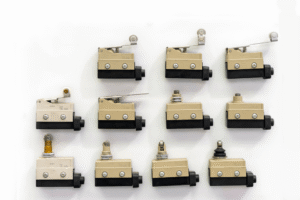
A Type rating covers the enclosure conditions defined by the standard. It does not account for every electrical, mechanical, or functional characteristic of the equipment inside. An enclosed switch must still be checked for load, actuator, installation, approvals, and environmental suitability. These checks also apply to industrial limit switches and similar field-mounted components.
Type numbers do not form a protection hierarchy. Type 5 is intended for indoor use, while Types 3 and 4 can be used outdoors. Choose the rating according to the actual exposure conditions, not the largest number.
NEMA Enclosure Rating Chart
The table summarizes the intended applications of common Types. Use it as a selection aid alongside ANSI/NEMA 250, product documentation, and local project requirements.
| NEMA Type | Intended Location | Protection Against | Typical Applications | Key Limitations |
| 1 | Indoor | Contact and falling dirt | Dry electrical rooms | Little moisture protection |
| 2 | Indoor | Falling dirt, dripping and light splashing | Areas subject to drips | Not for outdoor weather |
| 3 | Indoor or outdoor | Windblown dust, rain, snow, sleet, external ice | Exposed outdoor equipment | No added corrosion protection |
| 3R | Indoor or outdoor | Rain, snow, sleet, external ice | Outdoor disconnects and distribution equipment | Not rated for windblown dust |
| 3X | Indoor or outdoor | Type 3 conditions plus corrosion | Dusty, corrosive outdoor sites | No hose-directed water classification |
| 3RX | Indoor or outdoor | Type 3R conditions plus corrosion | Corrosive outdoor sites | Not rated for windblown dust |
| 3S | Indoor or outdoor | Type 3 conditions with mechanisms operable when ice-laden | Cold outdoor installations | No added corrosion protection |
| 3SX | Indoor or outdoor | Type 3S conditions plus corrosion | Cold, corrosive sites | No hose-directed water classification |
| 4 | Indoor or outdoor | Windblown dust, weather, splashing and hose-directed water, external ice | Washdown and exposed industrial equipment | No added corrosion classification |
| 4X | Indoor or outdoor | Type 4 conditions plus corrosion | Coastal, food-processing, and wastewater sites | Not classified for submersion |
| 5 | Indoor | Settling dust, lint, fibers, drips, and light splashing | Dusty indoor facilities | Not for outdoor use |
| 6 | Indoor or outdoor | Hose-directed water and occasional temporary submersion at limited depth | Equipment subject to a defined temporary-immersion condition | Verify the tested depth, duration, installation, and product instructions |
| 6P | Indoor or outdoor | Prolonged submersion at limited depth, corrosion, and external ice | Equipment subject to a defined prolonged-immersion condition | Verify the tested depth, duration, installation, and product instructions |
| 12 | Indoor | Circulating dust, lint, fibers, drips, and light splashing | Industrial control enclosures | Constructed without knockouts |
| 12K | Indoor | Type 12 conditions | Industrial enclosures requiring knockouts | Knockouts must be correctly closed |
| 13 | Indoor | Dust and spraying, splashing, or seepage of water, oil, and noncorrosive coolant | Machine-tool environments | Not intended for outdoor weather |
| 7 | Indoor hazardous (classified) location | Contains an internal explosion under the specified Class I, Division 1 conditions | Gas- or vapor-hazardous locations | Verify the exact Class, Division, Group, UL 1203 certification, and applicable NEC requirements |
| 9 | Indoor hazardous (classified) location | Prevents ignition of combustible dust under the specified Class II, Division 1 conditions | Combustible-dust locations | Verify the exact Class, Division, Group, UL 1203 certification, and applicable NEC requirements |
The Most Common NEMA Ratings Explained
The five ratings below appear frequently in routine enclosure decisions. The correct choice comes from the exposure at the installation site, not from a progression between Type numbers.
NEMA 1: Basic Indoor Protection
NEMA 1 is intended for dry indoor locations. It restricts access to hazardous parts and protects enclosed equipment from falling dirt. Locations exposed to dripping water, circulating dust, washdown, or outdoor weather require another Type.
NEMA 3R: Outdoor Rain Protection
NEMA 3R is commonly used for outdoor equipment exposed to rain, snow, and sleet. It also addresses damage caused by external ice formation. Windblown-dust protection is outside its scope, so dusty outdoor sites may require another Type.
NEMA 4: Dust and Washdown Protection
NEMA 4 is intended for indoor or outdoor locations exposed to windblown dust, rain, snow, splashing water, and hose-directed water under specified test conditions. It suits many washdown installations. Where chemicals or corrosive atmospheres are present, Type 4X may be required.
NEMA 4X: Corrosion-Resistant Washdown Protection
NEMA 4X combines the environmental coverage of Type 4 with additional corrosion protection. Typical applications include coastal sites, sanitation processes, chemical exposure, and wastewater environments. Type 4X does not cover submersion or establish suitability for a hazardous location.
NEMA 12: Indoor Industrial Protection
NEMA 12 is intended for indoor industrial locations exposed to circulating dust, lint, fibers, dripping water, or light splashing. The enclosure is constructed without knockouts. It is not intended for outdoor weather or hose-directed washdown.
How to Choose the Right NEMA Rating?
Start by defining the installation environment and each expected exposure. Then verify the required product rating and approval. Broad labels such as “outdoor” or “waterproof” do not provide enough information for selection.
Step 1: Confirm the Installation Location
Establish whether the equipment will be indoors, sheltered outdoors, or fully exposed. A roof or partial cover may reduce direct rain, but windblown water, dust, humidity, and condensation can still reach the equipment.
Step 2: Assess Water Exposure
Distinguish among dripping water, rain, splashing, hose-directed washdown, temporary submersion, and prolonged submersion. Each condition is covered by a different test. For components specified by IP code, the XWS-6 waterproof micro switch shows why a published series rating must be checked against the exact model and installation. Its IP67 designation does not establish a NEMA enclosure Type or a direct NEMA equivalent.
Step 3: Check Dust, Oil and Coolant
Determine whether the enclosure will encounter falling dirt, windblown dust, circulating dust, fibers, oil seepage, or coolant spray. Both the material and the way it reaches the enclosure affect whether Type 3R, 4, 12, or 13 is appropriate.
Step 4: Evaluate Corrosion
Identify possible exposure to salt, cleaning chemicals, wastewater gases, high humidity, and process chemicals. Enclosure material alone is not enough to establish a Type 4X rating. The complete construction must meet the applicable corrosion requirements.
Step 5: Identify Hazardous Locations
Check whether flammable gases, vapors, or combustible dust make the installation a classified location. A general environmental rating such as Type 4X cannot replace the required hazardous-location classification and certification.
Step 6: Verify Product and Code Requirements
Review the enclosure label, manufacturer instructions, exact model documentation, required listing, project specification, and applicable local code. The approval must cover the assembled product and intended market, rather than a similar model.
How Installation and Modifications Affect the Rating?
An enclosure’s Type rating applies to the finished installation. Openings, added accessories, damaged seals, and field modifications can allow water, dust, or corrosive contaminants to enter. Check each change against the manufacturer’s instructions and certification conditions.
- Cable entries and accessories: Cable glands, conduit fittings, windows, push buttons, fans, drains, and cooling devices become part of the enclosure system. Their ratings and installation methods must support the required Type.
- Field drilling and cutouts: Drilling or cutting can bypass seals, change drainage paths, reduce gasket compression, or affect grounding and structural strength. Confirm the permitted locations and sealing method before making an opening.
- Doors and gaskets: Doors must close fully, and latches must apply the intended pressure. Replace gaskets that are dirty, displaced, cracked, or permanently compressed.
- Unused openings: Close unused cable entries, knockouts, and mounting holes with fittings or plugs suitable for the required enclosure Type.
- Complete assembly: The enclosure body, controls, cable entries, seals, and mounting method determine the protection of the finished installation. The waterproof switch selection guide applies the same principle to sealed components.
For an application review, provide the required Type, installation environment, proposed modifications, and target market to XURUI engineering and sales. These details allow the product and supporting documents to be checked before quotation.
Common NEMA Rating Misconceptions
These misunderstandings often come from treating Type numbers as a ranking or assuming that one material or feature determines the rating. The designation applies to the complete enclosure under defined test conditions.
- Higher Type numbers provide better protection: Type numbers classify different environmental conditions rather than levels in a hierarchy. Type 12 is intended for indoor industrial use and cannot replace Type 4 in an outdoor washdown installation.
- NEMA 4X is waterproof: Type 4X protects against specified water exposure and adds corrosion protection to Type 4. Applications involving submersion require evaluation under another classification, such as Type 6 or 6P.
- NEMA 4X is explosion-proof: Type 4X addresses environmental exposure rather than ignition hazards. Locations with flammable gases, vapors, or combustible dust require the appropriate hazardous-location classification and certification.
- Stainless steel automatically qualifies as NEMA 4X: Stainless steel alone is insufficient for a Type 4X designation. The complete enclosure, including its seams, doors, hardware, gaskets, and penetrations, must meet the applicable requirements.
FAQs
Can NEMA and IP Ratings Be Compared?
They can be compared, but the designations are not directly interchangeable. An enclosure Type may meet or exceed certain IP ingress requirements. An IP code alone does not address additional NEMA conditions such as corrosion, icing, construction, or oil exposure.
Are NEMA Ratings Self-Certified?
NEMA publishes the standards but does not certify individual products. A manufacturer may declare conformity. UL or another third party may certify the specific models and ratings identified in its certification record.
Can an Enclosure Have More Than One NEMA Type Rating?
Yes. A design may satisfy more than one Type because it has been evaluated for different conditions. Use only the ratings listed in the relevant product documentation or certification scope.
Does a NEMA Rating Prevent Internal Condensation?
No. Temperature differences, trapped humidity, and heat from the equipment can still produce condensation inside the enclosure. The design may require drainage, heating, ventilation, or humidity control that remains compatible with the required protection.
Does a NEMA Enclosure Rating Expire?
NEMA Type designations have no general time-based expiration. Even so, corrosion, damaged hardware, degraded gaskets, and improper modifications can reduce protection over time. Follow the manufacturer’s instructions and site conditions when setting inspection and maintenance intervals.
External Sources
- ANSI/NEMA 250-2020: Enclosures for Electrical Equipment (1000 Volts Maximum)
- NEMA Enclosure Types
- UL Electrical Enclosure and Related Component Certification