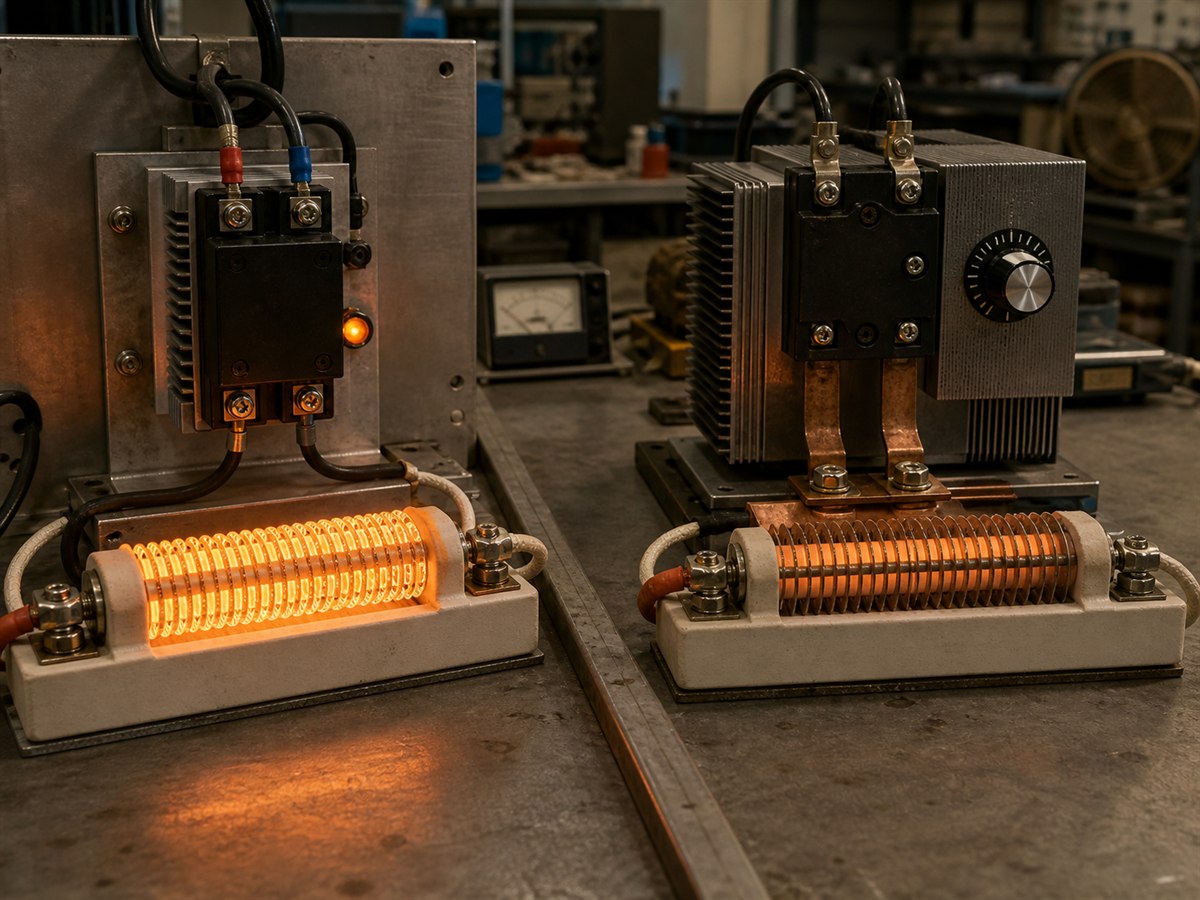
Use an SSR when the load only needs full on and off switching. Use an SCR power-control solution when the process needs documented AC power regulation instead of repeated full-power switching.
“SCR relay” is not a complete purchase specification. In an industrial controls inquiry, it may refer to an on and off solid-state relay or an AC voltage regulator. Start with the required output behavior, then match the load, command signal, phase arrangement, and thermal design to the documented series.
What Does SCR Relay Mean?
SCR commonly means silicon controlled rectifier, but the phrase “SCR relay” does not name one complete product function. For a buying decision, separate an SSR switching path that applies or removes power from a discrete command from a device that regulates AC power through a documented method. This article uses SSR switching for the first job and SCR power control for the second.
The label alone cannot confirm input type, output type, load compatibility, or thermal capacity. Xurui uses XSSR for solid-state relay families and XSSVR for solid-state voltage-regulator families. Those names give the buyer a starting point, not an approved part number. The exact series document still controls the final selection.
How SSR Switching and SCR Power Control Differ
The practical difference is the action required at the load. An SSR changes between an on state and an off state. A phase-angle AC voltage regulator changes when conduction begins in each AC half-cycle to vary the power delivered to the load.
| Decision Factor | SSR Switching | SCR Power Control |
|---|---|---|
| Primary job | Apply or remove load power | Regulate AC power by a documented control method |
| Usual command | Discrete on and off signal | Series-specific proportional or phase-angle input |
| Output behavior | Full available line power while commanded on | Variable portion of each AC half-cycle in phase-angle operation |
| Typical decision | The process accepts full-power switching | The process needs controlled AC power rather than repeated full-power periods |
| Data to confirm | Output type, load rating, switching mode, and heat path | Control input, supply, phase, load type, protection, and thermal arrangement |
The load, command source, enclosure temperature, protection design, and machine requirements decide whether the selected device fits the panel.
When Is SSR Switching the Better Fit?
Choose SSR switching when the process can operate by applying full power and removing full power. The selected SSR still has to match the output type, load current, installed thermal path, and switching mode.
Simple On and Off Command
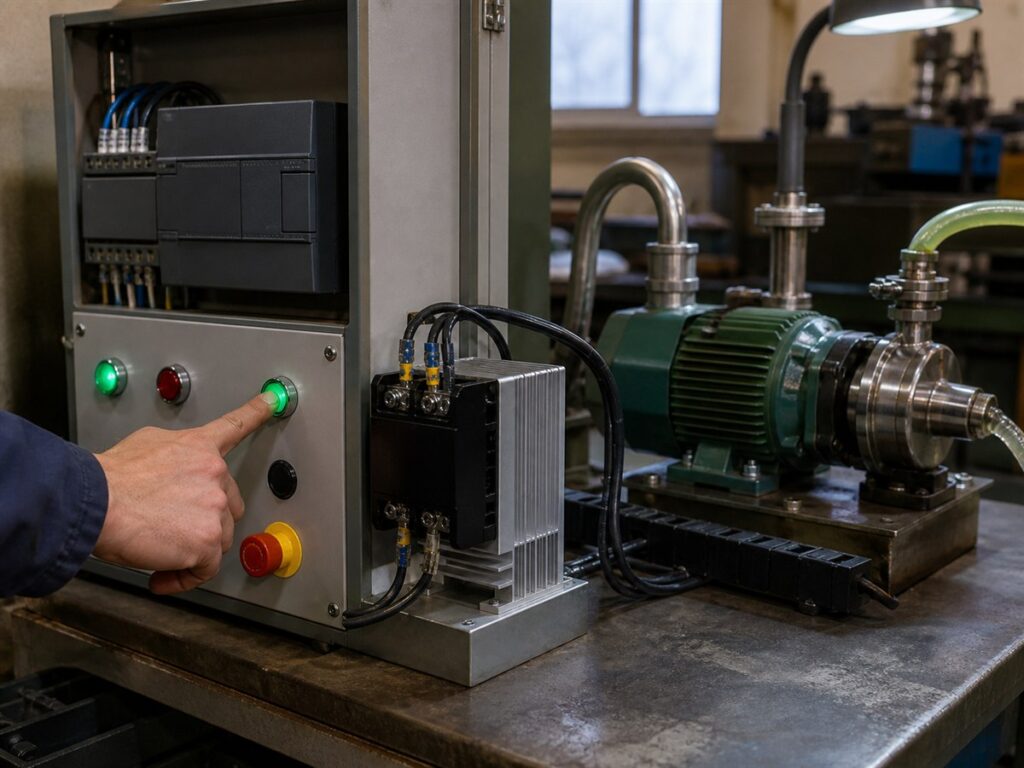
An SSR fits a discrete command when the load should receive full line power whenever the command is active. Zero-cross and random-turn-on SSR modes set different expectations for when an AC output begins conducting after that command, so select the mode from the load behavior and timing requirement.
Time-Proportional Heater Control
A temperature controller can command an SSR through repeated on and off periods. That remains discrete switching because the heater receives full available line power during each on period. Check the controller manual and the process thermal response before using this approach, because it does not provide phase-angle regulation.
When Should You Specify SCR Power Control?
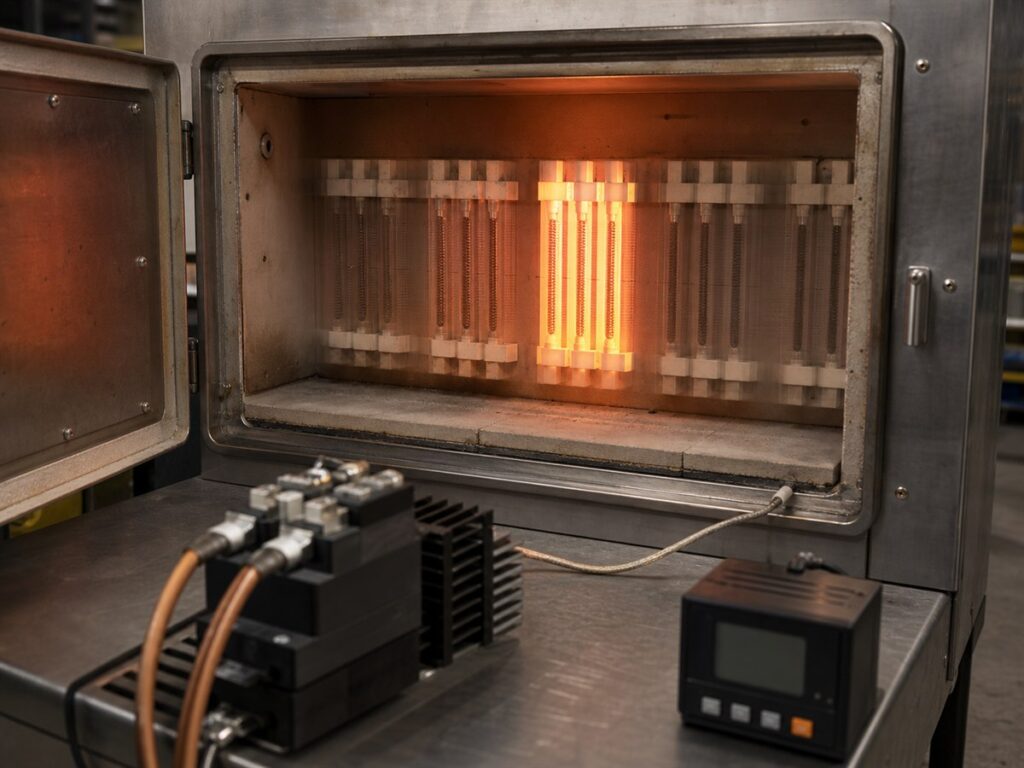
Specify SCR power control when the process needs a documented method that regulates AC power rather than a sequence of full-power on periods. The required function must match the controller command, load behavior, and approved series data.
Phase-Angle AC Voltage Regulation
Phase-angle control changes when the output starts conducting during each AC half-cycle. Earlier conduction delivers more of that half-cycle to the load, while later conduction delivers less. This method applies only when the selected product explicitly supports the required input and phase-angle function.
Changing Resistance or Inrush
Review a power-control solution when the heater documentation identifies changing resistance, startup inrush, or a required ramp or current-management function. These conditions do not automatically select one firing method. Compare the heater data, electrical supply, upstream controller, and allowed power-quality limits before choosing the control method.
Checks That Decide the Final Device
Choose from circuit requirements, not from SSR and SCR labels alone. Check the load and supply, the required control input and output behavior, and the thermal design as one system before releasing a panel design.
Load and Supply Details
Confirm whether the load is AC or DC, single phase or three phase, resistive or another documented load type, and what its normal and startup current look like. The device also has to match the supply voltage, phase arrangement, and intended load connection. A high current nameplate does not prove that the installed thermal and surge conditions are acceptable.
Control Signal and Firing Method
Identify whether the upstream controller provides a discrete output or a proportional control signal. Then confirm that the selected SSR or regulator accepts that input and performs the required switching or phase-angle function. A zero-cross SSR, random-turn-on SSR, and phase-angle regulator do different jobs, so the generic term “solid state” is not enough.
Thermal and Machine-Safety Design
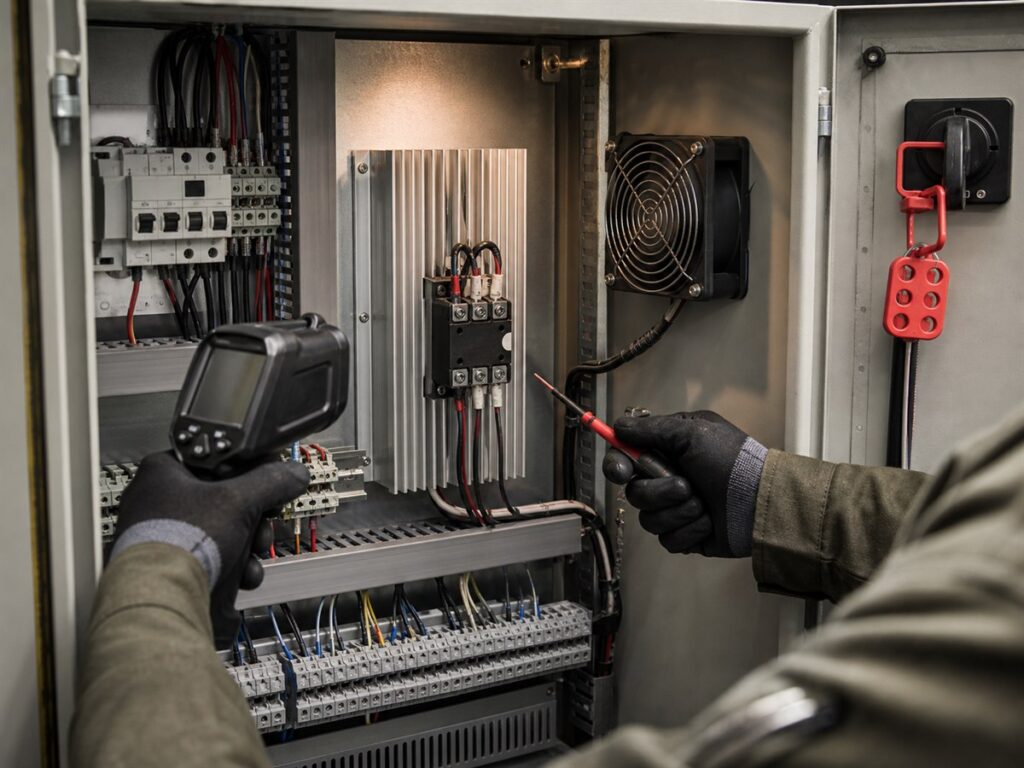
SSRs and phase-angle regulators dissipate heat in their semiconductor outputs. The final design needs series-specific derating data, mounting instructions, thermal interface details, airflow conditions, and protection requirements. SSR thermal selection is part of the installed design. Treat the power-control device as one part of the machine design, then define the required service isolation and emergency-stop function through the applicable machine design and safety process.
Where Xurui Products Fit in This Choice
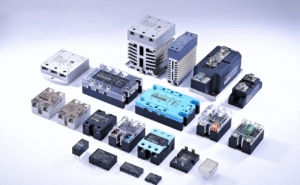
Xurui separates on and off solid-state relays from AC voltage regulators within its solid-state relay portfolio. This boundary helps a buyer start with the correct product family, but the exact series data must still confirm the electrical, control, and thermal fit.
On and Off SSR Families
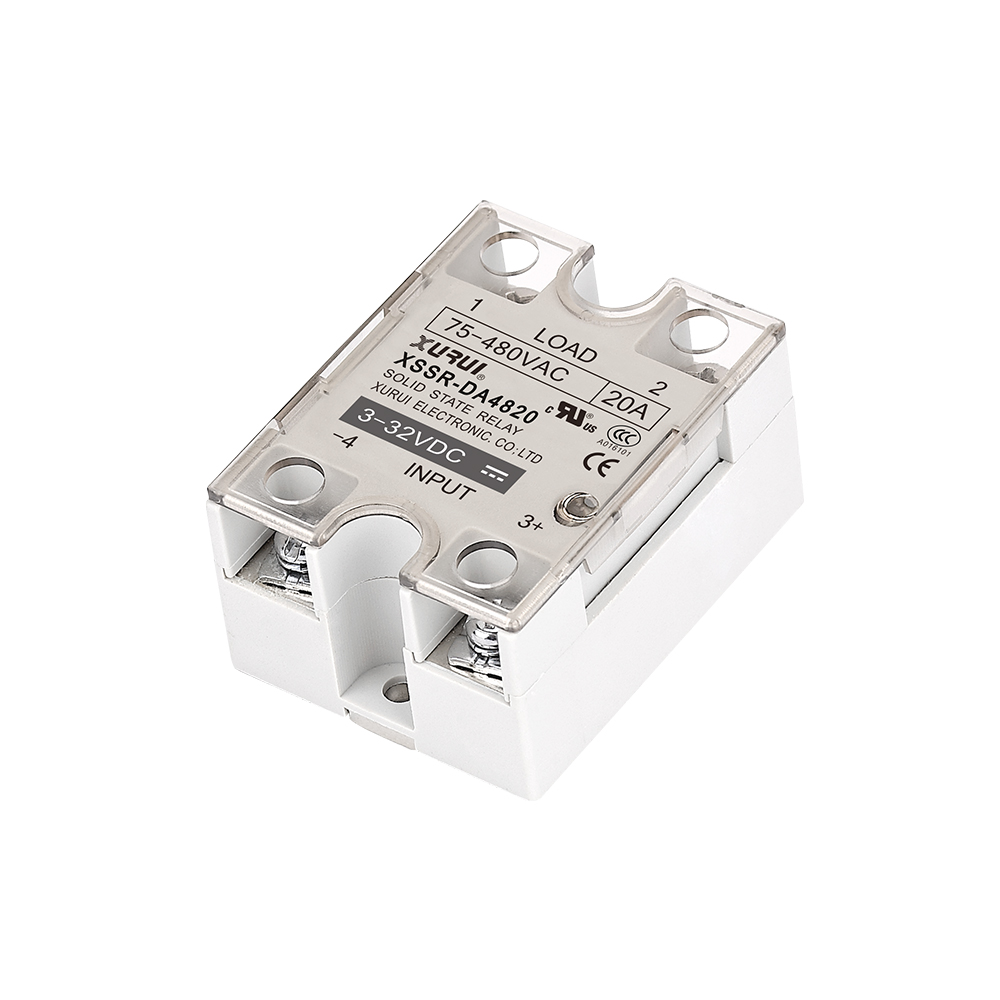
The Xurui solid state relay range includes XSSR families for solid-state switching. Use this path when the application needs a properly specified on and off SSR rather than phase-angle AC voltage regulation. Confirm the AC or DC output type, control input, switching mode, current rating under installed conditions, and the required heat-sink arrangement.
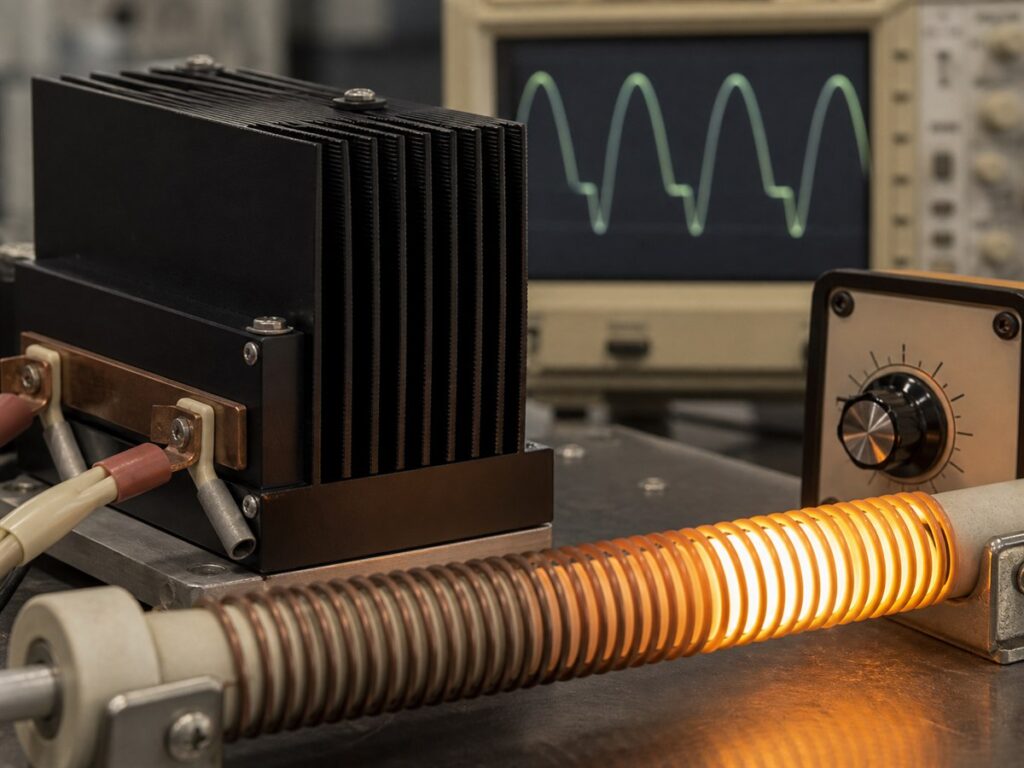
Phase-Angle AC Voltage Regulators
XSSVR-W1/W2 is a Xurui AC voltage-regulator series. Xurui also lists XSSVR-VA W2, XSSVR-CA W2, and XSSVR-3P in this product family. These products require a power-control review with the command input, phase configuration, load type, protection, and thermal requirements from the current model document. Do not select a regulator code as an unreviewed substitute for an existing SSR.
Frequently Asked Questions
Can an XSSVR AC Voltage Regulator Control a DC Load?
No. Xurui identifies XSSVR products as AC voltage regulators, so they do not establish a DC load-control solution. Select a device whose controlled documents cover the required DC voltage, current, and turn-off behavior, then confirm the complete circuit before release.
Can One XSSVR-3P Controller Run a Three-Phase Heater?
Only when the exact XSSVR-3P configuration matches the heater circuit. Confirm the voltage, current, control input, heater connection, wiring diagram, thermal arrangement, and model-specific document. A three-phase series name does not confirm that every three-phase heater configuration is suitable.
Which XSSVR Series Data Is Available?
For XSSVR-W1/W2, Xurui publishes the external-potentiometer range, phase-angle range, load-voltage range, and current range at series level. The control input, output code, thermal design, and protection details need an exact-suffix review. Use the current data sheet and drawing before design release.
What Should an OEM Include in an XSSVR Quote Request?
Provide the existing model, if applicable, plus the control signal, load voltage and phase, load type, RMS current, startup condition, duty cycle, ambient conditions, wiring diagram, panel space, and required approvals. This record lets the supplier identify the relevant model code and supporting thermal arrangement instead of matching only a nominal current value.
Can Xurui Review a Replacement Model?
Yes. Xurui requests the existing SSR model, control signal, load, wiring diagram, panel space, and required approvals for a replacement review. That review should confirm the requested function and construction before an engineering team treats a proposed series as an equivalent replacement. For a configuration review, contact Xurui Switch.
XURUI Engineering Team
Industrial SPST toggle switch on a control panel](https://xuruiswitch.com/wp-content/uploads/2026/09/spst-toggle-switch-industrial-control-cover-300x225.webp)
SPST toggle switch product on a clean electronics workbench](https://xuruiswitch.com/wp-content/uploads/2026/09/spst-toggle-switch-cover-300x225.webp)