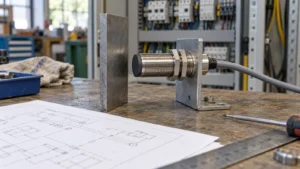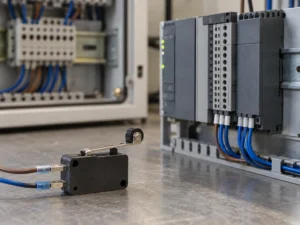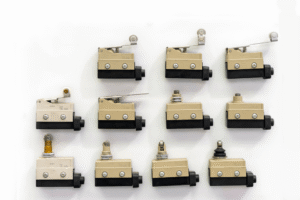

Micro switches and limit switches both convert machine movement into a discrete electrical signal, but the right choice depends on the mechanical interface around the sensing point. A compact snap-action micro switch can fit a tight, direct-contact location. A limit switch is often the better form when the machine needs a more exposed actuator and a dedicated mounting arrangement.
For industrial position sensing, the decision is not about the name on the switch alone. The design team must match the actuator path, mounting, electrical interface, and expected operating conditions to the exact approved model.
What Does Industrial Position Sensing Need From a Mechanical Switch?
Industrial position sensing needs a repeatable change of contact state when a moving part reaches a defined point. The control system can use that change as a discrete input for a sequence, status check, or machine function.
The switch is only one part of the sensing path. The mating cam, lever, bracket, fasteners, wiring, and input logic all affect whether the control system receives the intended signal. A switch can be electrically sound and still give an unreliable result if the moving part does not reach its actuator in the same way each cycle.
How Does a Micro Switch Turn Movement Into a Signal?
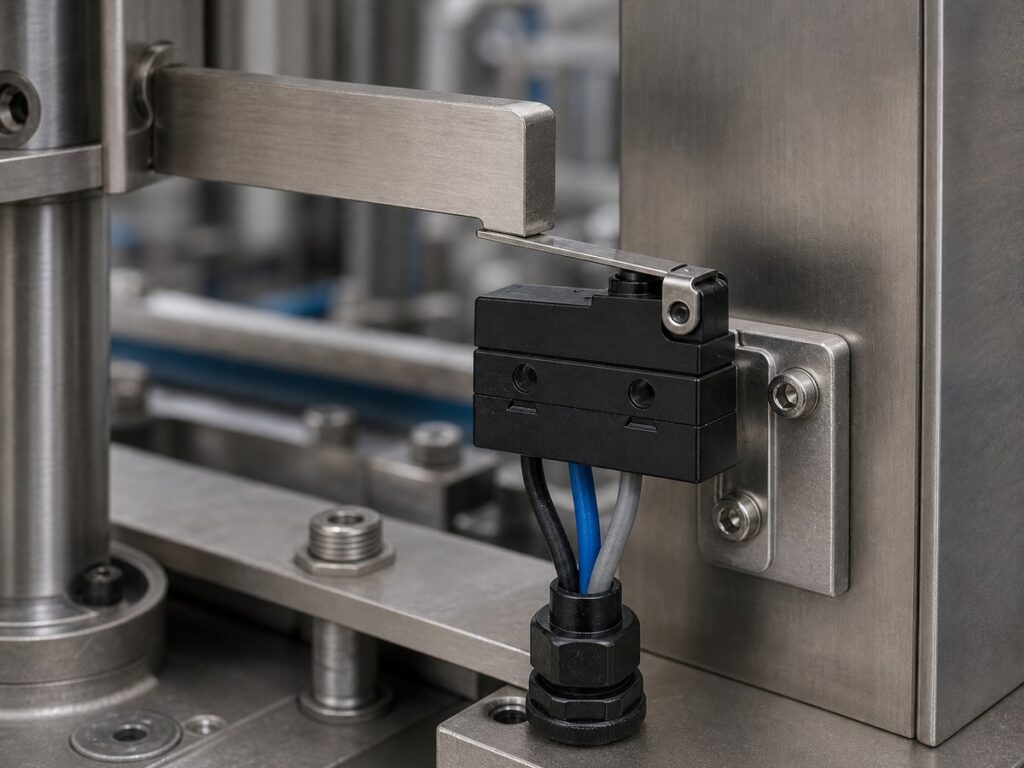
A micro switch uses a snap-action mechanism to change contact state after its actuator moves through the required motion. This fast internal action makes micro switches useful where a compact device must respond to direct mechanical movement.
Xurui micro switches are available with multiple actuator options, so the design team must match the actuator and body to the available mounting space and the shape of the mating part. The family also includes specialized variants, but the buyer must confirm ratings, sealing, and other specifications at the exact-model level rather than assume they apply across the category. Micro Switch Anatomy 101 explains the snap-action mechanism in more detail.
How Does a Limit Switch Turn Machine Motion Into a Signal?
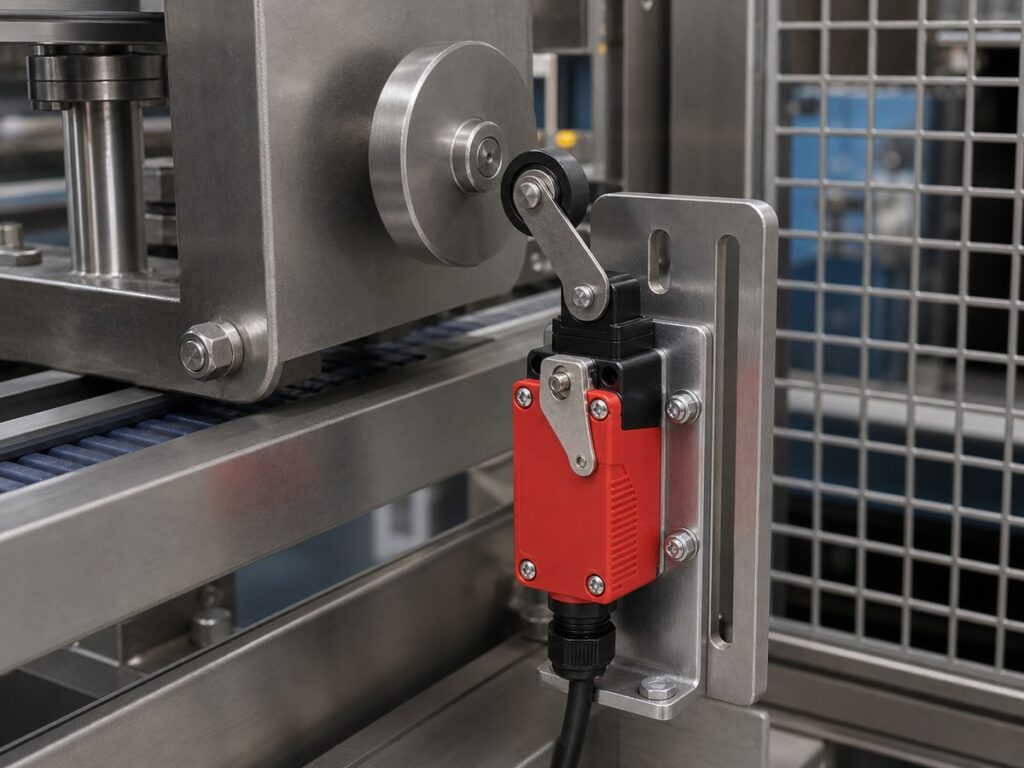
A limit switch places a mechanically operated actuator at a machine-facing sensing point. When the moving part reaches the intended position, it operates that actuator and changes the switch contact state for the control circuit.
This form is useful when the application needs a defined mounting arrangement and an actuator that can meet the moving part outside the tight space of a component-level installation. The required actuator shape, housing, load rating, environmental rating, and certification remain model-specific checks.
Which Switch Form Fits the Position-Sensing Point?
Choose the form that matches the mechanical path before comparing catalog ratings. A compact micro switch can suit a close, direct actuation point. A limit switch can suit a machine-facing point where the assembly needs a separate actuator and mounting arrangement.
| Selection check | Micro switch | Limit switch |
|---|---|---|
| Mechanical role | Compact snap-action switching at a direct actuation point | Machine-facing mechanical position detection through an installed actuator arrangement |
| Space around the sensing point | Fits tight mounting areas when the mating part can reach the actuator directly | Fits locations that need a dedicated body, mounting, or more accessible actuator placement |
| Buyer review | Confirm body clearance, actuator motion, terminal arrangement, and exact model | Confirm actuator path, mounting, housing, terminal arrangement, and exact model |
| Do not assume | That every micro switch has the same sealing, rating, or actuator geometry | That every limit switch shares the same rating, enclosure, actuator, or certification |
For applications that need a machine-facing assembly, review the available Xurui limit switch range against the required mounting and actuator path.
The labels can overlap in supplier catalogs because a compact snap-action device may be part of a limit-detection assembly. The safer selection method is to define the required movement, then review the actual product drawing and specification for that installation.
What Can Make a Position Signal Unreliable?
Separate the problem by whether the mechanical input reaches the switch correctly or the control circuit reads the changed state correctly.
Mechanical Path Problems
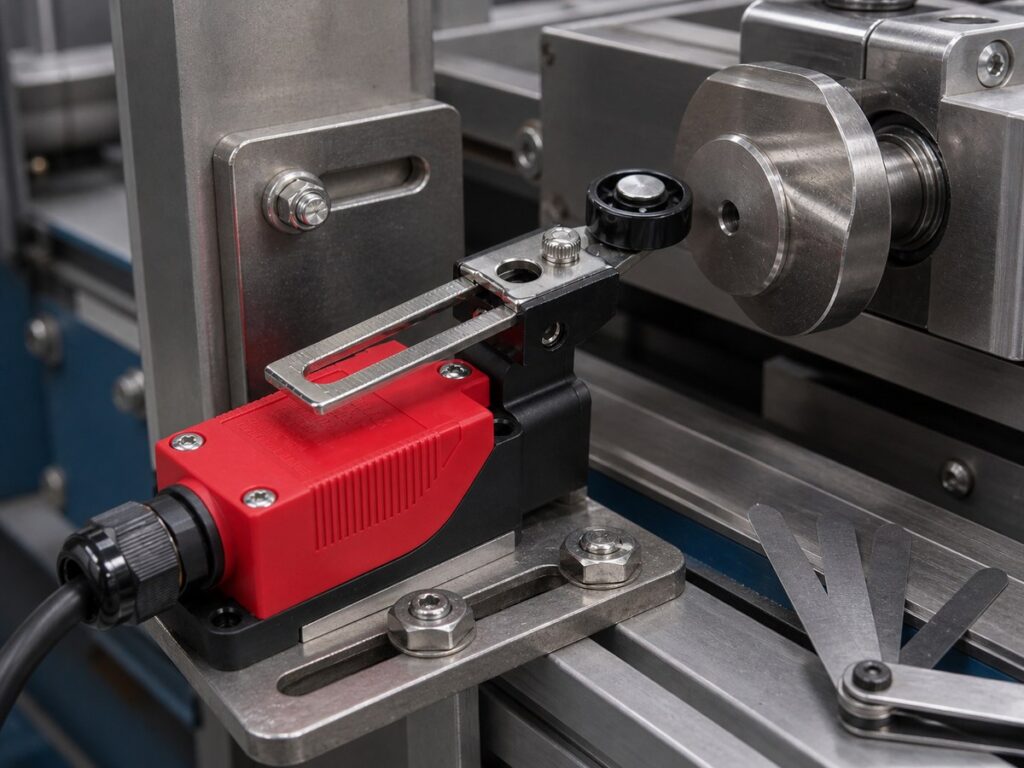
Mechanical problems can make the moving part miss the actuator, strike it at the wrong angle, or apply motion that the installed arrangement does not repeat consistently. A loose bracket or changed mating part can also shift the operating point.
Questions about a moving machine reaching its defined travel point belong in this travel limit switch guide, which covers that separate application context.
Electrical Input Problems
Electrical issues can create a similar symptom. The team should verify the terminal arrangement, wiring continuity, input behavior, and the contact state expected by the control logic. Replacing a switch with a higher contact rating does not correct a mechanical-path problem or an incorrect input interpretation.
How Should Buyers Verify the Position-Sensing Setup?
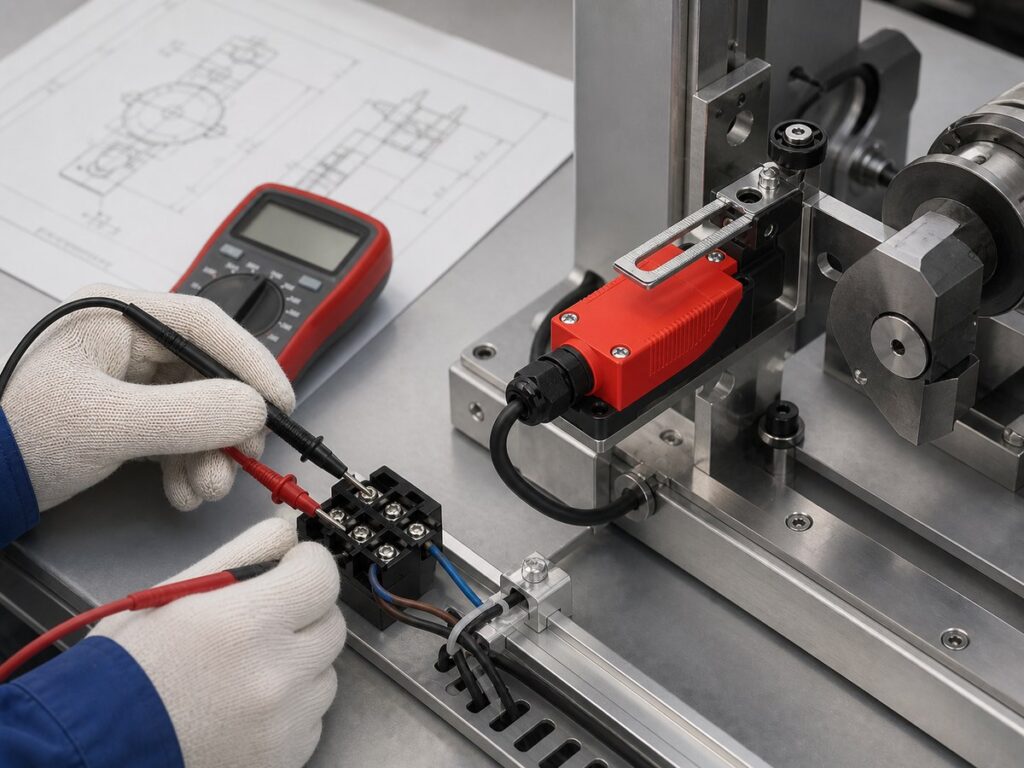
Test the installed assembly, not the switch alone. Record the approved model and mounting setup, then cycle the real mating part to confirm the input changes at the intended point. Retest after a change to the mating part, bracket, wiring, or control logic, and keep the test record with the approved part. The Limit Switch Testing Guide covers installed-system checks in more detail.
Frequently Asked Questions
What Evidence Should Accompany an Industrial Position-Sensing Sample?
The supplier should provide the exact model identification, applicable drawing, relevant technical documentation, and the installation conditions used for an industrial position-sensing sample. When requesting a sample from Xurui Switch, provide the actuator arrangement, mating-part description, and test method. The buyer should retain the observed switching result, so the production order matches the approved setup instead of only matching a category name.
What Must a Replacement Switch Match Beyond Its Contact Rating?
A replacement switch must match the approved mechanical interface as well as the electrical requirement. Check the model code, body clearance, actuator geometry, mounting pattern, terminal arrangement, and the way the mating part reaches the actuator. A part that fits electrically may still move the operating point if these mechanical details differ.
Can a Higher Contact Rating Correct a False Position Signal?
No. A higher contact rating addresses only one electrical selection parameter and does not correct a missed actuator, changed mounting position, loose connection, or mismatch with the control input. Diagnose the mechanical path and input behavior before changing the switch specification.
Which Assembly Changes Require a Position-Sensing Retest?
Retest the setup when a change can alter actuator contact, timing, or the input path. Typical triggers include a revised mating part, bracket, mounting position, actuator arrangement, cable route, or control-logic change. The purpose of the retest is to confirm the approved signal point in the real assembly.
What Should Buyers Confirm Before a Repeat Order?
Before a repeat order, confirm the approved model code, drawing revision, actuator and terminal arrangement, required documentation, and any application-specific test condition. This check reduces the risk of ordering a similar-looking switch with a different mechanical interface. If an application detail has changed since approval, treat the order as a new verification case.
XURUI Engineering Team